The FX6 and log exposure for commandos

What's the problem?

hey, i’m thinking it is late for you, and just best to pick up tomorrow.

I know your questions were originally directed toward Doug, but seeing the time and how slow these forums can be, i figured you’d rather someone to talk to than no one. Which, i am assuming is what all of this is about at the end of the day, but that is reading into things.
 
that makes sense. i guess you have to double the percentage because it is LOGARITHMIC

Then rec709 would just be 18%? or no, it has a LUT, maybe triple it? for 54% which is right in the mid tones.

No, no, no. This is all wrong. The main thing you need to know about gray is that when Sony or some other manufacturer mentions a number for it, it is more just to inform you where midtones will fall within a properly exposed image. If you expose by white, you can just let the midtones fall where they may.
 
Can't you just load in any LUT you want and use that as a base look?

In theory, yes, that is possible. Show me the LUT. I have not found this mythical LUT. I'd even settle for a pair of LUTs hat could be chosen for different situations. Last year when this subject came up I threw out the challenge for someone to send me a LUT (that they actually use themselves) that they feel provides a better WYSIWYG image than S-Cinetone with no grading in post needed when exposing at traditional broadcast levels. Crickets. Nobody took me up on that challenge and I'm still waiting. Abe, I think you have fallen into the trap of making unfounded assumptions about a camera you don't use.

I'm pretty sure there's no way in hell that recording a LUT onboard the camera is ever going to provide a nice WYSIWYG image that can go straight to air. Does anybody grade S-LOG in post by dropping a LUT on it can callling it done? I sure don't. A LUT in post is just a starting point and further fine-tuning is always needed. So how can applying a LUT onboard the camera provide a final image? So, if you are going to have to grade anyway, then why not just shoot clean S-LOG and leave all your options open in post? Why hobble the footage when you shoot it -- if it is still going to need work anyway?

Unless someone sends me an FX6 scene file or a LUT to load into my camera that proves me wrong (always a possiblity), I do not believe it is possible to get a WYSIWYG look out of the FX6 that can't be improved upon significantly in post with some grading if you are exposing at traditional broadcast levels. I'm not saying some clients won't settle for look of S-Cinetone or some burnt in LUT, but that doesn't make it good.
 
Last edited:
The LUT would be baked in, just like s-cinetone is. I've never shot s-cinetone but I've tested it and it seems like it has more contrast than I want in a variety of situations. For example, the lead editor and the owner of a wedding studio I work for prefer my in-camera look to s-cinetone, which their other shooters use. The owner has tried to get me to divulge my profile settings 4 or 5 times both herself and through an intermediary, explicitly and indirectly. They ought to just do what I did and test a variety of settings for a week. There's probably an even better configuration out there

You're talking about the FX3, right? Good for you. Always a good idea to get into the menus and tweak the paint settings to your liking. I wouldn't give them my secret recipe either.
 
.

I'm pretty sure there's no way in hell that recording a LUT onboard the camera is ever going to provide a nice WYSIWYG image that can go straight to air. Does anybody grade S-LOG in post by dropping a LUT on it can callling it done? I sure don't. A LUT in post is just a starting point and further fine-tuning is always needed. So how can applying a LUT onboard the camera provide a final image? .

My picture profiles are not truly WYSIWYG, they just make for an easy grade. The goal is to provide accurate, saturated colors so that only contrast adjustments are required (and perhaps a minor saturation increase.) With regard to dynamic range, i try to give myself just a bit more headroom than i need for the scene. But with enough available profiles, you could probably switch between them for different scenes and send the material straight to air.

My feeling with s-cinetone is that it's usually too contrasty. And perhaps something about the colors can look a bit videoish, but I can't put my finger on why. Maybe it's just because of the contrast. I've looked at the s-cinetone my colleagues are recording in scenes that are relatively low-conttast, and it still seems a bit contrasty to me.

I don't have a LUT in mind, but I'm not very knowledgable about LUTs. I've looked at a variety of LUTs for grading s-log3 and I always come back to the standard LUT and grade from there. But I think that other people may have had more luck with them and might know some better ones. It certainly seems to me that it should be possible for the fx6 to match my a7siii look, but I'm using a built-in color matrix and not a LUT.
 
Thanks! I’m new to iso12,800, so it has been interesting reading your thread.

Yeah, noise and exposure can be objective. Right? like you may have been working with a more moody style. Looking at Doug’s videos, i feel he exposes a bit brighter than i do, on average, so i assume we would pick different targets. i


I know I have talked about all this before, but I'll say it again.

I shoot for broadcast television, high-end corporate, and stock footage that needs to appeal to a certain type of buyer.
Footage in my world needs to have white around 90% otherwise the exposure will look wrong. Yes, wrong. There's very little creative wiggle room for the type of work I do. Either the footage needs to be exposed that way at the time of shooting, or graded to that level in post. Either, way whites need to be up around 90%.

I don't do drama, music videos, indy films, weddings, etc. where exposure targets are traditionally quite a bit lower. Most of the the programming I see on Netflx looks like whites are down around 80% or lower. Heck, Ozark is probably below 70%. That is a creative choice that works well for that type of material. I appreciate the look of those shows and wouldn't want then shot any differently. But that is not the world I work in. If I delivered footage where 80% was the target I wouldn't be working in this business anymore.

S-Cinteone works best at lower exposures and on human faces. That's what Sony designed it for. All of their demo footage fits that description, So if you stay within that type of shooting then S-Cintetome might look good enough. But when you need to expose at broadcast levels with clean blacks and decent satuation, S-Cinetone falls apart. Take S-Cinetone outdoors on a bright day and shoot some b-roll and you'll see what I mean.
 
Last edited:
It certainly seems to me that it should be possible for the fx6 to match my a7siii look, but I'm using a built-in color matrix and not a LUT.

Abe, take a look at the FX6 manual and see if you can find the same settings you use on the FX3. I have no idea they are there or not, but it wouldn't surprise me if they are not because Sony purposely stripped off most of their traditional paint menus from the FX6 in order to keep it simpler for the customer they want the camera to appeal to. If I remember correctly, the FX6 has only 1/3 as many paint menus as the FX9. And 1/5 as many as are on my Z750. That is very limiting.

Sony says too many menus = stress and confusion. That's not just my opinion, that is something I was told by one of my contacts at Sony.

If you think the FX6 has the same paint menus you use on the FX3 please send me your settings and I'll give them a try. I'll keep your settings private. I couldn't do anything until next month, though. I have a very busy couple of weeks coming up with no time for testing.
 
Last edited:
I know I have talked about all this before, but I'll say it again.

I shoot for broadcast television, high-end corporate, and stock footage that needs to appeal to a certain type of buyer.
Footage in my world needs to have white around 90% otherwise the exposure will look wrong. Yes, wrong. There's very little creative wiggle room for the type of work I do. Either the footage needs to be exposed that way at the time of shooting, or graded to that level in post. Either, way whites need to be up around 90%.

I don't do drama, music videos, indy films, weddings, etc. where exposure targets are traditionally quite a bit lower. Most of the the programming I see on Netflx looks like whites are down around 80% or lower. Heck, Ozark is probably below 70%. That is a creative choice that works well for that type of material. I appreciate the look of those shows and wouldn't want then shot any differently. But that is not the world I work in. If I delivered footage where 80% was the target I wouldn't be working in this business anymore.

S-Cinteone works best at lower exposures and on human faces. That's what Sony designed it for. All of their demo footage fits that description, So if you stay within that type of shooting then S-Cintetome might look good enough. But when you need to expose at broadcast levels with clean blacks and decent satuation, S-Cinetone falls apart. Take S-Cinetone outdoors on a bright day and shoot some b-roll and you'll see what I mean.

I think this may be my first time reading it from you, so i appreciate the thorough and intelligent response!
 
Last edited:
This is an interview i saw not long ago, and felt they were spot on with the exposure here, because it helps with the idea of getting drunk at home.

this was for Drunk History:
801CD9C8-F575-4DAD-9167-B566E0FCE3AE.jpeg - Click image for larger version  Name:	801CD9C8-F575-4DAD-9167-B566E0FCE3AE.jpeg Views:	0 Size:	43.1 KB ID:	5693731
 
Obviously in those interview setups, it is easy to bring in a white card, but when a white card is not present grabbing correct exposure in a room with no white reference, what is the best thing to get an exposure reading from in the scene?
 
This is an interview i saw not long ago, and felt they were spot on with the exposure here, because it helps with the idea of getting drunk at home.
this was for Drunk History:

I think that interview looks like a piece of ****. for a lot of reasons. The bad exposure is just the nail in the coffin. I guess the crew had to be drunk too.
 
I think that interview looks like a piece of ****. for a lot of reasons. The bad exposure is just the nail in the coffin. I guess the crew had to be drunk too.

It is one of those things that works because of the context. makes it feel less like TV, and a bit more like being with friends at home. Which is kind of how the show works. very informal. But the lower levels work here. Not saying the DP intended to go this dark or not, as some of there other interviews are not this dark.

In any case, i’m not sure how you know it is bad exposure, unless you pulled the image up on waveforms or something. You might be viewing on a dark screen.
 
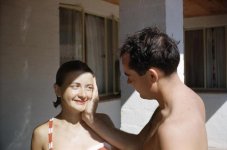
photo130511.jpg Here a picture taken by an unknown photographer. The main subjects face is very bright and very dark, because of the shadow, but it works in this photo. brings a sense of life to it.

Without the shadow, i’d be tempted to think her dace was over exposed comparatively. But with that shadow, it somehow balances out the odd and challenging exposure here. Ends up making an emotional photograph with some geometric complexities in the composition. But nothing is so perfect, so it all feels alive and in motion. There is a bit if psychology to exposure beyond hitting it right
 
In any case, i’m not sure how you know it is bad exposure, unless you pulled the image up on waveforms or something. You might be viewing on a dark screen.

I'm not really sure what your point is, but I don't have any interest in critiquing a bunch of crappy stills that you pulled out of your hat. If you think that interview looks good or is appropriate for the material, you are welcome to your opinion. In my opinion it is garbage. Maybe someone else can take up the conversation with you. I have no time for stuff like this.

BTW, I just happend to watch the pilot episode of LOST tonight. If you want to see some fantastic cinematography with correct broadcast-level exposures, nice color, beautiful compositions and editing, check it out. THAT is what we should be aiming for.
 
Last edited:
I'm not really sure what your point is,

The point is you might not always want to find white and let the rest fall where it may. You know that. So, by discussing non-standard exposures, or atypical exposures, we can get a better sense of exposure in general.

Sometimes you might want to push things outside standard parameters to find an effect.
 
The point is you might not always want to find white and let the rest fall where it may. You know that. So, by discussing non-standard exposures, or atypical exposures, we can get a better sense of exposure in general.

Sometimes you might want to push things outside standard parameters to find an effect.

What part of my previous post didn't you understand?

"I shoot for broadcast television, high-end corporate, and stock footage that needs to appeal to a certain type of buyer. Footage in my world needs to have white around 90% otherwise the exposure will look wrong. Yes, wrong. There's very little creative wiggle room for the type of work I do. Either the footage needs to be exposed that way at the time of shooting, or graded to that level in post. Either, way whites need to be up around 90%. I don't do drama, music videos, indy films, weddings, etc. where exposure targets are traditionally quite a bit lower."

If you want to slap a "creative" label on stuff you admire, then anything goes. Have at it. My opinion shouldn't matter at all to you, and I hope you can earn a living with your methods. Who am I to say you are wrong if you have clients that pay you for it?
 
What part of my previous post didn't you understand?

"I shoot for broadcast television, high-end corporate, and stock footage that needs to appeal to a certain type of buyer. Footage in my world needs to have white around 90% otherwise the exposure will look wrong. Yes, wrong. There's very little creative wiggle room for the type of work I do. Either the footage needs to be exposed that way at the time of shooting, or graded to that level in post. Either, way whites need to be up around 90%. I don't do drama, music videos, indy films, weddings, etc. where exposure targets are traditionally quite a bit lower."

If you want to slap a "creative" label on stuff you admire, then anything goes. Have at it. My opinion shouldn't matter at all to you, and I hope you can earn a living with your methods. Who am I to say you are wrong?


I’m talking about exposure.

A lot of these discussions end with hit % ire and off you go, perfect every time! But in documentary you’ll find that isn’t always the case. And when the situation demands it, one can also adjust those numbers to better communicate ideas. like a bit brighter, or a bit darker.

For me, i find people often drop the creative card too early. there are a lot of things that happen before inspiration that are mostly technical. Art isn’t nearly as creative nor subjective as you are implying above.

But if this conversation triggers you, and reminds you of conversations you’ve had before, then yeah, go enjoy some sunshine, and make it a good day!
 
hahaha - well without taking sides at all - I gotta say - Doug you made me laugh out loud this time. For better or worse (and we've had our disagreements) no one can accuse you of being a shrinking violet!
 
I think the drunk history shot looks like garbage. I'm not really sure what the goal is there. Clearly, that series succeeds only on the strength of its writing (not that I watch it). Maybe the reenactment stuff looks better

I think the sun/shadow shot you showed has an ok exposure. It looks better on the man's skin, the woman's highlights still seem a bit too hot to me. And the shot overall is rather a plain composition. But I do enjoy this type of lighting with strong contrast on the subject, which usually poses a challenge for exposure.

I could be wrong but I think Doug's larger approach involves exposing properly for the key light and then grading it for the stylized look you want. When you're maxing out your DR or shooting non-LOG then I think we have no choice but to decide how to distribute our values right then and there, and it's always a fun challenge. I rarely bracket my exposures anymore since I've had access and grown accustomed to false color. You can really get a good sense of how hot things are, where the gradient starts to sort of flatten out at the top of the exposure range, where the darks get crunchy, etc.
 
Back
Top