Cinema EOS Announcement on 19th Jan - EOS R5C

The sheer number of R5/C units moved make it a "mainstream" camera and bring the 8K adoption much closer to the widespread buyer demand. Now, add Z9 and A1 and whatever 8K are announced out at CP+ in February and the 8K crawl might be turning into the 8K gallop.

With the usual caveats in mind.

PS. Did I happen to mention that R5C is $4,500? It might have slipped my mind,

It will be a gallop and ahalpert will be looking down at his a7SIII and FX3 and a7IV and just thinking... "I hate you, I hate you, I hate you!"

lol
 
Getting a FF35 8K raw camera with good colour science to market in the most popular form factor all under $5K is a big deal, really.

Canon still carries a lot of clout and momentum, something the Panasonic S1H never had, and the uncertainty of Nikon in the “cine” sphere would sort of wet-blanket them a little.

Canon now has 48% of the global photo-video market (I assume, in units shipped) and there are over 100 million EF lenses around. And, over the last 3-4 years, they have been squeezing their competitors out. MFT is on the ledge, even with the upcoming new releases from OMD and Panasonic. And the APS-C is getting demoted downwards too. Both Sony and Canon want full frame with the top notch AF and that's what the customers are getting. And actually liking it.

Because it's $4,500. I am not sure I mentioned that in my last post.

The price is right.
 
The sheer number of R5/C units moved make it a "mainstream" camera and bring the 8K adoption much closer to the widespread buyer demand. ,

I think that deliverable requirements are what will drive 8K adoption. And those would largely be driven by having someplace to show 8K. Otherwise the utility is somewhat limited. More detailed 4K, which you can get just by oversampling in-camera. More capacity to crop in post, which would be my main use. Maybe effects work.

and the thing is - the stuff where I use a mirrorless as an A camera is also the stuff that's most likely to shoot in HD. Obviously, the clients are aware of 4K. And it's just a menu setting away. But the need isn't there. And if the mirrorless is your B camera, then you're not shooting entirely in 8K until canon provides it in a C-series camera

on the flipside, run&gun says he still shoots mostly in HD. Because that's what they need for broadcast.

Papert and Brawley said they shoot shows in ProRes 4444, not raw. Just because raw is available doesn't mean they use it.

distribution needs drives production specs, not the other way around. It's helpful to have a camera that can shoot 8K at an affordable price in terms of mass adoption. But i would probably use it very rarely if I had the camera. I would, however, probably enjoy having oversampled 4k. But even that I can live without
 
It will be a gallop and ahalpert will be looking down at his a7SIII and FX3 and a7IV and just thinking... "I hate you, I hate you, I hate you!"

lol

I’m actually at a cross roads with the A7s3 and the R5C, because my use for this type of camera is more in the small footprint documentary, where the mirrorless excels over the big boys.

In testing, the A7s3 was impressive. It was better than the R5. But the R5C CRL will likely demolish the 10bit codec of the Sony, so that creates a new dilemma, as i feel the Sony will be the more effecient of the two, rather than a choice of which is the better image quality. Yet the Sony will still likely get better results at lower data rates than the new R5C. 2K/HD in s35/crop and being able to get usable fidelity out of iso20,000 is certainly a completely different beast.

So, the cross roads decision in this case is: efficiency over raw image quality. The A7s3 is still the world’s most effecient cine camera, on the whole.

Surely, the FOMO the R5C will generate is going to be palpable, but any level headed person that shoots a lot of footage will appreciate the choices Sony made in the A7S sub genre. I felt it looked better than the original R5 in compressed video, with slightly better color (subjectively) and more DR (objectively).
 
I think that deliverable requirements are what will drive 8K adoption.

When was that ever the case? i was getting asked for 4K long before it was a deliverable. People go mad about archival and future proof quality.

That said, I don’t feel personally obligated to follow any trends.

The R5C is a gateway camera, and brings 8K to a much larger group of people in a way no other camera has.

In the last line i heard watching Dune (2021), before my internet went out and i couldn’t finish watching the movie “This is only the beginning”.

Wait you never finished watching Dune? Could that have something to do with feeling like the movie was incomplete?

I think deliverables depends on your clientele. A lot of my clientele wants to post immediately and cares a lot more about what's required now than in the future. And if you're showing online, as virtually all of my stuff is, then the imagery is limited by the viewing resolution on people's phones and the distance it will be viewed at, internet compression and the resolution of Instagram and YouTube, etc. Most of the stuff I watch online is in 720p or less. Most of my final exports are HD. 4K is used only for reframing
 
Last edited:
I think the bottom line for me, especially after this release, is that my money going into any camera moving forward will be for an 8K camera.

I thought about the R3 and the R5 C and in all likelihood it will be neither for me as I will keep renting and playing for now.

But if and when the time comes, whether I need 8K or don't need 8K - and maybe I will never truly need 8K - is not the point.

The principle of the matter is that the camera needs to have 8K and other modern technology for me to personally spend $4500 or put $4500 towards a more expensive system. Period. For me.
 
Wait you never finished watching Dune? Could that have something to do with feeling like the movie was incomplete?

I think deliverables depends on your clientele. A lot of my clientele wants to post immediately and cares a lot more about what's required now than in the future. And if you're showing online, as virtually all of my stuff is, then the imagery is limited by the viewing resolution on people's phones and the distance it will be viewed at, internet compression and the resolution of Instagram and YouTube, etc. Most of the stuff I watch online is in 720p or less. Most of my final exports are HD. 4K is used only for reframing

ok, i don’t think that is what we mean.


At this time very few people have or use 8K cameras, because they are either too expensive, are coming from a brand they lack confidence in, or they just aren’t a good quality image, not reliable shooting 8K, or they require an external recorder….


the R5C changes all of that.
 
Right but I think that shooting in 4K was really propelled by 4K TVs and Netflix offering a 4K subscription. And 8K would be propelled by 8K of the aforementioned. There are 8K cameras available now. It's not like Netflix can't envision a future where 8K supplants 4K. And yet, for now, they don't require it. And I believe they started requiring 4K in advance of mass adoption of consumer 4K displays or their 4K subscription

Netflix is also going down the tubes btw
 
Netflix is also going down the tubes btw

It is?

Anyhow, earlier in the week, we were having a dumpster day (three days, actually) in the building. Toss out whatever you no longer need. So, one one of those days, I am riding down the service elevator and I see a family of four lugging two empty boxes - one of them for an 85" 8K LG - and I am thinking, "The condos are far too small for an 85" set". Nonetheless, there it was.

So, yes, there are bottlenecks in terms of editing, storage, media and so on, but 8K is marching merrily along.

Because you can buy an 8K Canon camera for $4,500.

(TV's are already under $2,000, if one wants an off-brand 55")
 
Right but I think that shooting in 4K was really propelled by 4K TVs and Netflix offering a 4K subscription. And 8K would be propelled by 8K of the aforementioned. There are 8K cameras available now. It's not like Netflix can't envision a future where 8K supplants 4K. And yet, for now, they don't require it. And I believe they started requiring 4K in advance of mass adoption of consumer 4K displays or their 4K subscription

Netflix is also going down the tubes btw

Maybe you started video later than us.

resolution has been pushed since digital and HD take over despite TV and streaming operating primarily at 720p since the start of HD.

I’m not going to argue with you on what is relevant today, and i won’t pretend that 8K will make 720p obsolete. heck, i still enjoy the occasional DVD with little loss of appreciation compared to bluray 4K.


What the R5C does, is make it accesible. a gateway, not a mass take over and extinction of all that was before. that is a nonsensical attitude.


If i bought an R5C, i could shoot high quality 8K raw, or I could shoot compressed 4K downscale. So, why not? you know?

It makes the camera not scary. The buyer is not locked into 8K raw video, or worry about overheating. they can shoot compressed 4K and shoot stills if they like. And at $4500, it is more accesible than ever before.

now add to it next generation SSD and USB formats and data transfer speeds for faster turn around, and M1 chip tech handling H.265, and these previous bottle necks to 8K are reduced significantly.
 
Last edited:
One of the most exciting parts about this camera is actually how it may affect their roadmap.

Like I hope the C300 Mark III/C500 Mark II have different designs (and probably different names), but most of all I hope Canon makes their more powerful cameras in the $8K-ish price range versus the $11K-$16K one they have now.

Maybe an 8K/120p C600 or C900. Could you imagine?

[Definitely 8K/60p without external power.]
 
Maybe you started video later than us.

resolution has been pushed since digital and HD take over despite TV and streaming operating primarily at 720p.
.

When I started, there were still SD cameras but most were at least 720p. Well, that was the end of college. High school was SD i think. And 1080p was advertised as full HD. And that whole transition took time, for a much bigger payoff in relative quality increase than 4K->8K.

HD->4K is not yet the totality that SD to HD was. Because 4K is enough or more than enough for most display purposes.

My first job after college was assisting at a doc production company. They were shooting Joan Rivers: A Piece of Work on the HVX200 in 720p rather than 1080p to save money on the mountain of hard drives they needed. It won awards at Sundance and i think got HBO distribution

Seeing that the transition to 4K was slower and patchier than the transition from SD to HD, I assume that the transition to 8K will be even more so. A cheap 8K camera helps but isn't the only determinant.
 
No. I hate shoe mounts, hot or cold. I don't mind using little cams like the R5 as a B cam but I can't trust them enough to replace a grown-up camera. Too many fiddly little things that are doomed to fail.

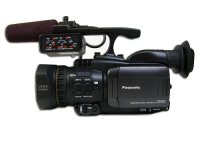
just to reference the DVC30 version, which is the only hot-shoe option i have ever enjoyed.


The things that set it apart were:
- locking thread screws for rigid security and strength
- top handle as a base
- XLR box attaches underslung to the handle to reduce height
 

Attachments

  • CDB0A061-5EED-4047-A030-BAF11F66407C.jpeg
    CDB0A061-5EED-4047-A030-BAF11F66407C.jpeg
    27.9 KB · Views: 0
It is?
")

Netflix lost 20% of its market cap this week on internal predictions of drastically reduced subscriber growth. Some of that is the end of pandemic mitigation measures

but the key takeaway is that competitors (apple TV, hbomax) are taking an increasing market share. Basically now its all about what movies and shows you have available. (I'm not going to say "content.")

that trend will continue and I imagine Netflix will go from whatever it has now, 50% or whatever, down to 25 or 12.5% eventually. It's a churn world now. We have 3 regulars (Amazon bc prime, Hulu bc cheap black Friday deal, paramount+ bc star trek), and then a 4th spot that rotates between HBO, etc
 
Netflix lost 20% of its market cap this week on internal predictions of drastically reduced subscriber growth. Some of that is the end of pandemic mitigation measures
isn’t that market correction?

but the key takeaway is that competitors (apple TV, hbomax) are taking an increasing market share. Basically now its all about what movies and shows you have available. (I'm not going to say "content.")

that trend will continue and I imagine Netflix will go from whatever it has now, 50% or whatever, down to 25 or 12.5% eventually. It's a churn world now. We have 3 regulars (Amazon bc prime, Hulu bc cheap black Friday deal, paramount+ bc star trek), and then a 4th spot that rotates between HBO, etc

is shrinking market percentage really all that scary? as others grow in subscriptions, even if Netflix still grows, it still becomes considered a lower percentage just by the nature of others growing from nothing to something?

just curious why those two circumstancial numbers/statistics mean disaster. Perhaps we should start a seperate thread?
 
Last edited:
One of the most exciting parts about this camera is actually how it may affect their roadmap.

Like I hope the C300 Mark III/C500 Mark II have different designs (and probably different names), but most of all I hope Canon makes their more powerful cameras in the $8K-ish price range versus the $11K-$16K one they have now.

Maybe an 8K/120p C600 or C900. Could you imagine?

[Definitely 8K/60p without external power.]

Should be interesting what happens next. certainly the winds of change are present. Things that have been prohibitive in the past are suddenly feasible.

Intel paradigm is flip upside down with the M1 and mobile computing

SSD and USB-C 4 throws old transfer times out the window

and Cellphone camera RnD starting to effect the larger sensor world.


In an odd way, the Canon C500ii body was a slight correction and a return to sensibility in ergonomics, however, Red has gone smaller, BMP success and mirrorless success have shown that even a lot of pros are looking for ever smaller. Arri won’t go so small, but they are also not going to return to the overly large Alexa Classic style either.

So, it will be quite interesting.


I think the C500ii hit a sweet spot for pro work. might be able to go a little smaller and still be glove and darkness friendly. But as i have shown a couple times before, the original ENG camera controls take up a very small amount of space and could easily fit onto something as small as a C100 or even a C70 with a few slight alterations. So, in reality, the only reason to stay big is perhaps a macho thing. That said, none of the smaller designs have gotten it right yet, and it would be better to stick woth what works than fugk it up with something new again. the original C300 was a bit reinventing the wheel, and the C300mk3 corrects most of the early mistakes, would hate to see them be annoying and abandon reason for “NEW”.
 
Last edited:
Back
Top