Article about global product shortage

ahalpert

Major Contributor
https://petapixel.com/2021/10/15/the-camera-industry-is-trapped-demand-is-there-but-products-arent/

Basically, there are supply chain issues beyond the chip shortage. And many different industries beyond camera manufacturers are struggling to get their products on shelves. Camera shipments arrive unexpectedly in spurts and then nothing for a long time.

one interesting aspect of all this is the sort of denialism on the part of the manufacturers and retailers and refusal to talk openly about the disruptions. But the article has an interview with a retailer in Texas who was candid
 
It's crazy. About a month ago, my local computer store got in a shipment of graphics cards, so I went early in the morning and stood in line to grab a GPU. The online chatter was that GPU shipments were normalizing and you should be able to get one at MSRP in a few weeks, so I felt a little uneasy at paying significantly above that, but I did and grabbed a 3060ti. I also managed to sell my old GPU at double what I paid for it, so at least that covered the markup. Since then, supply of GPU's got constricted again and prices are shooting back up, so I consider myself lucky. I've read a couple dire predictions basically saying the era of cheap stuff is over and we may never get back to normal.
 
. I also managed to sell my old GPU at double what I paid for it,
Wow that's insanity! Used a7siii/fx3 were going for about 10% over MSRP when I was scouring the landscape for one. I feel blessed to have grabbed a unit when they came in stock at all, let alone at the retail price.

Im surprised the MSRPs haven't gone up. Maybe they factored the supply problems into the price of recent releases, but they haven't adjusted prices on models that came out before these issues.

I've read a couple dire predictions basically saying the era of cheap stuff is over and we may never get back to normal.

Sounds like recency bias. My feeling is that if you can pinpoint the proximal cause of a shift, then it's likely that the situation will return to normal if the reason for the shift goes away. I think the supply chain issues are covid-related, so my feeling is that it's temporary. Even if it lasts for years and even if it's only stopped by effective and universally available antivirals
 
The notion that a government can just print new money and give it out is where it goes wrong. It doesn't buy as much. And since everybody got the handouts, demand for all products can exceed supply. The dollar is the new ruble.
 
The notion that a government can just print new money and give it out is where it goes wrong. It doesn't buy as much. And since everybody got the handouts, demand for all products can exceed supply. The dollar is the new ruble.

if that were true, then you'd expect the exchange rate for the dollar to have plummeted. but it was 0.85/euro a year ago and is 0.86/euro now. 6.7/yuan to 6.44/yuan. 62.98/ruble to 70.99/ruble.

here's an article about the supply chain issues and why we have so many products on container ships that can't get to their destination shelves: https://www.theatlantic.com/ideas/a...-choking-under-an-everything-shortage/620322/
 
The notion that a government can just print new money and give it out is where it goes wrong. It doesn't buy as much. And since everybody got the handouts, demand for all products can exceed supply. The dollar is the new ruble.

They should end social security payments, school lunches and medicare, too.
 
Thanks, Abe. Good article.... What's most frustrating is that retailers are not being up front with us. I ordered an FX6 from BH in August and I've been given three different ship dates (all of which have passed BTW) It seems they just don't know when the product is coming so just be honest and communicate that to the customer. Glad I bought my A7siii before this got too bad...
 
The notion that a government can just print new money and give it out is where it goes wrong. It doesn't buy as much. And since everybody got the handouts, demand for all products can exceed supply. The dollar is the new ruble.


Governments have a knack of finding the magic money tree as and when they want to. Who remembers the billions they gave the bankers in 2007/8 after the very same bankers caused the crisis??

Ridiculous to see this as a US problem caused by local economics and particularly, handouts. This is a worldwide issue caused in no small part by the pandemic. You'd see this for yourself if you took your blinkers off.

Here in the UK we also have the added PITA known as Brexit so count yourself lucky.
 
Governments have a knack of finding the magic money tree as and when they want to. Who remembers the billions they gave the bankers in 2007/8 after the very same bankers caused the crisis??

And that "magic money tree" is now responsible for devaluing the middle class's dollars.

Which doesn't mean that they can't buy the latest TV, it means they can't buy food, fuel, and diapers.
 
Apple is cutting the iPhone 13 production target by 10 million units (from the previously targeted 90M). They're blaming Broadcom.
 
And that "magic money tree" is now responsible for devaluing the middle class's dollars.

Which doesn't mean that they can't buy the latest TV, it means they can't buy food, fuel, and diapers.

No, it's really not. That is not how macro economics works. Quite the most ridiculous thing I've read on here in a while.
 
Do the inflation hawks realize they're carrying water for wall street? That's who inflation harms most: mortgage lenders. They're locked into 30-year contracts and they don't want the value of their loan to decrease.

If you owe money on a mortgage, then inflation is a boon to you. If you own your home outright, it's a wash.

I don't want there to be high inflation, but I can just renegotiate my rates sooner or later to make up the difference. Working stiffs without cash reserves are only temporarily harmed by inflation.

hyperinflation can be caused by the government producing tons of money out of thin air to fund its initiatives (as, i believe, happened in Zimbabwe, the current poster child for hyperinflation). EDIT: I'm not sure, but I think this is different from what we do in the US where we borrow money to fund our government. We sell bonds and use the proceeds to make up the difference between our budget and our tax revenues. And because the return on our bonds is currently less than the anticipated rate of inflation, people are effectively paying us to borrow their money (which they will do because we have the strongest credit rating in the world. We're virtually considered incapable of default. We've never defaulted. And if we chose to, it would be such a stupid thing to do.)

But the standard model for inflation is a chain reaction of price increases that begins with a strong labor market that begets wage increases.

The policy debate that is always raging at the Fed is how to set interest rates such that its easy for businesses to borrow and expand but it's not so easy that growth "overheats" and the labor market gets so hot that we end up with higher-than-desired inflation. Raising interest rates to intentionally slow economic growth is referred to as "taking away the punch bowl."

One of the things Trump did that i appreciated was he effectively said Damn the inflation hawks, full speed ahead on lowering the unemployment rate. And by not taking away the punch bowl, we achieved an unemployment rate not seen in decades.

What does the labor picture look like now? Workers are benefiting massively from a pandemic-related safety net. And they may also be reconsidering their life priorities. The last several months have witnessed record numbers of workers quitting, and it's being called the Great Resignstion. IATSE wasn't the only union heading for the picket lines. John Deere, Kelloggs, Nabisco - all currently on strike. Workers want better. They deserve better. They think think can get better. And they're doing something about it.

But their success will translate directly into higher prices for consumers to pay.

But even though we're facing higher than average inflation (currently 5.4% or something - which, by the way, factors in the quantity of an item being sold (eg the size of a candy bar, as was mentioned in another thread) As well as the quality of the components) - I don't think that's the issue at hand or at least the only issue.

There are tons of container ships bobbing off the coasts of our ports with goods dying to be sold to us. They just can't make it to their stores. That's why I got an fx3 eventually without a markup from its original price. I just had to wait until one was available.

I'm not sure why there's a holdup in offloading goods. There may be a labor shortage at the ports, and a shortage of truck drivers. The federal government is now coordinating with the ports and logistics companies to increase the speed of product flow. Which they probably should have done before.

Apparently a container ship can make 6x as much money on a trip from China to the US than from the US to China. So, empty or half-empty ships are speeding to China to be filled up and sent here. Which is not what you would expect if our currency were devalued.

And that's hell for American exporters if it's not even worth it for ships to take their merchandise to China to be sold

I've also read that outbreaks of the Delta variant in east Asia have caused recent factory closures, which cause a chain reaction of breakdowns in the supply chain as one factory that supplies components to another one misses its deliveries

so, what about goods whose prices have seen steep increases, such as meat and fuel? Well, food and energy are sometimes excluded from inflation calculations because their prices are so volatile, seasonally-dependent, and subject to all sorts of variations in supply and demand.

Actual inflation leads to rising prices in all categories. Not in just one or two categories. And a very high rate of inflation would be 10%. If the price of gas doubles in 2 years, it's probably not solely due to inflation.

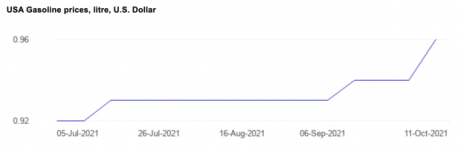
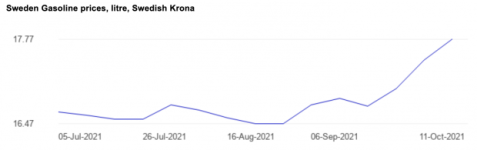
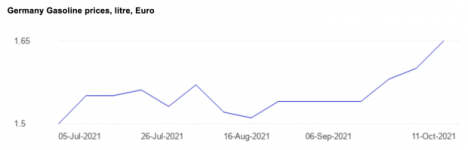
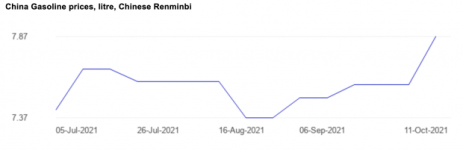
that being said, I'm somewhat more sympathetic to the idea that government aid could have goosed the price of meat and fuel because apparently the stimulus checks and generous unemployment benefits early in the pandemic led to an unprecedented reduction in American poverty and hunger. Food-insecure people spent the extra cash on meat (and not on GPUs.) It's just hard to tease out effects from increased demand and effects from supply disruptions
 
Last edited:
Back
Top