In case you're wondering if still lenses can cut it on Red...

Jarred Land said:
ha ha thank god you rate Angenieux as poorly as i do.. Ive had a few people lately swear by it and i thought i was going nuts.

The Angenieux 25-250 Cine Zoom is pretty popular, though...
 
Thanks Evin...some of those lenses were already on my short list of possible solutions, but getting a second opinion on them validates the line of thinking. I couldn't go too wrong with any of those...

Problem is...I want them all!!! I guess that's natural...

Gibby
RED #8
www.cut4.tv
www.4umat.com
 
While we are talking about wish lists and now that finally we are being promised a wonderful WYSIWYG viewing screen instead of horribly poky optical viewfinders, now everyone is going to jump on me again but people sometimes forget that they have the incredible opportunity to have what is the equivelent of dailies on set and instead insist on having what they are used to. One type of lens that I have always wanted to work with are those, sometimes called architectural lenses, where you can move the optics off center to the film (sensor) surface. You can use them to change the perspective of a shot but most of all, and this is what I would like to us them for, you can use them to "slant" the focal plane, in other words you can use them to selectivly throw objects at the same distance out of focus. What you do with large plate cameras by slanting the front or back. Dion Beebe in the Jane Campion movie "In the cut" used a similar lens to great effect in many of the shots. I believe he just winged it on set when operating by tweaking the lens during the shot. Pot luck I would think. Looks wonderfull however. Should be a lot easier on a Red camera.
So getting back to the question, I believe that several of these still camera lenses have been modified for cinema work by Clairmont or others. Which of these lenses were used in that film? How were they modified? Probably s35 being a smaller area than 35mm photo you could shift the lens more out of wack, did they do that? Which still camera lens would you suggest to start off with? Thanks!
 
You're referring to tilt focus lenses. This technique is borrowed from photographic view cameras, and is as old as photography itself.

There are a few different types for motion picture cameras, with different degrees of complexity from a few different makers, including Clairmont.

ARRI makes excellent Tilt Focus Lenses and also a more flexible but complex Shift & Tilt System which is more like a view camera setup.

Due to the way the ARRI website is designed, I can't give you a direct link.
Go to: http://www.arri.com/entry/products.htm
Then: click on Lenses & Accessories
Then: Scroll down and look for Tilt Focus Lenses and Shift & Tilt System.

There are a variety of manuals you can download. But if you want background on shift/tilt/swing techniques, consult wikipedia. You could start here: http://en.wikipedia.org/wiki/View_camera

There are some disadvantages to using shift and tilt techniques. The lenses tend to be slow as they cover a large image circle and shots take a while to set up, but it's amazing what one can achieve with this technique, but it's not for every shot. The web is full of tilt/shift/swing info and photos.

Oh, and surprise, surprise, the motion picture version is EXPENSIVE.

There are special tilt focus SLR lenses and versions of tilt/shift/swing systems for 35mm still photography that could be used.
 
Last edited:
Just an 85mm.
186251.jpg
 
Couldn't find a Nikkor currently listed on the Nikon site, but my search wasn't exhaustive. Dare I ask why you don't do a search? I try to provide info to get people pointed in the right direction, and then it's up to them to fill in the blanks. Google is your friend, my friend.
 
yeah but you're the cinematography experts.. :laugh:

evin, for instance, he's my hero! but you 2 following your special hints.
 
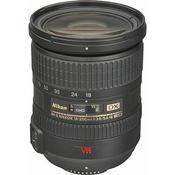
Hmm, all of Nikon's latest zooms are "G" no aperture ring, even though the DX format would be perfect for Red, like this 18-200 ED,AFS-VR.
408518.jpg


The known good two ring zooms with aperture rings are...
AF 17-35mm F2.8 (Best wide lens for the money, better than most primes)
NA07999038640.jpg

MF 25-50mm F4 (Older design, but very sharp and affordable)
NK07999034059.jpg

MF 35-70mm F3.5 (Sharp, compact)
NK07010201012.jpg

Longer zooms...
AF-D 80-200 2.8 two ring
NA07999045197.jpg

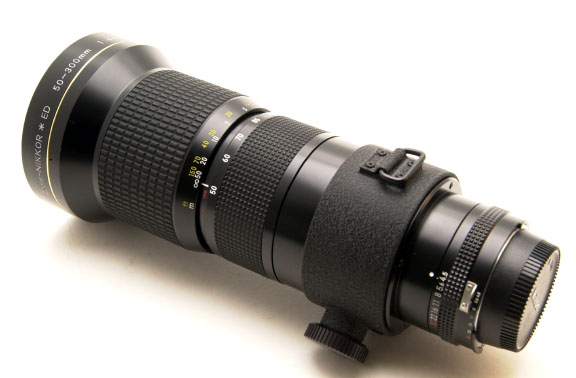
MF 50-300 F4.5 ED (Very sharp, but heavy and slow)
ais50300.jpg
 
its not impossible to put digital iris controls into the lens mount.. if not controlled by camera then can be controlled on the mount manually.
 
Back
Top