Keep video and film seperate please!

Graeme_Nattress said:
If that's the case, that they don't support 1080p60, then they're at best half formats that will not last.

Graeme

Greg you are right –unfortunately! I did a short search to be sure and it seems that both formats (Blu Ray and HD DVD) support only the current HDTV resolutions and frame rates:

- 1920 x 1080 HD (50i, 60i and 24p)
- 1280 x 720 HD (50p, 60p and 24p)
- 720 x 576/480 SD (50i or 60i)

http://www.blu-raydisc.com/Section-13470/Section-13627/Index.html
http://www.dvdforum.org/hddvd-whatis.htm

You can always convert easily from 60p to 60i but that’s not the same thing…

Also, AFAIK there is no format (including WMV) supporting 60fps at 1080p except one or two mpeg-1 encoders and maybe a couple of older (and not efficient) codecs I think.
But its easy for some company to extend it's proprietary format and add 1080p at 60fps.
That will be playable from a powerfull pc (e.g HTPC) but not from a table player.
If there IS demand though, that might make companies to support such an extention like they did with the WMV and DivX! :)
 
Last edited:
QUOTE; I hope we'll be able to broadcast 1080p/60 sooner rather than later. And I don't think it's even in the Blu-ray spec at this point. Some of the new HDTVs are 1080p/60 capable, but not the hd-dvd or blu-ray players. A big oversight, IMO.

Oh Greg i fear you may be right on this one. Why are we so slow on moving broadcast TV to match existing technological advances. Here in Britain we waited about 7 years to see widescreen TVs to more or less take over the old 4x3 format. We still have the majority of broadcast programmes at the 4x3 format or are a hybrid format between 4x3 and 16x9. It is going to take us ten years to change from analogue to digital. We have a two year war (so far) between Blue Ray and the alternative. You rightly state they have messed up big time in not providing 1080p capable. As far as i gather Hitachi have now produced a 1080p here in Britain and others will surely follow. When you see things like this you just wonder are we all getting ahead of ourselves big time or not?

Michael
 
Greg Lowry said:
I may be wrong, but it's the European HDTV standard set at 720p/50?

Yes, as in my previous post there is 720p 50 and 720p 60.
But NO 1080p 60 (or 50) anywhere.

In Europe 50fps will be probably selected in most cases but I don't see it as a general restriction. The displays would display both and probably the players too. HDTV is more universal than NTSC and PAL.
 
Proteus said:
Greg you are right –unfortunately! I did a short search to be sure and it seems that both formats (Blu Ray and HD DVD) support only the current HDTV resolutions and frame rates:


Unfortunately, broadcasters and cable operators seem to be resisting 1080p/60 due to bandwidth considerations. But it is more surprising that hd-dvd and blu-ray aren't including 1080p/60 in their spec. I suspect this will change and maybe it's a good thing that the players are delayed and not many are being sold. I personally think that blu-ray makes the most sense for the future as we're going to need all of the disk storage space possible for 1080p/60, 3D, etc.
 
Proteus said:
Yes, as in my previous post there is 720p 50 and 720p 60.
But NO 1080p 60 (or 50) anywhere.

In Europe 50fps will be probably selected in most cases but I don't see it as a general restriction. The displays would display both and probably the players too. HDTV is more universal than NTSC and PAL.

Sorry, I missed your 720p/50 reference.

For producers it's going to be important to choose the most versatile mastering format considering the different US and European HDTV standards. 24p is probably the best solution, although definitely a big compromise.
 
dasonras said:
I'm glad that my initial post caused somewhat of a stir; I am always open to learning about other peoples opinions on matters.

I´m glad you´re actually interested in this argument, instead of just trolling! That makes things more fun! Sorry for the missspelling, I´m typing from a keabord in very bad shape, and it´s driving me nuts!

My fear is that the "look" that we all are trying to obtain will one day become very generic looking. You see, in the 70's and 80's, films that were studio shot had cinematic quality to them that home or amateur filmmakers could not obtain. This is what separated the high and the low. It is also what made certain films have quality to them that an audience can recognize and appreciate. Today...it seems that with digital innovation, "everyone" is able to make a great looking movie; and in turn, movies are becoming less and less unique looking.

There is more to good cinematography than obtaining a certain look. And acessibility is NOT going to turn everybody into great cinematographers! This has been argued to death by people much better prepared than you and me, this was the root of all the film vs. digital debate that consumed the international film academy for more than a decade. They concluded that acessibility to the tools won´t make people better artists! THINKING and FEELING will make people better artists.

Is film and video simply defined as a "recording medium"? There is a specific reason one would use film over video for given projects. I don't see the nightly news be recorded on 16mm film!

But they were, for many and many years.

Okay, now, I'm not sure how seriously you take this industry, but for me, this is my job. Meaning, I make money by shooting filmstock. Now, if we continue in the direction that we are headed, salaries for cinematographers are going to drop dramatically. Too many people are becoming cinematographers. The skill and art is being compromised. As more and more digital technology becomes available, there will be a surplus of cinematographers (all working for a fraction of what they were once paid). This industry is about competition. And it seems to be getting more and more generic.

Are you trying to say you are a purist because you´re afraid to loose your job to some kid that knows nothing about cinematography but has 17.500 dollars to spend on this new camera? If so, I fear for your future. I take the industry very seriously, but I might be radically less experienced than you. I actually want to be the kid that will take all the jobs of the cinematographers that refuse to recicle their knowledge and move forward with the times. If you are one of them, new camera or no new camera, you´re doomed to become jurassic anyway.

Keep the discussion going, because I am very interested. Please do not use direct attacks or offensiveness. We are just discussing point of views. It is interesting, i posted something like this on a FILM ONLY forum and more people seemed to share more traditional views. And oh... purists are not necessarily "not bright." I am a purist because I enjoy the art and challenge of filming. I feel that with digital filmmaking, the challenge is somewhat diminished.

Don´t take it personally, I´m being blunt, more like a devils advocate, but in any way I seriously wish to imply negative things about you or your ability as a Cinematographer. I just get pissed off with cinematographers that hide behind some sort of Mystical world of uncanny powers and walk around the set like a genious, when, in fact they´re only there because they have 15 years of experience in mediocricy. I know a lot of those...And if RED is what it takes to rise and take those people´s jobs, great!
 
dasonras said:
Today...it seems that with digital innovation, "everyone" is able to make a great looking movie; and in turn, movies are becoming less and less unique looking.

I wish it was true! Because if this was possible, if “everyone” was able to make a *technically* great-looking movie with the same quality as Hollywood, that would cause an artistic revolution!
Why? Because the big producers would have to turn to art to compete! (Instead of BS).
Imagine spending millions to improve the artistic side of the films! That would be a celebration of art! But of course it's only a dream…

dasonras said:
Secondly, I feel that working with cine cameras is far more difficult than working with digital cameras. There is a lot more work involved in being a cinematographer who works with cine cameras. I consider cinematography an art; everything from selecting lenses and filmstock, to lighting the set. Digital filmmaking in a way is taking away from the artistic aspect of traditional cinematography.

First of all, the art factor is always the same –not depending on the medium. Art cannot be substituted. In digital it will simply be different. As for tradition, I’m futurist. If you like film and admire its creators, do what they did: Look forward.

Second, I have my objections about where the art in a film is being focused.
The art currently is being seriously limited to the “make” of the movie and NOT to the essence of the movie.
The majority of the movies have nothing to say and there are many reasons to be avoided… so the majority of people watch scrap movies and gain nothing. And they get used to gain nothing and respect nothing. And then they go out and kill each other –even the kids do this. “But there was art in these movies, in the lens selection, the lighting, the film process…and a lot of tradition!”

Number 1 priority should be the essence of the movie which is the script, because with today’s spread and marketing, believe it or not, a movie has the tremendous power to affect millions!

And the script is the last thing they care… In fact they intentionally repeat the same BS and the same recipes each time, that they think will sell.
Also there should be a lot more art in photography and direction. The reason to see a movie should not be just to kill your time; it should be worth each second…

dasonras said:
^^^Okay, now, I'm not sure how seriously you take this industry, but for me, this is my job. Meaning, I make money by shooting filmstock. Now, if we continue in the direction that we are headed, salaries for cinematographers are going to drop dramatically. Too many people are becoming cinematographers. The skill and art is being compromised. As more and more digital technology becomes available, there will be a surplus of cinematographers (all working for a fraction of what they were once paid). This industry is about competition. And it seems to be getting more and more generic.

Each revolution has its own temporary consequences until everyone is adapted. We all should adapt continuously today no matter in what area, because everything is changing rapidly.
And I wouldn’t support a selfish argument. We all should care for the general good NOT just for ourselves, because exactly *this* selfish tactic is driving us ALL to hell right now –the whole planet…remember?


To end this long reply, if digital is going to benefit the vast majority, then this is the right medium. Simple as that.
 
Last edited:
Well, having been a producer and director and having shot 35mm at about $1 a foot (30 cents stock, 30 cents processing, 30 cents work print - back in 1996 at 24 frames a second. I was paying $100 a take for a 2 minute shot every time an actor blew a line!) I look forward to RED in a big way, my wallet.

Just since most of us will never afford $150,000 Ferraries, many of us love our $30-60,000 sports cars that can beat the arrogant Ferrari owners much like the Ford GT40 did in Le Mann in 1967. This film vs video argument reminds me of the editors who loved touching film... having touched film, cut film, looked for and hunged film... the last of a generation, I can say cutting film was like picking cotton, and a computer or machine that makes the work easy, creative, fun, and AFFORDABLE, is welcomed... and re-invigorates editing (Natural Born Killers, etc)...

Much like Apple did for desktop publishing, Avid for film editing, and the Internet did for publishing and broadcasting, technology breakthroughs have humbled the lucky and few hard working film editors, also the rich or privilege media moguls and corporations and has given us the individuals the chance and audience to deliver products to the people (Thank God for Amazon.com and E-bay that support us entrepreneurs and indi-filmmakers and writers / bloggers).

If we all had to go through Barns and Noble, Wallmart, 35mm film, the film distributors, we wouldn't have this great and free creative multi-media.

Lastly, having seen blu-ray at Circuit City with a Hollywood movie playing on a horrible LCD Screen - I could see film grain and bad contrast compared to the plasmas playing normal DVDs. Ironically, it's the Discovery's Nature Channel shooting 1080i with shots of the Grand Canyon - beautiful and sharp - that make HD really stand out. Film has always been a lyrical, surreal, abstract format with a minimum frames 24 (the cheapest possible- not the best) - 30 would be sharper and more lifelike. Also the colors and art direction (color selection) make film more like a dream. Where video at higher frames, and now equal or higher resolution - can capture 'reality' better. I'd rather see the Grand Canyon in Red's 4k or 2K than in film with grain and color curves. (However, if it were a story of the Grand Canyon or in a narrative movie, I might like to see it done in lyrical film style.)

It's funny now, that most people on Amazon.com would rather watch DVDs with no noise or film grain! So now digital cinematography which minimizes noise and grain, is the new way like color over b/w. Embrace the future, like still photography has done already.
 
dasonras said:
I am somewhat of a purist. I believe video is video and film is film, and there shouldn't be any sense in trying to make video emulate film.

They are two entirely seperate and different mediums that satisfy different project needs.

If you want your project to look like 35mm film, then go out and buy an Arri.

You can keep using film for "film" while the rest of the industry moves toward "digital 24".

I was a musician when recording to hard drive just started and remember the talk that "hard drives would never replace 1 inch tape. Have you heard digital recording? It sounds soooo different and worse than analog".

The owner of that studio can't give away his analog machines and the entire studio works with ProTools.

Robert Rodriquez to told be that "film was dead". I have to disagree - it's dying a slow, angonizing death.
 
If Arri is Ferrari and RED is Porsche, I need a camera company that is Subaru Sti. That is my price range. Porsche is cheaper than Ferrari, but still out of my reach.
 
I think ARRI would prefer to be compared to the Porsche (911). A design that has gone through so many iterations that it's now rock solid in every way. Just as importantly, they're both German. haha.
 
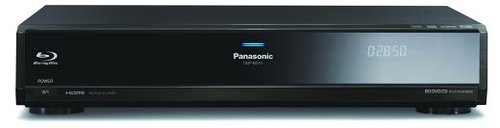
The blu-ray dvd spec document does not include 1080p/60. I carefully read it. Repeatedly. Maybe it's a mistake, but there is no mention of 1080p/60 in the formal document.

I too have read about PS-3 having 1080p/60 support. Confusing. But that's Sony these days.

Upconverted 1080i to 1080p isn't even close to native 1080p/60.
 
Last edited:
Says 1080p, but not 1080p/60. Keep looking, I would love to know that what I read is wrong.

The blu-ray users group says they're not aware of 1080p/60 being included in the blu-ray player spec. Bad, bad, bad.
 
Last edited:
"My fear is that the "look" that we all are trying to obtain will one day become very generic looking. You see, in the 70's and 80's, films that were studio shot had cinematic quality to them that home or amateur filmmakers could not obtain. This is what separated the high and the low. It is also what made certain films have quality to them that an audience can recognize and appreciate. Today...it seems that with digital innovation, "everyone" is able to make a great looking movie; and in turn, movies are becoming less and less unique looking."
_____________________________________________________________________________________________________

You mention "high" and "low" and that immediately brings me back to my art school days... no offense but you sound like one of my old painting professors that used to rag on illustrator and graphic design. He pretty ragged on any art that used a computer in the creative process. Same thing happened in photography.... this debate just seems to go round and round

Look, film is great.... HD is great..... they both have their differences, weak points, strong points. To simply write all digital mediums off as "video" shows a lack of knowledge or better yet an insecurity and anxiety about the future. Others have said it on this thread, think FORWARD, PROGRESSIVE.... look at digital for what it is. Another option for the filmmaker to achieve his story.... if you do not adapt you will become obsolete.

that is all.
 
dasonras said:
movies are becoming less and less unique looking.

I'm glad you figured this out on your own. Filmmaking is supposed to be pricey.

Meaning, I make money by shooting filmstock. Now, if we continue in the direction that we are headed, salaries for cinematographers are going to drop dramatically. Too many people are becoming cinematographers. The skill and art is being compromised. As more and more digital technology becomes available, there will be a surplus of cinematographers (all working for a fraction of what they were once paid). This industry is about competition.

I mean no disrespect.

But gut reaction from a quick overview of this thread is that you, dasonras, or someone with this viewpoint, are crying because you now have to share your sandbox with everyone else,... even though you think you make the nicer sandcastles. I would be concerned for their future if you think a bunch of kids are going to pick up digital cameras and put them out of a job. If that happens, maybe they didn't deserve to be there in the first place.

And I don't think film is "supposed" to be expensive. I think it just is...
 
I shoot film stills and digital stills, 16mm & 35mm film, and SD and HD video. Media convergence doesn't have to equal media collision. As a director and DP, I approach my projects thinking what medium and equipment would best express what I’m trying to say – and still stay within the project budget.

It’s counter-productive to divide into little fiefdoms and shout our case over the walls at the other encampment defenders. The stark reality is that the age of ones and zeros, a digital world, arrived in many industries some time ago. Film in stills and 35mm film in motion media will probably never disappear completely, for various reasons, but if recent developments in the still photography industry are any indication of trends for the closely related motion media industry, here are the facts:

- This year Canon and Nikon both announced that they are ceasing development and production of any new SLR film cameras.
- Konica Minolta quit the photography business altogether
- Kodak posted a $298 million dollar loss for Quarter 1 of 2006, their sixth straight quarterly loss. Experts assess that as Kodak being slow in adopting to the increased demand for digital, and a commensurately decreasing demand for film
- More than ¾ of all still photography cameras sold today are digital, and that total is estimated to be over 90% by 2010.

The motion media industry uses the same basic technologies as the still photography industry: film and digital. The chipset and use of my Canon 20D DSLR and RED are very similar: single CMOS, Flash, etc. The basic technology of my first 35mm photo camera, a Nikon F (1969), roughly parallels the mechanical technology of later 16mm and 35mm film cameras.

No amount of sentimentalism will stem the onslaught of digital technology in the convergent motion media industry. My approach is to take the very best of my accumulated digital and film knowledge and apply it to each project – cinematic techniques applied to digital technology. For sentimental or aesthetic reasons I still take out my old Nikon F and shoot some film once in a while. That same afternoon I may take my Canon 20D out and shoot some digital stills. I don’t feel the need for it to be an “either/or” situation, although I obviously know that the digital workflow of the digital SLR represents the main part of the present and future. The same with 16mm and 35mm film. I use them when the aesthetics of the story I’m trying to tell absolutely define that film is the way to go – and the project budget will allow for it. I approach SD and HD video the same way. When a project budget, or “look and feel” call for digital video, I use it.

The people in the motion media industry with the broadest skill sets are those in the most demand, and that trend is increasing. They are the ones who have the opportunity to be included in the broadest range of projects. If you have the latest convergence tool, but you don’t have convergent skills, you are like the proverbial one-legged man in an ass-kicking contest! Why even have the tool if you’re not going to maximize it’s professional and economic potential? If you’re a traditional “film guy” why not swallow your pride and learn digital technology and application? If you’re a traditional “video guy” why not swallow your pride and learn cinematic techniques and equipment? If you do, you’ll be stoked professionally and you’ll smile all the way to the bank!

Here’s to the end of motion media fiefdoms, and the beginning of true collaboration…(raises glass). We’re all part of the same tribe now, and we can learn from each other, rather than let pride or jealousies prevent us from pushing forward the boundaries of creativity.

Gibby
RED #8
www.cut4.tv
www.4umat.com
 
Back
Top