Will this type of filmmaking bore modern audiences?

nycineaste:

Perhaps if you can share links to your own films where you applied the techniques you are suggesting, it would provide a more appropriate illustration of how to do all this on little to no budget.
 
I haven't done a short where the story and lighting really gelled (lots to learn, huh?), so I
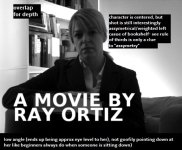
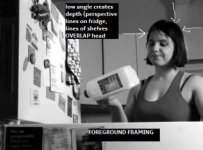
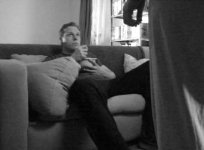
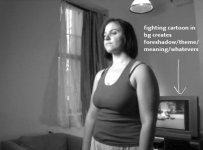
don't post my movies. I did post a frame here tho--- I ain't genius or nuthin', but its a
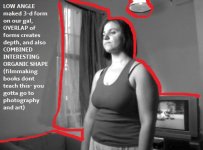
girl, a guy, a couch, and a PICTURE. Here it is-- Ill find some more. This is my big
point about all this:

As a nolo budgeter. your work will likely have big FLAWS (perhaps sparse art direction, fast
and dirty lighting, etc.)


BUUTTT.....


One flaw you do NOT have to have (once you learn to do it) is


======COMPOSITION/ARRANGEMENT OF THE FORMS=======cause that can
be done by anyone with no money, and it can be done in ANY location (this is called photography- taking life, and making art/a picture by pointing the camera in the right place/from the right direction, framing stuff out, etc)


and... arrangement of the forms is MOST of picture-making

also, heres a problem with posting my stuff as examples:


what if the beginner, not being VISUALLY LITERATE (able to spot a good picture) as I call
it, looks at my modest, meager, still largely amateur work and doesn't see anything
special/worth copying? Then I've lost him, he doesn't learn, and I wasted my proverbial internet breath.

I used to look at a frame from "passion of joan of arc" and see nothing special. Now that I know better, my eyes bug out (not that my work will make eyes bug, but these are decent shots below)

Thats why I am using examples from professional work, work that's BETTER THAN MINE to explain this stuff... but if you
insist:


(These arent graded btw- the highlights look more blown than they are)
 

Attachments

  • tammy1.jpg
    tammy1.jpg
    73.1 KB · Views: 0
  • tammy 2.jpg
    tammy 2.jpg
    17.7 KB · Views: 0
  • tammy 3.jpg
    tammy 3.jpg
    34.6 KB · Views: 0
  • tammy 4.jpg
    tammy 4.jpg
    35 KB · Views: 0
  • tammy5.jpg
    tammy5.jpg
    48 KB · Views: 0
Last edited:
Thanks for posting those.

Composition is obviously a completely subjective discussion. No two people make exactly the same framing choices, even given a camera pre-posiitoned at the same place in space. As you noted, opting to shake up the height can create a certain amount of interest compositionally--but it can also "give up" information that happens to exist lower in the frame, so there may well be a choice to be made that involves weighing one type of visual interest against the other.

One thing that is quite typical of novice filmmakers is that they may find a good spot to place the camera and frame the subject pleasingly, but not look at the background hard enough. As you alluded to, architecture plays a big part in this, finding converging lines and depth add visual interest. What is easily forgotten is that furniture is part of the frame, and can generally be moved to improve the shot. In my camera operator days, I developed quite a close relationship with the on-set dresser as we moved everything from desks to chairs down to small objects dressed into the frame this way and that to help balance the frame and avoid distracting elements. We regular raise objects via apple boxes to appear higher in the frame, or add pictures or flyers to break up bare walls, or place objects right by camera to provide foreground interest. This sort of meticulous attention to detail is a large part of why certain projects look higher-end than others; the shots feel fuller, richer, more complete. Of course, that's one style of filmmaking and there's also a place for a more chaotic, "found" look that suggests disorder and spontaneity, if that is the intended goal.

But anyway, the moral of the story is: even on a limited budget, the objects in the frame that are moveable and changeable are all fair game, so you might as well make them your chess pieces.
 
Well so far I have only helped friends and collaborators make their movies. I haven't any examples of my own, and this would be a first, which I would be actually fully directing, instead of co-directing someone elses. Their projects however, are the opposite style, and they shoot everything close up, with a shallow DOF.

As far as moving objects go, sometimes it works, but their are some sets, where a higher up owner of the locations will come and say, we are not allowed to move anything. But if we can, we can.
 
Obviously some things can't be moved. That's not the point. The point is: work within your limitations and make the best choices you can. The things is that many of those choices often go overlooked by beginning (and even more experienced) filmmakers because it doesn't even occur to them that the choices exist.
 
When larger objects in the room can't be moved, just moving the camera to get an interesting composition can cover a lot of ground. Which may sound sort of 'duh', but is often botched in lo/no budget filmmaking. In almost any situation small objects (lamps, bric-a-brac, artwork, etc.) can be moved/placed/added to create compositional interest, and lighting can be added/blocked to highlight or diminish parts of the set. In any case, it takes a good 'eye' to do that sort of thing artfully. In addition to useful things like 'the rule of thirds', it does help, greatly, to have talent...
 
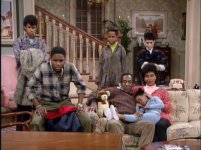
In regards to moving furniture, I did get a little lucky on this shoot- the couch was already in the center of the room (something movies and tv do as a matter of course), with the dvds behind (we hit the dvds with a background light). As for the bookshelves, we moved a chair in front of them to get that shot, then I threw a background light on the books coming up from behind the chair. Most houses in real life have chairs and couches up against the wall, and in movies, not. I pointed this out to my grandmother, and now she cant watch her spanish soap operas without noticing that the couch is always in the middle of the room.

If you cant do this tho, I wouldn't fret too much-- shooting "angle plus angle" and using the rule of thirds (the basics) should become a matter of habit, and you can often get something in your foreground to shoot over/through if you keep your eye out for the opportunities (often without moving anything- you gotta HUNT for your shots). Also, framing out distracting bits of shape and saturated color-- "fiddly bits" as I call them, is super vital (When you don't think about what's in the frame, and there's a glaring yellow box of cheerios in the back of your dramatic scene calling out "hey lookit me- you like cheerios, right?", that's not a picture, that's home video). You can compose a good picture anywhere and with anything, basically (making GREAT pictures is another story and takes mastery of all this, plus lighting, color, etc)...

And of course, having a literally million dollar location to photograph would be nice, but this is not about being Hollywood, this is about learning CRAFT and using it to make the best movie you can with what you got...
 

Attachments

  • the-cosby-show-season-two-20060405051046145-000.jpg
    the-cosby-show-season-two-20060405051046145-000.jpg
    197.8 KB · Views: 0
Last edited:
Back
Top