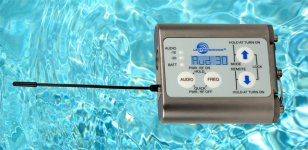
What's so great about Lectrosonics?

Victor Nhat Nguyen

Well-known member
I keep hearing sound guys ooh and aah over lectrosonic. But I have no idea what's the difference between lectro and senheisser G series. Can anyone explain?
 
Lectro are an American company that make excellent radiomics.

But Sennheiser, Audio Ltd. and Audio Wireless are also excellent.

Probably the very best is the Sennheiser 9000 series - but that is costly.
 
Lectros actually work during shooting, while the G3s usually work before and after a shot. ;-)No really, the Lectrosonics transmitters are at 100mw, and the Sennheiser are at 50mw.Nut as far as I know, there is not a lot of difference in range between the two.I have a set of G3s and I'm more than happy with it - the lav that comes with them is crap though.
 
The reasons probably fall into a couple of broad categories.

Lectro only makes radio mics (as far as I know), and they are built for rough field conditions.

So Sen. are fine but probably are not quite as hammer resistant, and they have much less experience with film work issues. The Sennheisers are more aimed at live stage work where the conditions are a bit more controlled.

If your in the field working the brick that always comes through is going to trump a unit that is not as reliable and not as durable.

That said I haven't heard that the Sennheisers are particularly fragile and they certainly get a lot of use in low budget and ENG shoots.

Also there may be a little of the warm and fuzzy feeling of owning an industry standard. Kind of like having a Nagra. Not nec. better but isn't cool to own one.
 
The better, tougher build is definitely one of the strong points, but they do have less noise than for instance the Sen G3, and good compressors to prevent overload. For lavs this may not be very noticeable, but for wireless boom or monitoring purposes it can be more important. They also have transmitters of a smaller size, which can make all the difference for certain clothes and body builds.

Whether or not these differences are worth the price is up for each to decide.
 
Lectro is an American made brand that is made by wireless fanatics. I know the company well. If you are comparing even the cheaper lectro wireless to a Sennheiser G3, the difference is night and day. Lectro has fantastic customer service, hands down. They are very popular here in the states because they have a higher milliwatt output than brands from overseas. This is because in Europe and much of Asia higher milliwatt output transmitters are illegal. The higher end Sennheiser stuff is nice, but VERY expensive, and not as user friendly. Audio Limited is also a nice analog wireless system, and have a great industrial design, but the UI is a bit lacking, in my opinion. The other American made wireless manufacturer is Zaxcom, and their stuff is all digital, and honestly, it's in a world all it's own. The transmitters can record with timecode and can be remote controlled, and the new transmitters have Neverclip, which is HUGE. The only downside is they are very very expensive, but I know guys that have full zaxcom setups (with a nomad) in their bags, and they'd never go back to any other way of working. The whole Zaxnet thing is pretty impressive.

So, to sum it up, when it comes to higher end wireless, the two most popular brands are Lectro and Zaxcom, and it really comes down to what your needs are and personal preference as to which one you will choose. For low end wireless the sennheiser G3 series pretty much dominated purely on its price point.
 
Lectros actually work during shooting, while the G3s usually work before and after a shot.

Is this a well known thing with the G3? Was doing an interview with Robin Thicke and 2 secs before I hit record the G3 I had on him stopped working. Hustled to switch of Mics (last interview of long day for talent) and got the Intv done. Once set was cleared I tried the mic again and it worked as if nothing happened. Spooked the hell out of me.
 
The milliwatts thing was mentioned here but it cannot be emphasized enough. As i understand it, higher milliwatts = less prone to interference which is a big problem with wireless mics on location. In a situation where the g2 or g3 will have issues with interference the lectros are a lot less likely to. In addition, having never bought lectros myself, i dont know if they even come with a lav upon purchase, but if they do, itll be a lot nicer than the stock lav that comes with a g2 or g3 system.
 
The higher the milliwatt output, the greater your range.

I know Lectros used to come with a lav back in the day when I sold them, but it has been since 2006, so I don't know about that these days. Most people replaced the stock Lectro lav with something better and kept the lectro lav as a backup.
 
My mistake. But am i wrong about the interference thing? I thought i heard the higher wattage allowed to fight and "win" over competing signals of lesser power on the same frequency
 
My mistake. But am i wrong about the interference thing? I thought i heard the higher wattage allowed to fight and "win" over competing signals of lesser power on the same frequency

Yes, that is true. But if you are depending on sheer overpowering on-channel or adjacent-channel interference then you are really living on the edge. Better to find a channel as far away from interference as possible.

It is axiomatic that the stronger the transmitter, the farther away you can hear it before interference sets in. Exactly the same thing happens with wireless mics as with your favorite AM or FM radio station. You can hear a 50KW transmitter across the country. You probably can't hear a 5W transmitter on the other side of your town.
 
Last edited:
Don't forget that the G3 are the cheapest of all the Sennheiser systems and the Lectro are in a different price bracket.

Sennheiaer also do the more expensive 3000 series that are more in the same price bracket at the Lectro - they also do the top end 5000 and the new 9000 series.

So, for a fair comparison, you should compare like with like.

The power question is down to the G3 being made down to a price to an international specification - the US allow a higher power and, as a US company, Lectro would make equipment specifically for their home market. Internationally, 50mW e.r.p. is the maximum limit for a body-worn transmitter.

However, Sennheiser do make the 250mW SK250 as well as the 50mW SK50 in their more professional series.

Having said all this, a lower power output is normally better for multi-channel situations as higher power tends to cause more interference.

Though in the UK I think that Audio Ltd. are still the No.1 for professional sound recordists
 
I've used both Lectro and Senn systems. The downer on the Lectros are they consume a lot of power. With the Senn G3 systen I've experienced excellent range and low power consumption which is much more convenient. Built of the Lectros is excellent but so far I've yet to experienced a broken Senn G3 system.
 
You get what you pay for.
While the 100 series G3 is can sound almost as good as a Lectro, (input sources being equal and set-up properly) they ain't as bullet proof, physically or RF wise. No wireless can give 100% trouble-free reception.. a $20 cable is still more reliable.
 
I thought I might jump in here and address a few issues, including some misunderstandings. Since I work for Lectrosonics, perhaps what I say has to be taken with a grain of salt...

The OP asked us to explain the difference between Lectrosonics and Sennheiser G series, specifically. Also, perhaps what makes "sound guys go ahh over Lectrosonics."

John Willett mentioned that Sennheiser, Audio LTD and Audio Wireless are also excellent. He also pointed out that "Probably the very best is Sennheiser 9000 Series"

Yes, absolutely Audio LTD in particular is excellent for film-making and has been used for that purpose, primarily in the UK, for many years now. These are analog systems. Sennheiser's high end products are also somewhat used for film-making, at least in Europe. In the US, the G series is popular with videographers, but at the higher end, there is little to no Sennheiser being used for major motion picture production.

Sennheiser's 9000 Series, however, was not designed for portable use at all (instead for installtions and possibly touring sound), in that the receivers are very large and extremely power-hungry. There are no camera-mount receivers in this line, thus it is not really relevant to this discussion. And, "best" is always a very application-dependent statement.

In recent years, Lectrosonics has made major in-roads in the UK and Europe particularly with the SR Series dual-channel slot/modular recievers, Venue rack-receiver and SM Series miniature transmitters. These units actually have an Audio LTD compatibility mode (along with other, similar compatibility modes to match other brands) so that owners of those products can use them with the Lectrosonics units if need be. This creates a great deal of flexibility.

The G Series from Sennheiser are excellent for their price point and frankly are unbeatable for low-cost units. They deliver very good results, are small, and don't cost much. They are also partly plastic, and provide about 30 mW of RF power, with a spec that allows for up to -3dB (half power, or 15 mW)

Lectrosonics units will cost more, but are all metal so they are extremely durable. In addition, they use Digital Hybrid Wireless technology, developed by Lectrosonics. In terms of sound quality, they are measurably better with lower noise, less distortion, and less dynamics artifacts. All Sennheiser G Series units are analog and thus have compandor artifacts and certain types of distortion. In many situations, the two systems are comparable for sound quality, but in some situations, the differences are readily obvious. This is probably one reason "sound guys go ahh" when referring to Lectrosonics.

Lectrosonics does not make any lower lines of products, thus as John Willett pointed out, Sennheiser's middle and upper lines of products are more comparable for quality. However, the 3000 Series from Sennheiser is already appreciably more expensive than Lectrosonics, and the 5000 Series even more so. Forget about the 9000 Series ($10K per channel here in the US) while the most expensive Lectrosonics system per channel (SMQV + UCR411A) is about $3000 per channel in the US and perhaps 10 to 15% more than that in the EU. Meanwhile, All but Sennheiser's 9000 Series are analog units, with the inherent problems with compandors. They also do not use isolators (a component in Lectrosonics transmitters) and thus, particularly with their higher-power units that John mentions, are readily more susceptable to generating transmitter-to-transmitter intermod (a source of interference particularly in multi-channel systems).

I hope some of this information answer's the OP's questions, and clears up some of the potential confusion in this thread.
 
Some good stuff here. I liked this bit in particular.
The Sennheisers are more aimed at live stage work where the conditions are a bit more controlled.

If only!

There are lots of difference between film/TV and theatre, but the theatre/live sound people cope with interference and high channel counts every day. They suffer persistent mic damage, cable damage. They have people stand next to receive aerial with a transmitter in the jacket, wiping out the signals from further away transmitters.

From what I've seen of my TV work, with Audio Ltd and Sony kit, the real difference is the mechanical aspects. I've had quite a few Sennheisers broken by dancers hitting the floor, or a sharp edge with the receiver in the wrong position. Displays cracked, the up/down buttons pushed through - that kind of stuff. Ive had sockets ripped through the aluminium where the impact was violent. In general, they've coped well, and the broken bits can be fixed. Price for price, I'm sure a Lectrosonic would survive better. However, I can buy more Sennheisers for the money?

I note in the UK Ray Withers distributes Lectrosonic. His company have only ever dealt with serious RF equipment - that's what his company does. Truly professional equipment. When he can't buy it in, he builds it himself and has plenty of niche products. Sennheiser G3 is direct to consumer, do everything kit - and it does it very well. On paper, the audio spec E to E is better on lectrosonic, but I'm very content with the G3 performance. I'm running both conventional packs and receivers, plus a pile of IEM kit.

The difference in performance between the 50mW and 100mW versions is not going to impact very much. The noise analogue systems develop as signal strength drops below the ideal is usually caused by the signal being masked and absorbed by the body of the wearer, the bodies of people close by, and by being in null areas, where by virtue of the environment, the signal strength is not even. Upping the output level when the problem is location rarely has much affect. Distance in free space goes up when transmitter output power is increased, but 50mW up to 500mW is noticeable, 50 up to 100, much less so.

I suppose the questions should be based on if you need the extra audio performance, and can make use of it, added to the physical side of things - however, you could afford to have multiple Senheiser systems, which could be used as spares with double miking, making the choice more difficult.
 
Back
Top