Way too much crap

If there is time during the shoot day, I try to make a list of exactly what I am using so I can periodically evaluate what stays in my pelicans and bags for my essential kit. I think this is a perennial problem for freelance shooters.
 
I have fallen in love with one-point lighting, like in Ken Burns's documentaries. Regardless, you can accomplish much with little.

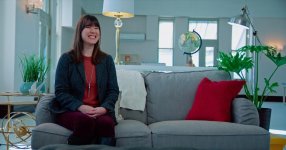
Cinematography Tips: Don't complicate lighting - Geoff Boyle
One Light Cinematography

"We're in a world now and in a business where people perceive complexity as good. People don't understand the elegance of simplicity. . . . And don't get Simple mixed up with Simplistic. . . . You know, you hit somebody in the face with a pie. . . . Simple is your choices. One light coming through a window might be quite beautiful. That's all you need. You don't need six other lights, because why are you doing all of this, by habit or by need?" --- Gordon Willis

It takes a certain amount of bravery to work that way, don't get me wrong.

Though less eloquently, I've promoted this doctrine multiple times on this forum, & others, but gained no traction.

Since everything breaks, & usually at the worst time, I've never been bold enough to bring just one light, but even when I have multi-ton trucks full of lamps I strive for the "one light" look, & despise the typical "three light" formula.
 
Last edited:
While I love C-stands in the studio, they are way too heavy to drag around when I'm flying solo.

For corporate work I try and work with available lighting using daylight balanced 1x1 LED panels and gels. ( I plan to replace these with some new roll-up flexible LED panels to get the size down )

I also bring two of these which are 13 foot stands that break into 6 foot booms in about 3 seconds. Great for audio and small lights. They weigh 6 lbs each, so not too heavy, but they are a little on the long side. ( for boom counter-balance I use collapsible water containers, that take a minute to fill )

...I also hate the standard 3-point light set-up, as it looks too artificial for me.
 
I have fallen in love with one-point lighting, like in Ken Burns's documentaries. Regardless, you can accomplish much with little.

Cinematography Tips: Don't complicate lighting - Geoff Boyle
One Light Cinematography

"We're in a world now and in a business where people perceive complexity as good. People don't understand the elegance of simplicity. . . . And don't get Simple mixed up with Simplistic. . . . You know, you hit somebody in the face with a pie. . . . Simple is your choices. One light coming through a window might be quite beautiful. That's all you need. You don't need six other lights, because why are you doing all of this, by habit or by need?" --- Gordon Willis

It takes a certain amount of bravery to work that way, don't get me wrong.

Great information from Mr. Boyle. Ironically whoever lit his interview did not do a very good job. In holding the subjects out the window, Mr. Boyle is several stops underexposed and murky looking. I have lit interviews with several world class, A list DPs, most of them Oscar winners and it's a bit intimidating but I was happy with how all of them looked.
 
Here's a typical corporate interview set-up shot in the client's tiny hotel room. Camera is right up against the bed, with subject in a small desk chair, background is semi sun-lit sheer curtains in a 6 foot window that I let blow-out, fill light is one 1x1 LED daylight panel and a 4x4 white reflector. Audio is a 6 foot Manfrotto combi boom stand with a hypercardioid mic about 1 foot above the subject's head. Shot many interviews that day with this set-up.

InterviewSetUp.jpg
 
Last edited:
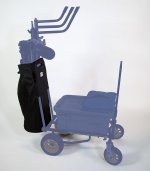
Thanks. I have the older version of those bags (they were originally made to order by an awning company here in Houston). They help but can cause their own issues with making a fully extended cart not fit in elevators or be maneuverable down tight hallways.

Keep in mind unless you are producing the content end to end, that is, yours are the standards the looks has to satisfy, some of this "one-light" etc. stuff may not cut it...still need to get good production values even with way less gear. I'm trying to find that reasonable medium.
 
some of this "one-light" etc. stuff may not cut it

I like one-light set-ups not because it's easier but because it looks better. One-light lighting actually looks upscale. Compare Ken Burns's interview shots with your typical three-point news interview. (Of course, it further helps that he shot on film)

With one light, the exact character, angle, and intensity of the light becomes more critical. Save those dimmers! Usually it has to be soft. You can let the ambient light (window, fixtures, etc.) be your other light sources (backlight, fill, etc.) if they look good. If not, turn them off or flag them off. Fourth, by one light I mean sources --- you may still need a reflector.

Tread slowly, take your time, test the waters. See what works.
 
Last edited:
Screen Shot 2017-02-09 at 4.53.29 PM.jpg
(ungraded pic above, graded pic below)
High-key, flat look. They wanted it to look clean, but feel a bit more human. I generally try to light with more contrast and mood, but I was happy to light this as well...and am proud of it :)

-FS700/7Q
-A7SII
-2x light tripods (no movement necessary)
-Skypanel S60 / softbox / grid (camera right)
-Aluminum combo stand (very light)
-1x pop-out diffusion (softening hard sun from window camera left)
-1x 500w tungsten open face (warm hair light camera left, motivated by sconces)
-1x light stand (cheap and super light)
-Wireless lav straight to FS700

The trickiest thing about it was the size of the aluminum stand, and the weight/size of the skypanel. But I was able to put both on a cart, single trip, set it up by myself. I guess it seems like a lot as I'm writing, but it was easy to load and break down.
 

Attachments

  • IMG_5140.jpg
    IMG_5140.jpg
    59.2 KB · Views: 0
Last edited:
We're getting off track here, but I will follow...

What is being called a "one light" setup a few posts above is kind of only so on a technicality...I think even if you are only using one INSTRUMENT, when you start flagging etc. you are still "lighting". Also the approach you describe depends very much on where you're allowed to shoot. What if there are no windows? What if it's an ugly, flat grey room? These are very real and likely possibilities on shoots.

In addition, youre talking about a large key source which takes us back to the thread's premise...how much crap can I comfortably haul alone? Skypanels etc. have large cases. An led (or other small light) punched through a collapsible 4x4 frame/diffusion is about the only space saving thing that could still fit the bill for large source that I can think of offhand.

I think the reason so many still do the textbook three point approach is cause it still looks nice. You can use huge lights and soft lights and gentle ratios to get more natural/less lit-looking, but it's still basically 3 point with key, fill, edge. Using a window as your fill or edge is still 3-point lighting, youre just using a window as one of the "points".
 
When something is critical you want spares. Even something that checked out fine the night before can fail when you get to your location. If nothing else a good toolkit and spare parts like fuses, cables, connectors, and especially spare lamps.
 
Yep people go on about the price of cameras fully forgetting they should have two :)

Im OK with no FS7 spare but always have my EX1 in my van and usually a Gh4 (+yagh) on location

S
 
I think the reason so many still do the textbook three point approach is cause it still looks nice.

Some of the best 3-point lighting I've seen is the "60 Minutes" interview, that looks lit, but unconciously I always recognise it as the "60 Minutes" look. ( their 3 camera shooting style also helps to reinforce this look )

...But most of the time I don't want that look. I want something that has a "natural" look to it, as if you just walked into the room and this flattering light was already there. Given that I am often working as a one-man-army, I need to bring enough gear with me to pull this off and still be portable, so I can change locations for different shots, and do it by myself. This means I am going to have to work with the "found" lighting that is already there at the location. So windows, tungsten lights, and sometimes semi-horrible fluorescent lights might have to fill in for the gear that I can't carry when I am working as a one-person crew.

Most of the time the "found" lighting is going to be my fill light or background ambient light while I set up my own key light, but sometimes it's the opposite like in the frame-grab I posted previously, where window light becomes my key.
 
Sure, I get that. If thats your thing thats your thing. I still like a "pretty" shot even if its less natural...that means usually the background gets lighting treatment as well (accents, glows, things like that). You can make it less blatant with ratios by not having the background super dark except where the movie lights are hitting it, make the accents subtler in other words, and this seems to be trend since the large sensor cams became in vogue for everything. Seems like in those cases you'd almost want to white balance to the background since that's the thing you cant change the color of or at least not easily,and force your lights to match (or not, if you like the background colors "unbalanced" in a certain instance.
 
Some of the best 3-point lighting I've seen is the "60 Minutes" interview, that looks lit, but unconciously I always recognise it as the "60 Minutes" look. ( their 3 camera shooting style also helps to reinforce this look )

...

That's funny, because I actually think 60 Minutes has one of the worst looks on TV, for a high-end magazine news show. It ties in with what I was talking about on another thread: their frame rate, camera set-up("look") and lighting do not go together. The lighting is generally extremely flat and cool(on the subjects), they appear to be shooting either 24 or 30 frames and the cameras look like they have a "video" set-up instead of a set-up that lends itself to 24/"film".
 
could be deliberate? dont watch 60 mins at all but look could be intentionally designed to seem more "real" and present, less artful and removed from reality the way a film look might be. Could be designed to have more impact that way on the viewer. Cant imagine a long-running high end show like that would have people doing things like that cause they simply dont know any better.
 
Back
Top