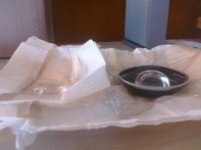
Uncoated Cooke Panchro/i lenses now available.

From Jon Fauer's FDT magazine,

Cooke is now offering front elements for the Cooke Panchro/i series that do not have the lens coating. For those who want softer contrast, more flaring, and an 'older' lens look and feel.

I'm really interested in testing a set! I wonder just how lovely these look if that is the aesthetic desired. I think they flare beautifully with the coatings... wonder what is in store for us now. :)

Exciting.
 
right, but i'd want to test a 'set' with them installed is what I meant. I might order a set this week. Waiting to see if the circumstaances are right
 
Just bought a set! Should be in next week. Will be doing a side by side comparison on a Red Epic or RedMX with my set "uncoated" versus another Panchro/i set that has the normal coatings on.

Any recommendations for testing?

I think I am going to do one test outdoors hopefully in a scenic location with an actress/model, and maybe another test indoors where I can test more point-source flares, flashlights, and etc.

Anyone here have good ideas?

I was thinking the exterior of the actress/model can show skin tones, sun flares, and etc. The interior can show more contrasty scenes with dedo light flares, flashlight flares, candle light or something similar.
 
How much are they?

< $2,000

Do a bid soft source in shot test, like a blown window. Wanna see the flare.

Yes. That is a good idea. I thought about that earlier, and I think it is of utmost importance. The older Cooke and Angeniuex zooms tend to have contrast reduction and slight flares at overblown windows and etc. That will surely make the final list of test situations.


Now I need you to buy that Van Diemen Anamorphic Cooke 50mm lens, so I can rent it from you. If I wasn't buying those front elements, or the Cooke 135mm Panchro/i... you could bet my life I'd be bidding on that lens. It gives me goose-bumps.
 
306310_796334637237_39602619_38351152_752825849_n.jpg

Came in today, but the lens test won't be for another two weeks, when the lenses come back from a feature in Chicago. I'll have time to test these right.

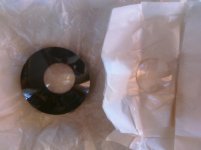
For the record, I had no idea that a front lens element could be so thick. I thought they were all just thin slivers of glass... but the 18mm front element is roughly an inch thick! I opened it for about 10 seconds before wrapping it back up again. I'm not skiddish when it comes to handling equipment, but a raw uncoated piece of glass was making me worried. Didn't want to touch it or get dust on it. :P

Now to shoot an email to Matthew Duclos and see if he will swap the front elements out for me. ;)
 
Send it to Guy.....


noone else.

Also i may be renting these from you. Do they have secure protective cases of somekind?
 
Guy is great. He's serviced my lenses before, I believe, when I sent them to ZGC for regular maintenance. But I really hate shipping lenses. TSA or shipping agencies are very rough on stuff. I'd rather drive them to a local place to have the fronts changed out. Plus Les told me any competent lens tech can do it. They have pretty much said that it's an easy procedure. Seems you don't have to be Cooke certified or etc. Plus... I don't want to pay for shipping. Shipping insurance for a value of $45,000 isn't cheap, plus as mentioned, it's risky the way package handlers treat large heavy cases. I'd rather have Duclos or a lens tech from a rental house in LA do it.

You're in NY, Timur, so New Jersey isn't that far for you. Over here in LA, we have plenty of good lens techs to do this simple procedure.

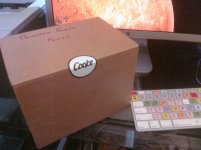
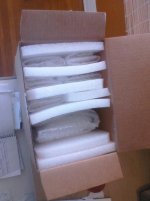
Nope. They came very protected and wrapped in bubble wrap, foam peanuts and Styrofoam. I'm currently trying to figure out how to best protect them and ship them. I'm thinking I'll likely just use a small pelican case, and continue to use the wrapping they came in. Many of the front elements are tiny. Just look at the 75mm and 100mm lens fronts... they are tiny!
 
Last edited:
303903_796393454367_39602619_38352056_1188116145_n.jpg
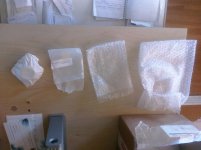
You can see the six different fronts, wrapped in bubble wrap, partially divided by styrofoam

315665_796394607057_39602619_38352059_297535465_n.jpg
Top view of giant 18mm front and little 75mm front.

317179_796394312647_39602619_38352057_1960448118_n.jpg
Russian Nest-Egg of protection.
Cardboard box from ZGC> foam peanuts> cardboard box from cooke > styrofoam inserts > bubble wrap envelope> bubble wrap> plastic bag with identifier tag > tissue paper wrap > thin cellio-like wrapper around lens front > lens front.

318538_796395026217_39602619_38352062_441350544_n.jpg
Side view of 75mm front and 18mm front. lol. One is a contact lens and the other is a paperweight. lol
 
wow.

Uncoated huh...... God i cant wait to see what it looks like.

Man we can vasoline, burn, scratch, distress these bad boys to create some cool effects. kinda how Panavision stripped the set of primos for SavingPrivateRyan (not your set obviously....)
 
wow.

Uncoated huh...... God i cant wait to see what it looks like.

Man we can vasoline, burn, scratch, distress these bad boys to create some cool effects. kinda how Panavision stripped the set of primos for SavingPrivateRyan (not your set obviously....)

Yes. Panavision took the coatings off of a set of Ultraspeeds (Panavision UltraSpeeds) which says something about going with no-coatings, considering Panavision UltraSpeeds, already have older coatings and older qualities. He wanted even more flare and contrast reduction.

‎
"I think we succeeded in emulating the look of that footage for the invasion scenes, which we achieved with both in-camera tricks and other technological means. First off, I thought about the lenses they had back in the 1940s. Obviously, those lenses were inferior compared to what we have today, so I had Panavision strip the protective coatings off a set of older Ultraspeeds. Interestingly, when we analyzed the lenses, the focus and sharpness didn’t change very much, though there was some deterioration; what really changed was the contrast and color rendering. The contrast became much flatter. Without the coatings, the light enters the lens and then bounces all around, so the image becomes kind of foggy but still sharp. Also, it’s much easier to get flares, which automatically diffuses the light and the colors to a degree and lands a little haze to the image."
- Janusz Kaminski
 
Last edited:
Back
Top