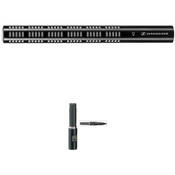
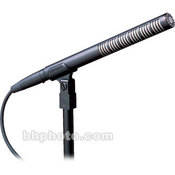
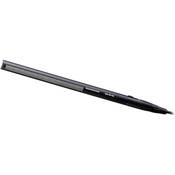
TOP 5 SHOTGUNS! (for those with a budget)- READ THIS!

timapter

Veteran
Ok, so you're new to audio. You're trying to choose a mic. You have only a certain amount of cash. You want to do a, b, and c with it. Before you ask a question thats been answered before, read this.

The low downs below are for the 5 short shotgun mics everyone here talks about. The fields of comparison are price (based on bhphotovideo.com), what the heck it does, and a ranking from 5th best to best for overall sound quality (i.e. how GOOD it makes things sound, what its reputation is).

If you want the best you can afford, start at Number 1, and work your way down until the price works for you. And remember: Short guns don't work for every situation. And you'll also need a suspension system, and a windshield.

If anyone owns these mics, PM me and lets find a way to get audio samples linked up next to each mic. Even better would be an A B C D E comparison, but I dunno if anyone owns all 5!

Here goes....
 
Revision 1 - See end of thread for "HOW YOU CAN BE CONFUSED WHEN BUYING"

POSITION 5:
THE AUDIO TECHNICA AT897

400801.jpg


PRICE: $279.95

WHAT THEY SAY IT DOES:
"The Audio Technica AT897 is a short shotgun condenser microphone designed for audio capturing in video and broadcast applications. The microphone's unobtrusive length of 11" (279.40mm) ensures that the microphone remains out of the frame when mounted on compact, consumer video cameras.

The microphone's narrow pick up pattern enhances signal reproduction when capturing audio at long range. Excellent off-axis sound rejection minimizes noise and ambiance, emphasizing the desired signal. A wide frequency response provides accurate sound reproduction of signals registering at various frequencies. A low-cut frequency switch eliminates noise and hum registering at the low frequency range. The microphone operates on a single 1.5v AA battery or 11V - 52V phantom power."

WHAT IT REALLY DOES:

Signal/noise ratio: 77 dB, 1kHz at 1 Pa

Dynamic range: Phantom: 112 dB, 1kHz at Max. SPL
Battery: 98 dB, 1 kHz at Max. SPL

Weight with battery: 5.1 oz

The AT897 costs more than the RODE NTG-2 and is a similar mic in many ways- Its decent.

On the plus side: It can be run on non-phantom wireless systems because it's battery operated. Its also an Audio Technica mic, which means fairly high quality control. Most users here state that the mic sounds much better than it costs.

On the downside, the output isnt as hot as I personally would like it, and this means its less suited for "straight into camera" use - camera preamps will make the signal noisy when you turn up volume to compensate. The Mic is best used with an external preamp or mixer. Its also quite heavy according to spec and compared to the others.

This could be a pro or a con, but the mic is not drastically directional. For a perfectionist or someone in a relatively high noise location, this sucks. For an inexperienced boom op look to cover two targets, this is ok.


POSITION 4:
THE SENNHEISER ME66 CAP with K6 POWER UNIT

92911.jpg


PRICE: approx. $450

WHAT THEY SAY IT DOES:
"The Sennheiser ME66 short shotgun microphone is a popular choice among video, film and ENG / EFP professionals. The capsule features a highly directional, cardioid polar pattern yielding great attenuation at the sides of the microphone, maximizing pick up at the front. The result is a focused pick-up in highly ambient environments. A wide 40-20,000Hz frequency response provides detailed, accurate signal reproduction. The ME66 capsule takes advantage of the K6 modular power supply. The K6 houses a standard AA alkaline battery and is also capable of excepting phantom power from outside sources. It's compact design allows mounting to video cameras. The ME66 is at home in event videography, ENG / EFP use, video depositions, corporate media applications and film."

WHAT IT REALLY DOES:

Signal/noise ratio: 84 dB

Dynamic range: 115 dB typical

Weight with battery: 3.93 oz. (110 g)

The Sennheiser ME66 is most commonly hit for its price relative to its quality, however its one of the most common mics in use for videography and broadcast/documentary use.

On the plus side, its light. The lightest in this comparison. It can be run on non-phantom wireless systems because it's battery operated. Its also fairly well made for a mic made of plastic. They dont break often.

On the downside, Its darn expensive, most probably due to the fact its part of a modular system and most people only use the ME66 cap. The quality of the sound is often referred to as inferior, and colouration of off-axis sound is, IMO, really horrible. As directionality goes, the mic is far from surgical. I often feel you're mainly paying for the brand "Sennheiser" and the hopes it'll sound like a MKH416.


POSITION 3:
THE RODE NTG-2

ntg2_side_lrg.jpg


PRICE: $249.95

WHAT THEY SAY IT DOES:
"The {new} RODE NTG-2 is a lightweight condenser shotgun microphone, designed for professional applications within the film, video, television and production industries.

The NTG-2 provides a balanced low impedance output stage and operates either from an internal 1.5 V battery (AA) or 48 V to the P48 standard. A wide bandwidth and controlled polar response coupled with low noise SMT electronics, makes the NTG-2 the perfect choice for film, video engineering and voice-over work. The NTG-2 is extremely lightweight making it ideal for mounting directly to video cameras or on boom poles.

The NTG-2 comes complete with mount and windshield.The windscreen effectively suppresses wind noise when recording outdoors in moderate conditions."

WHAT IT REALLY DOES:

Signal/noise ratio: 76 dB

Dynamic range: 113 dB

Weight with battery: 161 g approx. (5 oz.)

The Rode NTG-2 is the cheapest mic on comparison here. Its decent. But it's sure not what they used on "Spiderman".
On the plus side: An inexperienced boom operator can get by with its wider acceptance angle. You can also run it on a non-phantom wireless system because it's battery operated. Output is hot enough to use the mic plugged straight into the camera (if you have to). It, according to most users here, sounds very natural.

On the down side: Its pretty heavy (approaches the 416's weight). Its far from premium quality, but its natural and will do the job.


POSITION 2:
THE AUDIO TECHNICA AT4073a

68317.jpg


PRICE: $549

WHAT THEY SAY IT DOES:
"The Audio Technica AT4073a is a transformerless, externally polarized line + gradient capacitor microphone. It has been specially created to meet the critical long distance pickup demands of broadcasting, film/TV sound, professional recording and theater sound reinforcement.

The AT4073a features a broad band, linear on axis frequency response, with maximum rejection of sounds from both the sides and the rear of the microphone. Rear polar lobing, common in shotgun microphones, has been greatly reduced and the off axis response remains highly uniform. The resultant lack of sound coloration on and off axis makes the AT4073a particularly useful for miking dynamic action in film/TV audio as well as in "spot" miking techniques in the music studio or theater."


WHAT IT REALLY DOES:

Signal/noise ratio: 80 dB, (1 kHz @ 1Pa, A-Weighted)

Dynamic range: 112 dB

Weight with battery: 4.0 oz. (114 g)

The AT4073a is considered by many to be the cheapest mic that can be considered "pro", and is highly competent is most production fields. Although on stats, the mic doesn't beat the ME66, in sound it (IMO) destroys it.

On the plus side: This is the second lightest mic on test. Not much colouration of off axis sound. Nice tight pickup pattern. High quality construction (dont know of any breaking yet). Excellent, excellent sound compared to what it costs (Can be compared to mics that cost much more).

On the downside: Although Ive never heard of one breaking, it feels very fragile, even more so than the plastic ME66. Only runs off phantom, so you'll need a supply for that - be it camera, mixer, phantom enabled wireless adaptor or external preamp.


POSITION 1:
THE SENNHEISER MKH416

79502.jpg


PRICE: $1099.95

WHAT THEY SAY IT DOES:
"The MKH 416 transformerless, RF condenser is designed as a combination of pressure gradient and interference tube microphones. Very good feedback rejection, low proximity effect, 130 dB/SPL. Rugged and resistant to changing climate conditions. Ideal for boom, fishpole, and camera mounting.

Its excellent directivity and compact design, high consonant articulation and feedback rejection make the MKH 416 a superb all-around microphone for film, radio and television, especially for outside broadcast applications."


WHAT IT REALLY DOES:

Signal/noise ratio: 81 dB

Dynamic range: 117 dB

Weight with battery: 5.82 oz. (175 g)

The MKH416 is used worldwide and its been that way for a long time. It's the classic mic that most other short shotgun mics are compared to.

On the plus side: Its sound is hard to beat. Warm, and real with very precise pickup, and little off axis colouration. It's almost DIFFICULT to break, thanks for its metal shell. You shouldn't ever need to replace this mic if you are a sound professional.

On the downside: Its the heaviest of the 5 mics, but who cares its kicks ass. Its expensive, but its quality warrants it. It is incredibly precise, which can be very dangerous in the hands of an inexperienced boom operator.


Conclusion:
If you guys don't agree with my opinions expressed here, PLEASE post and correct me or say how YOU feel. I'm happy to shuffle the positions, and adjust the content if its the truth and the forum feels I'm wrong.

Hope this is a useful thread for beginners...
Tim :thumbup:
 
Wow! Beautiful post! If possible you should paste a the frequency and polar charts next to the mics.
 
Thanks, I will do that... just need to find URL's for the pictures on the net cuz I got nowhere to host my own ones.

Right now, gonna take a break: My eyes hurt from all that typing and googling.
 
Well this verifys my recent purchase of the Rode NTG-2 for exactly the reasons mentioned. I researched this same type of info for over a month before I ordered it and listened to countless comparisons on different sites. While I doubt this one thread will be the only source people will use to make their decision it will certainly help. My mic hasn't arrived yet(ordered Friday evening). Thanks for sharing.
 
There never will be just one source, but the idea of this thread is to give new users a focussed crash course on the mics so they dont ask the same questions over and over.... If we all contribute maybe we get a general opinion that is correct.
 
GREAT JOB TIM!!
I spent most of July and August doing basically the same research, and your results are spot on. Personally, I opted for the AT4073a over the 416 due to price.
 
Great post! Speaking as an audio newbie, I find this stuff invaluable, as I'd much rather put valuable time towards production rather than research.

I'm inclined towards the Rode nt2 (or the Oktava 012) because of budgetary reasons. I'm also sure I'm not sophistcated enough to appreciate an expensive mic.

Surprised you didn't include the Oktava 012 hypercardoid though... it seems to be on everybody's top five.


Thanks!!

Edited: I just realized the post said "Shotgun mic"... the Oktava's a HC. Sorry!!
 
i started with the me-66

then after a little more than a year i moved up to the 416.

i still have and love the 416 but i recently got an oktava mk 012 and for indoors stuff i just love it.

i just used it on a short that was shot in a normal house and the oktava did an amazing job. it was very good at only picking up the sound in a fairly small radius around it (using the hypercardioid capsule. i got all three with it)

i know that if i had used the 416 i would have heard a lot of noises from the background and general household noises that the oktava didn't pickup.

i'm glad that so many people kept talking about the oktava and i finally got one.

for the money its an amazing deal. my 416 cost 3x as much.

for outdoors or a larger space i'll use my 416. i'm anxious to have time to do an a/b comparison.

matthew
 
I did a search on ebay for the MKH 416, and I see two different versions at different prices. the "MKH-416 T" recently sold for $365, while the "MKH-416 P48" sold for $700. I'm new to this, what's the difference?
 
to use the "t" version you need to have a mixer that can output "t" phantom power.

otherwise you would have to buy a "t" phantom power thing.

the p48 is the standard phantom power that the dvx puts out and what most mixers put out.

my sd 302 will do "T" but then it is for all three inputs.

and i believe it also means that the mic is older if it is "t" as i don't think they make it in "t" anymore.

matthew
 
Matthewd5, I started this post for shotguns, but I'll add a section on the Oktava too, just cuz its talked about so darn much.

Ive just tried to edit the top post section on the 416 to include a little description about the difference between the P48 and the T version, and a short description on the difference between the K6 power module and the K6P module. But the limit on post length is 10000 characters, so I cant. Heres the addition below:

QUESTION:
Does anyone think a version of this post for lavaliere mics, wireless systems, and mixers would be useful? Cuz Im prepared to make em if you guys want them. I know most of the stats offhand, and they say repetition is the best way to cement your knowledge.
 
Revision 1:

Revision 1:

This is an addition to the Sennheiser MKH416 info, and the Sennheiser ME66/K6 info

SENNHEISER ME66/K6 COMBO:
HOW YOU CAN BE CONFUSED WHEN BUYING:
This microphone is a modular unit consisting of the Me66 mic part, and the K6 power pack. The K6 accepts phantom power (supplied by camera or mixer), but accepts an AA 1.5v battery if you dont have phantom. There is also the K6P power unit - IT HAS NO BATTERY COMPARTMENT, so you MUST have phantom available to power the microphone. Careful you get the one you want, because they cost the same. Also be careful you dont see a seemingly cheap ME66 but it turns out to just be the cap (microphone) section with no power unit.


SENNHEISER MKH416:
HOW YOU CAN BE CONFUSED WHEN BUYING:
Before phantom power (abbreviation P48) became widely used, many microphones were powered off a different system where power was distributed differently over the wires in an XLR cable, and this format was called T powering (sometimes called simplex powering too, and USUALLY indicated on the mic by means of a red dot). Because the Sennheiser MKH416 has been been in production for decades, there are TWO VERSIONS! The MKH416P48 is powered by PHANTOM POWER (common on cams and mixers). The MKH416T is powered by T POWER (not found on cams, and only found on SOME mixers). Hence, the T version is cheaper because it is not as widely used. If you want to buy a T version, you need a mixer that can supply the power, or an adaptor (they usually look like little black boxes and are heavy) that will convert P48 to T. Dont get tricked by this.
 
timapter said:
QUESTION:
Does anyone think a version of this post for lavaliere mics, wireless systems, and mixers would be useful? Cuz Im prepared to make em if you guys want them. I know most of the stats offhand, and they say repetition is the best way to cement your knowledge.

I would love to see this kind of post for lavaliere mics! CHEERS! :laugh:
 
I like your concise, textbook style of relaying info. It's very professional and fun to read. Post all of this that you can!

I wish I'd have set up my threads so intelligently.
 
Thanks matt, thats quite a compliment coming from you.

I'm going to continue adding what I can to this thread (starting with the Oktava even through its a hyper), and then I'll put up a separate post with the lavs soon. If anyone wants to give me what they reckon the top 5 most common/best lavs are ("beginner" or "pro" models), please email me at timapter@webmail.co.za or PM me. Lets not post about Lavs in here or it will pollute the thread - and my idea with this is to keep the topic very focussed so everyone gets exactly what they want when they read it.

Glad you guys think this is a useful thread.
 
yes!!!

yes!!!

ok my first post, and so on,
i´m a film student, i´m graduating, and getting ready for action, my passion are documentaries, i live in Quito-Ecuador, i purchase my DVX100a, 2 months ago, sorry i didn´t know the "B" was comming.
But yes this is the forum to visit if your are going pro on DVX, that´s for sure,

well, very nice all the info about the boom mic, perfect, just when i need to get my.

So, i will get a boom, arm, and adaptors, this month, i have DECIDE, WHICH ONE, PLEASE HELP. BASICLY I WILL USE IT, IN SHOOTING DOCUMENTARIES, SHORT FILMS, IN AND OUT, AND MUSIC VIDEOS-
PLUS, I HAVE TO BY 2 LAVALIER MICS.

I WANT TO USE ALL WITH THE DVX. SO ANY IDEAS, I HAVE TO MAKE DECISIONS, AND THATS THE HARD PART I´M THINKING TO SPEND IN THAT
1200, SO PLEASE. SEND FITBACK...
THANKS, VIC
 
Back
Top