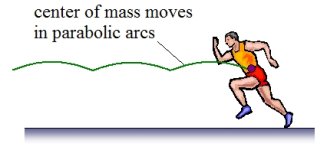
It occurred to me that 3 axis gimbals for camera operators are damping the wrong axis. They dampen movement in the pitch, yaw, and roll axis, but don't do anything for the Z-axis(up/down). Well, some have spring arms now, but I'm skeptical about those.
A stabilizer dampens z-axis movement with the arms and controls roll with the bottom heavy pole. The stabilizer does not dampen yaw (pan). The stabilizer controls the axis that really need control. The pan is not dampened and is controlled by the operator for precise framing.
So the gimbal does two things wrong - it dampens pan, which doesn't need dampening or at least severely impedes proper panning; and it does not dampen the z-axis, which does need dampening. I'd like to see a gimbal that has no pan axis and replaces the pan dampening with active (not springs) z-axis damper. This way, the operator would have precise control over the pan part of framing and would remove more of the z-axis issues. Of course, there would now be lag in the z-axis control, but I'd prefer that as it would stabilize the image much better.
The reason gimbals are this way is only because they started out on helicopters, which needed pitch,yaw, roll dampening. But the adaptation of that gimbal to a camera operator is not as good as it could be.