The Great Hollywood Rip Off (idea thieves)

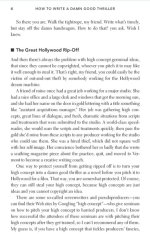
What do you all think of this (see attached image of page 4 from the book)? I ran across this in a book I just read on writing thrillers. The author talks about a friend of his who specifically was told to search submitted query letters, script submissions, pitches, and so on for the purpose of stealing ideas, dialogue, stories, to then have the studio pilfer and use in-house with their writers. etc. :crybaby:

Makes me want to be very careful who I share my story ideas and first drafts with, keep it in a closely trusted circle of writer friends.
randall
 

Attachments

  • writerthieves.jpg
    writerthieves.jpg
    90.1 KB · Views: 0
well then call the thought police. also you just kinda did something similarly wrong by posting an image of a copyrighted piece of material without express written consent.

no surprise though, ever notice that about 90% of movies are just recycled plots and cheezy lines? not to mention the same actors over and over again.

No, what Randall posted is called an excerpt or quotation and is protected under fair use for commentary or reporting.
 
Yeah, it happens. People also get mugged, but that doesn't mean you shouldn't go outside. It's not the normal way of doing things, since getting caught stealing an idea can hurt a lot more than the relatively small fee a writer can get. Based in this one page that book looks like BS, especially the recommendation of a novelization as protection of the all powerful 'high concept'. There really isn't as much risk as people would have you believe, especially since your script is a lot more important than the vague 'dramatic situations', which can be told a thousand different ways.
 
I doubt that really happens. I was just looking at that book and based on the reviews and reading through his sample on my Kindle I could see the gyy was a schlock and didn't really seem to know what he was talking about. Color me skeptical.
 
I wouldn't get too worked up over "I had a nameless friend who worked for a nameless company and did X thing."
 
I wouldn't get too worked up over "I had a nameless friend who worked for a nameless company and did X thing."

The nameless friend allegedly wrote an unnamed article for an unnamed magazine (hmm...?)-- I sure would like to find that article, might do some digging (unless it is all pipe dreams, and I would be digging for fool's gold!)

EDIT: I just emailed the author of that book, James N. Frey, asking if he can share the name of that friend and/or the magazine article that was written exposing that prodco; I would sure love to see that article.
:)r
 
Last edited:
Ideas mean noootthhhing!!!!!!

Ideas mean noootthhhing!!!!!!

If you write the best version possible of your story than you haven't much to worry about."Ideas" don't mean crap. Execution does. The LEAST important part of a movie is it's ideas. You think someone can take all the "good ideas" out of Pulp Fiction and tack them onto another movie?

You think I can take a villian with an air compressor thingy weapon and a wierd haircut go write "no country for old men"?

you think I can take the "I drink your milkshake" line out of There Will Be Blood and tack it on to another villian in another script? It wouldnt make -sense- in another context.

You think I can take the plot twist at the end of SIxth Snese, and the line "I see dead people" and then go write Sixth Sense? or even just another movie that ends up as good? The -line- didnt make teh movei good. The movie made the movie good. "I see dead people" ON ITS OWN isn't even a good line of dialog- Its good IN THE CONTEXT OF THE ENTIRE STORY.

Richard Walter calls this "Integration" - meaning a great story is like a swiss clock- all the parts work together to create something, and each part interacts with the other parts.

Ideas in stories can't be removed like blocks from a lego sculpture. .You cant make good movies that way. If this mythical studio really did do this, then the movies that were made this way sucked ass, I assure you.


Write an "airtight" story....
 
Last edited:
YIKES! If they are out stealing any little idea they can to turn into a movie, they must be STARVING for acceptable screenplays! This actually motivates me to keep writing, especially considering how many movies are remakes from previous movies, books or fables.

If Hollywood needs fresh ideas, what say we help them out?
 
Feel Randall's pain, however, azharrison summed it up well. Just watched Butch Cassidy... again. The idea was already there. But Goldman, who said he had never written a screenplay before, breathed life into the characters and story. It's feels like when a thing is good it creates an electricity all its own - that can't be stolen or copied.
 
YIKES! If they are out stealing any little idea they can to turn into a movie, they must be STARVING for acceptable screenplays! This actually motivates me to keep writing, especially considering how many movies are remakes from previous movies, books or fables.

If Hollywood needs fresh ideas, what say we help them out?


I have never been bothered by the numbers game, the piles and piles of screenplays sent to prodcos and agents each year. Because the more I study this craft the more I realize how easy it is to write junk, and 99.9% of scripts and loglines sent to hw are junk. Thus the gauntlet hw as set up to try to filter the utter crap being shilled to them, and thus the 32 gallon trash cans next to the incoming screeners desk to quickly toss the junk to burn for a marshmellow roast to make sommores later (a tasty treat up here in MN where it is bad ass cold most of the year, so lots of camping and camp fires, and eating a tasty snack completely devoid of any nutritional value-- graham crakers, chocolate and roasted masrhmellows).

HW needs great scripts. When we write a great script, high concept, it will be snatched up, a bidding war might ensue. Why would we expect anything less? I surely would not expect hw to buy my crap and then invest 80 million dollars into it and risk careers. We can expect nothing until we send hw what they want. And as you said, they badly need good scripts. The studios are in competition for box office gross, it is a business. Let's get busy writing great stuff, let's put our idea hats on and come up with some good material (and PM me everybody with your great ideas hehe!).
:) randall
 
Feel Randall's pain, however, azharrison summed it up well. Just watched Butch Cassidy... again. The idea was already there. But Goldman, who said he had never written a screenplay before, breathed life into the characters and story. It's feels like when a thing is good it creates an electricity all its own - that can't be stolen or copied.

My concern is that if I have a great HIGH concept story idea (logline, synopsis) to pitch to a major hw studio-- well, they can easily just steal it and have a big hitter writer on their A list of writers they have worked with to take it and write a great screenplay from it, and they know it will be great, rather than take a chance and a year of writing with an amateur (moi, me).

So, as has been said, I think the solution may be to only send hw the completed great screenplay, and deal with a reputable agent on the WGA list of agents. Pitching just 'ideas' to hw is perhaps better left to the major proven hitters that the studio would just give the green light to and know what they are going to get, and fast.
 
My concern is that if I have a great HIGH concept story idea (logline, synopsis) to pitch to a major hw studio-- well, they can easily just steal it


I actually have a file on my computer of my loglines/concepts, at least 2 of which I genuinely feel are good enough to steal n their own.I would never share them with anyone, until Ive already written a great version of a particular one. In which case, Im selling the -script- not the idea.

a writer trying to sell just ideas is like a crappy comic book artist who cant draw people trying to get a job drawing backgrounds or something.

learn to draw.

learn to write.

Focus on being such a good writer that someone will be eager and excited to use the script you wrote (and/or you for rewrites) rather than pluck it for trimmings.

Than again screenwriting is full of rewrites and firings and multiple writers and all that anyway, so ....

worry about only what you can control
 
My concern is that if I have a great HIGH concept story idea (logline, synopsis) to pitch to a major hw studio-- well, they can easily just steal it and have a big hitter writer on their A list of writers they have worked with to take it and write a great screenplay from it, and they know it will be great, rather than take a chance and a year of writing with an amateur (moi, me).

So, as has been said, I think the solution may be to only send hw the completed great screenplay, and deal with a reputable agent on the WGA list of agents. Pitching just 'ideas' to hw is perhaps better left to the major proven hitters that the studio would just give the green light to and know what they are going to get, and fast.

THere is much logic here, because this is all part of the game.

A good friend of mine was asked to do a take on a project that has recently been in (and quickly out) of the theaters. As an up and coming writer he quickly jumped in (through his agent of course) and submitted. They loved his ideas, he flew out to LA and was about to finalize the deal. Then they signed a director who was well known and also a screenwriter who wanted to write the script himself. So my friend got the door. No big deal. That stuff happens all the time.

Then he saw the trailer on TV. Not only did it have very specific elements from his take, it also had his suggestion for a new title.

He was pissed and called his agent.

So what did they do? They sent a nice basket over to the studio with a follow up e-mail that said something like. "Hey, we saw the trailer and it looks great. Congratulations. So and So (the writer), really liked it as well. Best of luck". The e-mail also contained all of the correspondence they had, including the writer's original take.

Their way of both taking the high road and reminding the studio that some of the best ideas in the movie came from this writer.

Could he have sued and won? Sure. Would that have helped his budding career? Nope.

Going through a good agent protects you. Not just legally, but with their experience in negotiations and positioning in a crowded marketplace.
 
Also keep in mind that sometimes ideas aren't consciously "stolen". You have a meeting with a writer that has some great twists in a script, but you don't like the bulk of the concept. Three months later you are in a different meeting with another writer for the same project. Solid story, but it needs a twist. Guess what? You are going to remember the twist from the earlier script, but you may not remember from where. You may not even remember that it came from someone else at all.

Fear less, write more. It's wise to protect yourself and be judicious about the people you share your stuff with. But never let the potential for someone to steal your idea paralyze you from taking advantage of an opportunity.
 
Last edited:
Fear less, write more. It's wise to protect yourself and be judicious about the people you share your stuff with. But never let the potential for someone to steal your idea paralyze you from taking advantage of an opportunity.

Well said sir! It seems all you can do is to copyright your script, save all your supporting works (ie. index cards, outlines, etc) and hope for the best when you send up your script... thats all anyone can do isn't it?
 
Back
Top