Stage Lights changing and Iris setting

offbeatbryce

Well-known member
I am wondering how I would go about getting the same exposure from a multi camera shoot for a stage performance? What I have filmed so far isn't that bad but I'd like tips on how to improve.

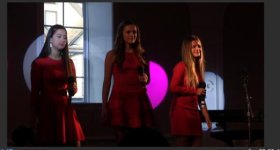
First of all I film very small time performances at bars and school plays. The stage lights aren't that great to begin with. There was one performance where three girls were singing a holiday song and the lighting setup only had one spotlight and there were lights above them shining down in front of them. At first this was fine but in the middle of the song the lighting person turns down the lights on the left side of the stage making the second camera which was from the side of the stage darker and the faces from the side was dark. The person operating that camera tried raising the iris which brought in horrible digital noise as well as made the faces over exposed so he just set it back to what it was before.

What's even more frustrating is that I asked the lighting person how bright his lights go and to set them the brightest during soundcheck. I then set that camera's iris to it so it was perfect exposure then the idiot dims the lights in the performance.

I've seen professional concert films and for the life of me can't figure out how the exposure is the same for every camera angle when the lights are always changing.

To make matters worse there was a huge window off to the side and the sun and clouds kept moving thus changing the light as well. I requested to shut the shades but the owner of the building refused because he told me that the sun helped with the lighting in the room. I don't really believe him on that.

I can't be the only one that's had some of these issues. I hope someone can offer me assistance.
 
Last edited:
....

I've seen professional concert films and for the life of me can't figure out how the exposure is the same for every camera angle when the lights are always changing.

....

I don't know how filmmakers do it, but a concert recorded by television cameras has a person that is dedicated to setting iris on all the cameras in real time. The video engineer sits in the truck with a waveform monitor for each camera. He has control of the iris. He constantly tweaks the iris of all the cameras when the camera are not hot (in live to tape or live events, one camera is selected to be recorded or hot). Rarely, he will adjust iris when it is hot, but only if absolutely necessary.
 
Last edited:
I don't know how filmmakers do it, but a concert recorded by television cameras has a person that is dedicated to setting iris on all the cameras in real time. The video engineer sits in the truck with a waveform monitor for each camera. He has control of the iris. He constantly tweaks the iris of all the cameras when the camera are not hot (in live to tape or live events, one camera is selected to be recorded or hot). Rarely, he will adjust iris when it is hot, but only if absolutely necessary.

Well the issue for me is that if me or my friend operating our cameras turned the iris open any further the faces were washed out. So i don't see what the solution is.

Also, mind explaining why one person would look more out of focus than another when they are all standing on the stage and the camera is focused? Only one person looks out of focus. Is this the lens I'm using? I was able to create a sharpen mask around the person and sharpen her up a bit.

also, here is an example of another performance I filmed. Single camera. The performer is slightly out of focus but when i pan the guitar it's perfectly in the focus and the focus never changes. https://www.youtube.com/watch?v=PK8RdQxPFoA
 
I'm amazed! The lighting guy is an idiot for doing his primary role - lighting the band in a sympathetic and interesting way. He did what you asked.
What's even more frustrating is that I asked the lighting person how bright his lights go and to set them the brightest during soundcheck. I then set that camera's iris to it so it was perfect exposure then the idiot dims the lights in the performance.
He didn't go brighter did he?

I do this kind of thing all the time, as a production manager, and the problem with your shoot was because your cameras couldn't cope and neither could the operators. You could wash the stage with light and then leave it. You would have nicely exposed images, but it looks terrible to the audience. So when we do these things the first question is always "Is the lighting for the audience, or the video". If you have a big budget, then you put in more lights - but even then, the best images are contrasty, and video cameras have a very limited range of contrast. If you are using auto exposure, then a simple followspot, or special (things often requested in the contract riders) will mess your camera up. The face gets blown out and the shadow detail goes, leaving a black picture with a white spot. Normal. In a properly planned and equipped production, the followspot might be throttled back and the shadows brightened, and YOU give the lighting operator and designer a monitor. That's when the video is given primary importance. If the audience is the primary source, then you to spend time (and perhaps even pay for it) with the lighting designer when they are programming the show - NOT ten minutes before show time. In bars and small scale stages, then flashy lighting is the norm, and it's unacceptable to expect anything different to what you got. Do not blame the lighting operator - one of your cameras couldn't hack it, yet it's his fault?

I've seen video people set their cameras up and not even notice dozens of lights pointing directly down the lens, then be surprised and angry when they are turned on.

The one we did last week had some cameras running at f2.8-5.6 most of the time, and f8 during the big pushes and flashes - and you need to decide how you manage it. If you are going to do a multicam, and have proper lenses, then the operators can adjust as appropriate as they shoot, covering the ramping up and down in the edit. If your cameras have to run on auto, then check to see if there is a spot exposure mode - where it tends to close the aperture a little to help blowing out the whites, but you lose some brightness overall - but that's how it is. Generally, face exposure is key. Most video'd shows have us with a pretty constant, but not that bright face light - usually fixed specials, that you can rely on to not put the turns into darkness, then the flashing and effects prettifies the image with colour , intensity and movement.

If you ask the video guy to NOT go too bright, why is he an idiot for doing what you asked. If you had said I don;t want it to go bright, or to go dim, he'd have thought you mad and probably refused unless the person in charge had approved it, because as a vibe for the music, it would be rubbish.

Your problem is common - but video people always blame the sound man for the rotten audio feed they have been given last minute and the poor lighting - when both these people are probably quite happy with what the audience heard and saw. Video cameras are not magic. Recording live stuff takes money, time and skill, and blaming the venue, lights and operators is kind of unprofessional.

I do appreciate the video perspective, but it is NOT the most important ingredient unless it was designed in early on - which it could be, but rarely is. Lighting for all the TV music shows you see often looks pretty flat if you are there, but even the most expensive cameras need help. As said above, the racks guy will be working his socks off in a music show, constantly tweaking every single shot to prevent burnouts, and the result is often that some angles just look odd - with one bright bit and the rest dark - then you have to adjust the composition or just take it for what it is - live music on stage.

Sorry for the rant, but having lights, sound and video people working for me, there is always compromise - and sometimes it really is MY fault for not planning properly, rarely theirs.
 
Um

Um

I'm amazed! The lighting guy is an idiot for doing his primary role - lighting the band in a sympathetic and interesting way. He did what you asked.
He didn't go brighter did he?

I do this kind of thing all the time, as a production manager, and the problem with your shoot was because your cameras couldn't cope and neither could the operators. You could wash the stage with light and then leave it. You would have nicely exposed images, but it looks terrible to the audience. So when we do these things the first question is always "Is the lighting for the audience, or the video". If you have a big budget, then you put in more lights - but even then, the best images are contrasty, and video cameras have a very limited range of contrast. If you are using auto exposure, then a simple followspot, or special (things often requested in the contract riders) will mess your camera up. The face gets blown out and the shadow detail goes, leaving a black picture with a white spot. Normal. In a properly planned and equipped production, the followspot might be throttled back and the shadows brightened, and YOU give the lighting operator and designer a monitor. That's when the video is given primary importance. If the audience is the primary source, then you to spend time (and perhaps even pay for it) with the lighting designer when they are programming the show - NOT ten minutes before show time. In bars and small scale stages, then flashy lighting is the norm, and it's unacceptable to expect anything different to what you got. Do not blame the lighting operator - one of your cameras couldn't hack it, yet it's his fault?

I've seen video people set their cameras up and not even notice dozens of lights pointing directly down the lens, then be surprised and angry when they are turned on.

The one we did last week had some cameras running at f2.8-5.6 most of the time, and f8 during the big pushes and flashes - and you need to decide how you manage it. If you are going to do a multicam, and have proper lenses, then the operators can adjust as appropriate as they shoot, covering the ramping up and down in the edit. If your cameras have to run on auto, then check to see if there is a spot exposure mode - where it tends to close the aperture a little to help blowing out the whites, but you lose some brightness overall - but that's how it is. Generally, face exposure is key. Most video'd shows have us with a pretty constant, but not that bright face light - usually fixed specials, that you can rely on to not put the turns into darkness, then the flashing and effects prettifies the image with colour , intensity and movement.

If you ask the video guy to NOT go too bright, why is he an idiot for doing what you asked. If you had said I don;t want it to go bright, or to go dim, he'd have thought you mad and probably refused unless the person in charge had approved it, because as a vibe for the music, it would be rubbish.

Your problem is common - but video people always blame the sound man for the rotten audio feed they have been given last minute and the poor lighting - when both these people are probably quite happy with what the audience heard and saw. Video cameras are not magic. Recording live stuff takes money, time and skill, and blaming the venue, lights and operators is kind of unprofessional.

I do appreciate the video perspective, but it is NOT the most important ingredient unless it was designed in early on - which it could be, but rarely is. Lighting for all the TV music shows you see often looks pretty flat if you are there, but even the most expensive cameras need help. As said above, the racks guy will be working his socks off in a music show, constantly tweaking every single shot to prevent burnouts, and the result is often that some angles just look odd - with one bright bit and the rest dark - then you have to adjust the composition or just take it for what it is - live music on stage.

Sorry for the rant, but having lights, sound and video people working for me, there is always compromise - and sometimes it really is MY fault for not planning properly, rarely theirs.


Um, did you even read what I originally posted? I clearly said I was in manual exposure. My camera operator couldn't open the iris without the faces exposed. The lighting guy only had one spotlight one there was 3 members singing. This is not my fault. A lighting person needs to light all singers regardless. My cameras were fine during sound check because they had the lights set to what I was told was the maximum. Then the lighting guy during the actual show turned them brighter and dimmed the ones that were for the side of the faces.
 
I'm not sure what you are complaining about. If you were the producer of the show, then you had control over the lighting as Paul mentioned (flatten out the lighting) and everything should have been ok. If you weren't producing, or part of the production, then you get what you get and you deal with it. There's no point in telling us it wasn't your fault. If you were in charge of the video production then the results are yours and no one elses.

The lighting person does not have to have light on all the singers. Just as Paul said, that is part of theatrics and putting on a show.

You asked how the pros do it and Paul answered.
 
If you get a chance, take a look at the Eagles segment of the Kennedy Center Honors that played tonight. You'll see in the four numbers how they had a theatrical performance that was lit for television.
 
You had manual control - great. You could have exposed for the highlights and tried to maybe pull a bit out of the shadows, but lighting is an art too - and what looks good to the eye might not work. The show Im doing at the moment uses lots of pink light and getting face tones to look correct is very difficult - and the transitions from pink to blue are handled pretty poorly by the cameras. The best colour temp seems to be around 4800K - a broad compromise. The two followspots are both 1800W and need pulling back a bit, which we planned for.

Shooting for TV, when I first started out years ago with tube cameras meant blasting the hell out of everything and getting rid of all the shadows - so you could have flashing lights on the set/stage for effect, but the band members needed high light levels. Now we have sensitive cameras and LED lighting capable of being virtually monochrome - a very narrow spike of red, blue or green, and double spikes of magenta, cyan and yellow - hardly blends, and while my cameras might hate the blue light, the lighting designers love it - something they've wanted to do for years when Congo Blue 181 let through just 5% or so of the light - now they can blast everything in deep blue and to the audience it's great. The cameras in most cases are bolted onto the end of a production, and I have to live with it.

We are supposed to be a team = but really sound, lights, video and perhaps even costume departments now fight with each other to get the best possible product, and in reality it must be a compromise. Sound always ask for a maximum level and press their kit. Cameras ask for a maximum brightness (or minimum one), video always want less contrast and less saturated colour. This is clearly impossible. It's just unfair to dismiss one department's needs because another wants something different.

Compromise needs negotiation and proper planning. My experience is that video rarely plan that much ahead. I pick cameras and operators who have experience in this kind of thing. Stage lighting small or large scale is very problematic for people unaccustomed to it. The post blamed the poor results on the lighting guy - I just feel sorry for him because keeping an eye on the video success is not remotely his primary job, or perhaps even what he's being paid to do. Sound people find providing a mix for the video fairly easy - but they do not have extra ears to listen to it during the show. The video people could carry a monitor and cable - but rarely do. Team work.
 
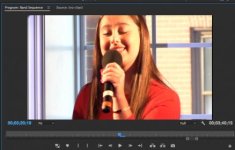
Thanks for all the information guys. I do want to point out that I spoke with the professional photographer who's been taking photos for over 30 years. Even he couldn't get his photos to look correct through the show or the performance I have on YouTube. The photographer blames the windows. There is one behind the performers and several others in the building. Anyway, Here is two screenshots of what I had without any color correction.

Camera B Screen Shot 2017-01-16 at 7.32.35 PM.jpg

Camera A Screen Shot 2017-01-16 at 7.30.52 PM.jpg

I did manage to correct it in post and even used Neat Video Noise Removal to fix the picture from noise.

Here is the link to the full video. https://www.youtube.com/watch?v=2vVb_ZvfTO0 I don't think I did bad with the correction but I still can't get it where I want it. Sometimes the skin tones match and other times it's off from one camera to the other.

Would appreciate any feedback and tips on how to better improve this.

I have other performances from that show and some other performers are better than others.

I was not the producer of the show so I filmed what I got.
 
Geez, you didn't have much to work with there. The lighting is.... unusual. Ok, that wasn't theatrical lighting. That was bad lighting.
- I like how the middle performer is in the shadow of the performer stage left. Maybe they weren't on their marks.
- Rhetorical question - why wasn't that window blocked out? Uggh.

As to the video; I'd say the operators need to learn a few techniques. I know, its tough to shoot without having someone call shots so that each camera is getting good coverage. With only two cameras, it's nearly impossible to get proper coverage. A third camera locked to a wide shot could have helped. Always have a go-to camera so if you have crap on the other cameras, you can at least go to the wide shot.

-Sometimes the heads are chopped off. Sometimes there is too much headroom.
-Cutting from a 3-shot to a 3-shot is generally uncomfortable. Maybe you didn't have anything else. It's best to discuss coverage beforehand so that you don't have matching shots. (0:12-0:15)
-For one-shots, isolate the singer so that we don't see part of the other singers (:47-:49)
-When panning, don't be afraid to tilt at the same time so that head room is consistent and heads don't get chopped off. (1:12-1:14 and 2:10-2:15)
-Recompose the shot (zoom out slowly) when needed (2:19 - 2:24)
-Many of the framing compositions seem poor because the operators seemed to always want to be in close. Then when they go to a two-shot, we see half of two people.

If I shot that with 3 cameras with no director on headsets, I'd have one stay wide, one always doing a closeup of whoever is soloing (yes, they would not get it all), and one camera doing the creative stuff of the moves from solo to two shot and back to solo.


To be honest I asked the producer if he could block off the windows and he said he couldn't. Wouldn't give me a reason why no matter how many times I explained it would be best to block it off. You can blame the certain shots on my beginner filmmaker. I do want a third camera but right now don't have the budget for a third.

To be honest the room to film in was horrible. It was a show with performers and in that same room was dining tables all around. My second camera operator was wedged in between a table of four eating and the enterence to the hallway. I didn't even charge for this performance to be shot because I knew it wasn't gonna be anything spectacular but I didn't think it would be this bad. lol I mainly filmed for the family who wanted clips of their kids performing.
 
The funny thing is given how crap the lighting is it actually looks WAY better than I thought it would from your description. I bet the parents are very happy with it. As Paul F pointed out the bigger problems are with the filming techniques.
If your photographer is blaming the windows for exposure problems then he has some technique shortcomings as well. I have photographed theatre for over 30 years in lighting often as bad as that and every shot is a different exposure in ever changing light. Setting one exposure for the whole thing isn't going to work. The window would only influence the exposure if the metering zone "saw" it behind the performer. I would be spot metering through my AF zone to shoot this and compensating if the window fooled the meter by being included in the metering zone. Filming or photographing events like this is always going to be a compromise. I actually think you did a pretty good job with the exposure and although the colour is off in some shots thats to be expected I think in lighting like this.
 
One thing you did not mention until rather late in the thread is that the client was the girls parents, not the venue. In that case the lighting people cooperating with you at all was very nice of them.

When you are working for the venue, the answer is a "Photo Call". Because they have to pay the cast to come in for that, it is rather expensive, so they cooperate really well. The lighting crew are working for the camera (you usually have to explain to them what that means). The sound crew is working for the camera (ditto on explanations). There is no one in the way because the place is closed to the public.

As a stills photographer I was often amazed at how professional talent worked with me in public events with no communication between us at all. Really, all it was is two pro's recognizing each other as pro's. I would be down front of the stage, being careful not to get in the audiences way, and the, sometimes big names, performer would be pausing for a second, now and then when they knew they had a good pose, for me to get a good shot.

The other side of being a pro, is knowing your equipment so well that you do not have to think about it. Automatic is for know nothings, it works most of the time, but when it doesn't you have to stop and think about what you need to do because you are not in practice. Young people always poo-poo this when I tell them. I was at a seminar once telling some guys this during a break, and got the usual reaction. Then one of the guys lifted his purely mechanical camera (Pentax 6x7) and started shooting, rather obviously, the only thing he was paying any attention to was his framing. The kids started asking, how the heck are you doing that? He replied, "Just what Tom was telling you".

Unfortunately, I have not learned to use these camcorders that way, and probably never will (I am in my seventies now).
 
Back
Top