I waited about a year to test the MixPre-6 (for various firmware fixes, e.g. 192kHz issue) and compare to the Zoom F4.
Short summary: I returned the MixPre-6.
Limiters: using a Schoeps CMC641 + Mogami cable, in side-by-side testing vs. the F4's limiters (regular and advanced), the MixPre-6's limiters didn't impress as being any better. I prefer the USBPre2's limiters (more on this later).
Build quality: MixPre-6 is much higher, though the plastic knobs feel cheap compared to the USBPre2.
Usability: The MixPre-6 menu system needs a complete redesign. My opinion comes from personally leading professional software design teams of far more complicated apps which are much easier to use. The F4 by comparison is vastly superior and much easier to navigate and use, despite offering a lot more features and functionality.
Safety: The MixPre-6 has a very powerful headphone amp. Due to the current design, it's possible for 'ear blasting events' when changing settings. Additionally, many state changes cause little clicks which make the device sound cheap (F4 doesn't do this). Audio mixing engines need to constantly fill a buffer which feeds the analog output. Any time that buffer will starve or otherwise cause a click, the analog output should be muted before such changes are started. Any change which can cause hearing damage on the headphone output, the output should be set to zero before the operation starts. For additional safety, a software limiter for the headphones should be added to prevent hearing damage no matter what the device or other inputs generate.
Ambisonic support: this was one of the main reasons in getting the MixPre-6 (need 4 channels of input), with the goal to improve sound over the F4. Unfortunately, ambisonic mode is completely broken- any time the 'analog' limiters engage, random clicks can be heard in both the 4-track and mixed binaural outputs. I quoted 'analog' because it doesn't make sense that clicking/distortion could occur if 100% analog. It's possible that this bug is hardware related to the single device. In the A-direct mode, the live binaural and mixed BIN recording level is way too low. This promotes turning the headphone volume up quite high to hear what's happening. Then, when playing back the recording, the next bug results in hearing damage level output: the full level A-format 4 track mix is sent to the headphone output vs. playing back the low-level binaural file and/or using the binaural filter on the 4-track recording (which is what the F4 does correctly).
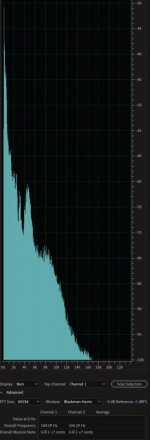
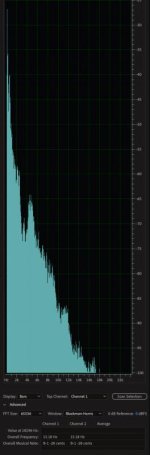
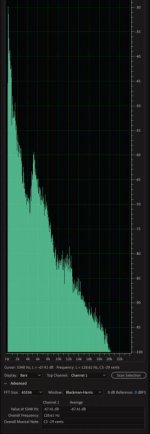
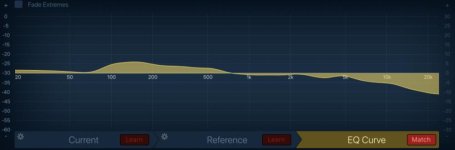
Sound quality: the AKM "Velvet Sound" ADC sounds great on paper. However comparing the Schoeps CMC641 (and CMIT5U, Audix SCX-1 HC) and the Zoom F4, showed another problem. While monitoring on headphones, the MixPre-6 sounds a lot better than the F4. However playback of the files on the computer shows a different story. While the F4 recordings sound neutral, detailed, fully textured, and accurate, the MixPre-6 sounds low-mid boosted with cut highs, and worse, a major reduction in detail and texture. I verified this by looking at the FFTs in Audition (Analysis) and Logic X (Match EQ): The MixPre-6 is indeed boosting the low mids and cutting the highs, and is also smoothing the spectral variance, which removes sound texture and creates a 'spectral plastic wrap' shown on the FFT as smoothed spectral peaks (in code: convert time domain to frequency domain via FFT, perform a low pass filter on the spectral bins, and convert back to time domain via iFFT). Is this the "Velvet Sound"? If not some kind of bug, it may work OK for some sounds, however it doesn't work in the general case and an option to turn it off should be added.
Ambisonic sound quality: HRTF binaural mixing: The MixPre-6 is outstanding here- the 3D spatialization is very good, perhaps the best I've heard for a general-use HRTF, even vs. what I can do in post so far! The Sennheiser AMBEO sounds really good, other than the veiled spectrum and cut highs (perhaps can be fixed with a future firmware update?).
Noise floor: The MixPre-6 is really, really great there- very quiet: impressive. However the F4 is so far good enough.
I do like the MixPre-6's low-mid boost to some extent, so I was curious what they were doing so I can match the F4's more textured, non-veiled recording. Here's the Match EQ result that sounds pretty good:
I was a bit puzzled that the MixPre-6 didn't surpass the F4 in all aspects for sound quality. So I did further tests with my (many years old!) Sound Devices USBPre2 (computer recording). The USBPre2 was clearly better than the F4 in all aspects, limiters, detail + texture, and overall sound quality. The MixPre-6 is a step backwards unfortunately- clearly shown on the FFTs and not just via listening. This is not just a possible issue with this particular copy of the MixPre-6: https://www.gearslutz.com/board/high-end/1245013-sound-devices-702-vs-mixpre-3-a.html:
The USBPre2 has the same audio topology of the 702. So it's looking like one needs to get into the $6K range of gear to match the USBPre2 for 4 channel ambisonics (and it doesn't appear those devices support ambisonic monitoring?).
Physical design: I like the MixPre-6's small size, however the power switch placement, headphone knob, and powering options could use improvement.
In summary, some of these issues could be a single-product defect (manufacturing), and perhaps the sound quality can be fixed with a firmware update (turn off whatever filtering they are doing to veil the spectrum unless it's a 'product differentiation' business decision to protect the higher end devices (even if that's true- turn it off anyway, please. Those devices have many more features)).
I can match the F4 close enough to the sound elements I like from the MixPre-6 and USBPre2 via EQ and the F4 is close enough in noise floor to not be too bummed having to return the MixPre-6. I'm looking forward to testing the new Zoom F6 with unclippable 32-bit float! If I can EQ to match close enough to the USBPre2, that will be a nice workflow. It would be nice if Zoom added some user-selectable 'coloring' options to save on post work (beyond the simple HPF)
Short summary: I returned the MixPre-6.
Limiters: using a Schoeps CMC641 + Mogami cable, in side-by-side testing vs. the F4's limiters (regular and advanced), the MixPre-6's limiters didn't impress as being any better. I prefer the USBPre2's limiters (more on this later).
Build quality: MixPre-6 is much higher, though the plastic knobs feel cheap compared to the USBPre2.
Usability: The MixPre-6 menu system needs a complete redesign. My opinion comes from personally leading professional software design teams of far more complicated apps which are much easier to use. The F4 by comparison is vastly superior and much easier to navigate and use, despite offering a lot more features and functionality.
Safety: The MixPre-6 has a very powerful headphone amp. Due to the current design, it's possible for 'ear blasting events' when changing settings. Additionally, many state changes cause little clicks which make the device sound cheap (F4 doesn't do this). Audio mixing engines need to constantly fill a buffer which feeds the analog output. Any time that buffer will starve or otherwise cause a click, the analog output should be muted before such changes are started. Any change which can cause hearing damage on the headphone output, the output should be set to zero before the operation starts. For additional safety, a software limiter for the headphones should be added to prevent hearing damage no matter what the device or other inputs generate.
Ambisonic support: this was one of the main reasons in getting the MixPre-6 (need 4 channels of input), with the goal to improve sound over the F4. Unfortunately, ambisonic mode is completely broken- any time the 'analog' limiters engage, random clicks can be heard in both the 4-track and mixed binaural outputs. I quoted 'analog' because it doesn't make sense that clicking/distortion could occur if 100% analog. It's possible that this bug is hardware related to the single device. In the A-direct mode, the live binaural and mixed BIN recording level is way too low. This promotes turning the headphone volume up quite high to hear what's happening. Then, when playing back the recording, the next bug results in hearing damage level output: the full level A-format 4 track mix is sent to the headphone output vs. playing back the low-level binaural file and/or using the binaural filter on the 4-track recording (which is what the F4 does correctly).
Sound quality: the AKM "Velvet Sound" ADC sounds great on paper. However comparing the Schoeps CMC641 (and CMIT5U, Audix SCX-1 HC) and the Zoom F4, showed another problem. While monitoring on headphones, the MixPre-6 sounds a lot better than the F4. However playback of the files on the computer shows a different story. While the F4 recordings sound neutral, detailed, fully textured, and accurate, the MixPre-6 sounds low-mid boosted with cut highs, and worse, a major reduction in detail and texture. I verified this by looking at the FFTs in Audition (Analysis) and Logic X (Match EQ): The MixPre-6 is indeed boosting the low mids and cutting the highs, and is also smoothing the spectral variance, which removes sound texture and creates a 'spectral plastic wrap' shown on the FFT as smoothed spectral peaks (in code: convert time domain to frequency domain via FFT, perform a low pass filter on the spectral bins, and convert back to time domain via iFFT). Is this the "Velvet Sound"? If not some kind of bug, it may work OK for some sounds, however it doesn't work in the general case and an option to turn it off should be added.
Ambisonic sound quality: HRTF binaural mixing: The MixPre-6 is outstanding here- the 3D spatialization is very good, perhaps the best I've heard for a general-use HRTF, even vs. what I can do in post so far! The Sennheiser AMBEO sounds really good, other than the veiled spectrum and cut highs (perhaps can be fixed with a future firmware update?).
Noise floor: The MixPre-6 is really, really great there- very quiet: impressive. However the F4 is so far good enough.
I do like the MixPre-6's low-mid boost to some extent, so I was curious what they were doing so I can match the F4's more textured, non-veiled recording. Here's the Match EQ result that sounds pretty good:
I was a bit puzzled that the MixPre-6 didn't surpass the F4 in all aspects for sound quality. So I did further tests with my (many years old!) Sound Devices USBPre2 (computer recording). The USBPre2 was clearly better than the F4 in all aspects, limiters, detail + texture, and overall sound quality. The MixPre-6 is a step backwards unfortunately- clearly shown on the FFTs and not just via listening. This is not just a possible issue with this particular copy of the MixPre-6: https://www.gearslutz.com/board/high-end/1245013-sound-devices-702-vs-mixpre-3-a.html:
My friend uses a 788T, and also has the MixPre6 and he likes the sound better on the 788T and thinks the MP6 has a softer sound that he doesn't care for. I agree with him, the MP6 seems to be less neutral in tonal balance and somewhat rounded off in detail. I was considering getting one but now not interested.
I had a chance to try out the mixpre 3 and can confirm that the sound is not as great. I think I will just keep the 702.
The sound seemed a bit less full on the mixpre 3. I'm not sure what the proper terminology is...
The USBPre2 has the same audio topology of the 702. So it's looking like one needs to get into the $6K range of gear to match the USBPre2 for 4 channel ambisonics (and it doesn't appear those devices support ambisonic monitoring?).
Physical design: I like the MixPre-6's small size, however the power switch placement, headphone knob, and powering options could use improvement.
In summary, some of these issues could be a single-product defect (manufacturing), and perhaps the sound quality can be fixed with a firmware update (turn off whatever filtering they are doing to veil the spectrum unless it's a 'product differentiation' business decision to protect the higher end devices (even if that's true- turn it off anyway, please. Those devices have many more features)).
I can match the F4 close enough to the sound elements I like from the MixPre-6 and USBPre2 via EQ and the F4 is close enough in noise floor to not be too bummed having to return the MixPre-6. I'm looking forward to testing the new Zoom F6 with unclippable 32-bit float! If I can EQ to match close enough to the USBPre2, that will be a nice workflow. It would be nice if Zoom added some user-selectable 'coloring' options to save on post work (beyond the simple HPF)
Last edited: