I am confused as to what a "shotgun" mic really is. To put my question in context, I am looking for a mic to use indoors to record voices. I read that a shotgun mic is not the best for indoor voices, and that cardioid mics are much better for that purpose. When I look at the specs for some mics, nothing is listed as "shotgun." ie., The Azden ECZ-990 "shotgun" is listed as "Super cardioid." So, for indoor voices do I want a mic which is listed as just "cardioid," without the super or hyper? Or, is super or hyper cardioid also ok for indoor voices? Thanks

Navigation
Install the app
How to install the app on iOS
Follow along with the video below to see how to install our site as a web app on your home screen.
Note: This feature may not be available in some browsers.
More options
You are using an out of date browser. It may not display this or other websites correctly.
You should upgrade or use an alternative browser.
You should upgrade or use an alternative browser.
Shotgun mic basic question
- Thread starter Newvideo
- Start date

Gohanto
Veteran
Shotgun more specific refers to the way a microphone is build, specifically being line + gradient. What this means is that they have slots along the tube designed to cancel out sounds coming from the side of the microphone, instead of those coming from directly in front of the mic.
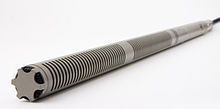
This cancellation method doesn't generally work too well indoors.
Now the polar pattern (cardioid, hyper-cardioid, omni-directional, ect...) is tells you how much rejection a microphone has to sounds coming from the sides vs. straight on.
Now, the problem comes in that people blur the lines between polar patterns and microphone technology. One company might consider a mic "cardioid" while another would look at the same mic and call it "hyper" or "super cardioid". Then on top of that, the specs a lot of companies put out are just outright untrue.
So where does that leave you? My honest suggestion is to get mic recommendations from people that simply use them a lot. There's a lot of good info in the stickies at the top of the page to start from.
This cancellation method doesn't generally work too well indoors.
Now the polar pattern (cardioid, hyper-cardioid, omni-directional, ect...) is tells you how much rejection a microphone has to sounds coming from the sides vs. straight on.
Now, the problem comes in that people blur the lines between polar patterns and microphone technology. One company might consider a mic "cardioid" while another would look at the same mic and call it "hyper" or "super cardioid". Then on top of that, the specs a lot of companies put out are just outright untrue.
So where does that leave you? My honest suggestion is to get mic recommendations from people that simply use them a lot. There's a lot of good info in the stickies at the top of the page to start from.

John Willett
Veteran
A "shotgun" mic. is a microphone with an interference tube - this tube makes the microphone progressively more directional as frequency rises. The longer the tube, the more directional it gets (hence "short gun" and "long gun").
Most gun mics use a super-cardioid capsule as the base - as the interference tube has virtually no effect at lower frequencies, the super-cardioid is the basic directivity (though the old Sennheiser ME88 actually had an omni capsule as the base).
Some manufacturers call the gun mic. "lobar" directivity.
I hope this helps.
Most gun mics use a super-cardioid capsule as the base - as the interference tube has virtually no effect at lower frequencies, the super-cardioid is the basic directivity (though the old Sennheiser ME88 actually had an omni capsule as the base).
Some manufacturers call the gun mic. "lobar" directivity.
I hope this helps.

Postmaster
Dark Side of the Camera
Strange thing, here in Germany almost all the sound guys and boom ops work with shotguns. In- and Outdoor. Never saw a cardioid or hyper at the set. They say they are trained to aim quick, silent and precise enough.
Frank
Frank
Steve House
Veteran
Strange thing, here in Germany almost all the sound guys and boom ops work with shotguns. In- and Outdoor. Never saw a cardioid or hyper at the set. They say they are trained to aim quick, silent and precise enough.
Frank
I'd agree that a cardioid on a boom is pretty rare but a hypercardioid such as the Schoeps CMC641 is pretty much the industry standard for indoor location booming for dialogue. Note that Schoeps categorizes the MK41 capsule as a supercardioid so its pattern has a similar high degree of directivity as a shotgun.
Last edited: