Samyang Anamorphic lenses

KrocanX

Well-known member
I am surprised no one here posted this before (if yes, sorry for double post).

Samyang is apparently developing affordable anamorphic lenses.
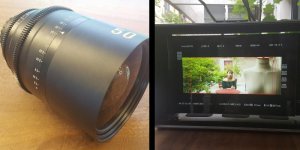
samyang-anamorphic-50mm-lens.jpg

One part of me is excited! But the other part is not. Anamorphic look is for me something special and usually means hi-end and quality. If Samyang bring some really affordable anamorphic lenses I suppose we will see tons of "youtube slomo broll" everywhere and anamorphic will loose "badge special" for me. We will see.

More info:

https://www.eoshd.com/2018/06/new-anamorphic-lens-under-development-at-samyang/
 
If you’re relying on some piece of gear to make things “special” or “high end” then you’re fighting a losing battle with today’s technological environment.
 
I'm surprised nobody else has done this before: is anamorphic THAT difficult?
The only alternative I know about are the SLRmagic ones, and they are a bit expensive and a bit slow for my taste. Let's see if Samyang can do better.
 
Just one question for anyone excited by these lenses? Why? Why shoot a format that is noticeably worse on phone screens and laptops? No insult intended but why go through the hassle? And even if it turns out "well", to what end? In my entire filmmaking career, I've NEVER understood the fetishization of this format. Sure, if you're shooting a Lawrence of Arabia epic thats going to be viewed in anamorphic projection in a theater and your subject matter demands it, go for it. But no filmmaker in that position would utilize Samyang lenses. Oval shaped bokeh and lens flares are just not worth it. What am I not getting here? Is this just a step up from anamorphic iPhone lenses? Enlighten me.
 
Oval shaped bokeh and lens flares are just not worth it. What am I not getting here?
I think it's a matter of personal taste.

I personally do not feel any need for anamorphic for a documentary and most other movies. I think it is applicable for certain kind of scenes only.

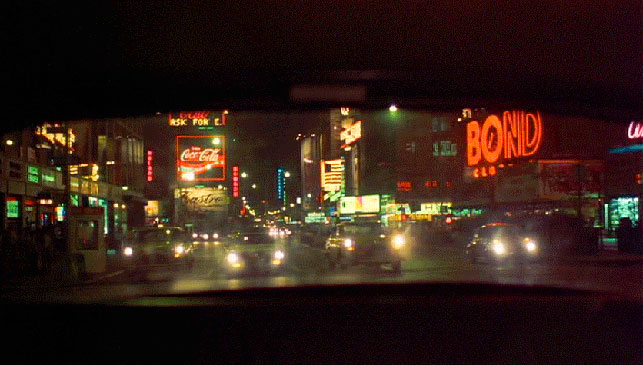
An example: some of the night scenes in Taxi Driver would have been great with anamorphic lenses.

Taxi-Driver_1.jpg


What I like about anamorphic is how the background goes out of focus, it becomes "psychedelic".
Also, it creates a sense of more presence because of the difference between the horizontal and vertical depth of field, it pulls the viewer in.

But ultimately it is about personal taste, some people will like it while for others it does not do anything.


By the way I don't think Lawrence of Arabia was shot with anamorphic lenses.
 
Last edited:
.... By the way I don't think Lawrence of Arabia was shot with anamorphic lenses.

Correct. Super 70 spherical lenses were used and the 35mm prints were anamorphic.


...Oval shaped bokeh and lens flares are just not worth it. What am I not getting here?.... Enlighten me.

The time I asked this question I got the "If you don't understand...." I would like to understand the attraction as well. In no way am I being snarky or putting it down. I simply want to be educated about one's attraction to this format. Since the aspect ratio can be achieved very easily with 4k and cropping, there must be some things such as those pointed out by Cary that make the expense and hassle worth it. It intrigues me to know more.
 
Last edited:
To me its yet another way people want to achieve that "film look" through technology instead of embracing what it means to make film. Sure there are great cinematic works of art that were shot with anamorphic but there are just as many master pieces that were not shot on anamorphic.

I get the desire but have those obsessed with anamorphic really thought about the ROI or the ultimate impact on the end product? Aesthetic quality is one thing but has any highly successful movie not shot on anamorphic ever suffered because of that reason? Would those movies have earned a few extra million at the box office if they would have been shot on anamorphic? Would critics rate those movies any higher? The answer is no.

Its totally acceptable to want a specific look but its more important to focus on story telling, set design, and acting and not get hung up on just chasing anamorphic like its the one thing that will finally lead to that big break. Honestly from a consumer perspective nobody gives a darn. The average movie viewer just doesn't see the same stuff we see. Poll average users what anamorphic means and they might respond that they think it was those Power Ranger characters. Normal people can grasp color, surround sound, 4k, HDR and higher frame rates but when it comes to anamorphic only the ultimate film nerds even give a darn or realize there is a difference.

I'm not saying anamorphic isn't neat because it is very cool that we can do it on even the Panasonic GH4. My point is just how much is the end product going to matter if it was shot on anamorphic. It may provide some bragging rights and street cred but beyond that nobody else gives two $#!&$.

Some of my favorite movies were shot and cropped to a widescreen format. 4k allows us to do that today with an insane amount of detail. As for the flares JJ Abrams killed that for everybody and now a lot of people don't want to see it anymore.
 
I'm not a big fan of anamorphic either, even less so when I never have the budget to rent proper anamorphic lenses and I can only use adapters that make focusing really difficult and lenses a lot softer than they need to be. But sometimes it's not my choice, and if I'm going to work with someone who feels very passionately about the anamorphic look (as has happened before) I'd rather use something more practical like these Samyang lenses hopefully will be.

As to why they like it: they just think it's a beautiful look. Difficult to explain, since it's a personal taste. But they do see and value things that I really don't care about that much.
 
I like the Ana look, and enjoy 239 delivery, (which wastes maybe 20% of a 16:9 sensor)

Id like a wide, medium and tight Ana set (FF 25, 50, 90?) that did the mild 16:9 to 239 stretch.

The samyabngs could therefore be interesting.. but only as a set, an individual 50 has no interest.

Of course Id like reasonable practicality too like a single focus ring.

So Im interested in..
a set of three
sensible focus mechanics
 
The way I see it, choice of lens is an incredibly important part of what we do. Which—at its core and from every department—is supporting the story being told. Anamorphic is just another way to do that. I understand the reasons to maximize resolution, and to me, the flares are rooted deep in my love of Sci-fi.

At the end of the day, there continues to be lower cost options for so many things. I like options. Options are good. As with anything, there are those that will use this who previously would slap a 2.39 png on their footage because it looks “cinematic,” and those who choose a wider aspect intentionally with the larger project in mind. None of this devalues existing tech, just gives options to those who haven’t had them in this price range before.
 
The way I see it, choice of lens is an incredibly important part of what we do. Which—at its core and from every department—is supporting the story being told. Anamorphic is just another way to do that. I understand the reasons to maximize resolution, and to me, the flares are rooted deep in my love of Sci-fi.

At the end of the day, there continues to be lower cost options for so many things. I like options. Options are good. As with anything, there are those that will use this who previously would slap a 2.39 png on their footage because it looks “cinematic,” and those who choose a wider aspect intentionally with the larger project in mind. None of this devalues existing tech, just gives options to those who haven’t had them in this price range before.

Succinct and to the point.

:thumbsup:
 
I probably would have shot my feature anamorphic if I could have. It suits the aesthetic and themes of my story. But it was an extra technical hurdle I would have had to deal with and didn't trust the sharpness and quality of the cheaper lenses. If there was a low cost anamorphic lens that was as easy to use as a spherical lens, fast, with good sharpness and only one focus dial to worry about, I would have used it. Instead I just framed and matted for 2.35. I had a monitor with guides, but found that shooting Cinema 4k (4096x2160) is wide enough that even framing for that, when I matted it, the compositions mostly didn't suffer.
 
If people complain about anamorphic lenses not being different/indistinguishable from other lenses (not just blue streaks on flares) then really the same argument should be applied for all spherical lenses that share the same focal length, and I think we all know that there are big differences on lenses with same focal length, like color, sharpness, bookeh, etc...

Bookeh being one thing people pay top dollar for. Well, with Ana's the toolbox get wider and the wallet lighter, but it is simply not true that there isn't a difference, the only thing is whether or not it is noticeable and appropriate for the project (just like any other decision that affects the image)...

I think that some of the allure with Ana's is their different "otherworldly" effect to how it renders out-of-focus, basically very different from how humans see it and therefore it becomes mostly a subconscious trigger that says "hey, this is a fantasy-world you are watching"...
 
Thanks to all for some honest, heartfelt answers. I totally respect John Fauer ASC and I will go through that edition of FD Times. I think with anamorphic, I too see a lot of hassle for little payoff that an audience will notice. The one example that sticks in my mind is the direct to video comedy I recently saw that was shot anamorphic, it actually distracted from the story and comedy. I know who the DP was that shot it and I've seen some of his other work and it looked good so I chalked that decision to shoot anamorphic up more to an uninformed director or possibly producer and probably wasn't the first choice for the DP because it was utterly the wrong format for the film.

Of course everyone is entitled to their opinion and aesthetic choices, it's just that anamorphic in 2018 seems to be more of a detriment to good filmmaking than an attribute in most cases. I like and agree with what Thomas Smet wrote, too much emphasis seems to be placed on toys (Gimbals, Technocranes, crazy huge LED lighting walls) and effects such as anamorphic than on story, characters, writing and storytelling.
 
There's no question that shooting with Ana lenses would be much slower, and limiting any many ways, including requiring larger lighting packages for example....in the end it always comes down to a choice between a look and practical considerations made between the director, DP and line producer...there is also no question IMO as to there being more to using Anamorphics than flares and oval bokeh....I personally think that a company that succeeds with reasonably priced and fast anamorphic lenses will do well in the rental market...after all, in the same way that Cinema cameras are a niche market, so are the lenses used with them....not too many privately owned $20 to $30 thousand Cine lenses, and that's probably where the market would exist.
 
Just one question for anyone excited by these lenses? Why? Why shoot a format that is noticeably worse on phone screens and laptops? No insult intended but why go through the hassle? And even if it turns out "well", to what end? In my entire filmmaking career, I've NEVER understood the fetishization of this format. Sure, if you're shooting a Lawrence of Arabia epic thats going to be viewed in anamorphic projection in a theater and your subject matter demands it, go for it. But no filmmaker in that position would utilize Samyang lenses. Oval shaped bokeh and lens flares are just not worth it. What am I not getting here? Is this just a step up from anamorphic iPhone lenses? Enlighten me.
Oh boy.... ;)
 
Back
Top