
ectobuilder
Veteran
Re: 1500 vs 700 vs 400 NITS Comparison.
Well I finally exchnged my SmallHD DP7-Pro High Bright (1500 NITS, 24 watt Power Consumption) for a Marshall V-LCD71MD (700 NITS, 10 watt Power Consumption).
Here is an indirect/non-scnetific comparison between these two monitors and a direct comparison with my Ikan iVH7 (400 NITS, 6 watt Power Consumption).
Note that both comparisons were done on different days with slightly different exposures. Comparison 1: DP7 Pro HB vs Ikan iVH7. Comparison 2: V-LCD71MD vs Ikan iVH7. However in both comparisons, you can use the Ikan iVH7 as a reference monitor as the settings for this monitor remained constant across both comparisons.
All monitors were at max 100% Backlight at all times for all tests.
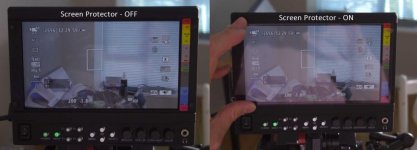
Note that I took the screen protector off the V-LCD71MD as it added about 1-stop of reflection as you can see here:
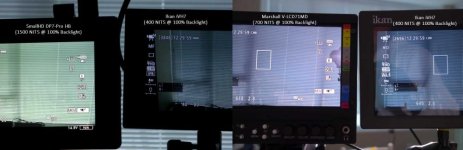
Here is a comparison of the relative brightness between a 1500 NIT vs 400 NIT and 700 NIT vs 400 NIT with my camera's exposure turned down. Notice how much closer 700 NIT looks to the 400 NIT than the 1500 NIT. The 1500 NIT looks to be way ahead of the 400 NIT.
Now here is a comparison of the monitors in bright daylight (clear skies in the afternoon). The sun was about 20 degrees off axis to our setup.
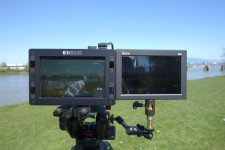
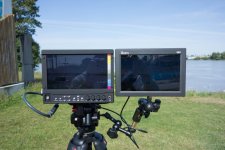
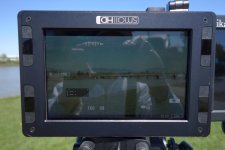
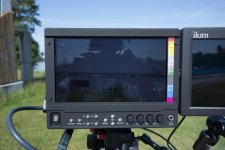
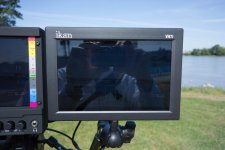
Now here is a close up of each monitor in direct sun light. The close-up shot of the Ikan iVH7 was taken during the test with the marshall as I got the pixels better in focus than with my previous test.
I've been wanting to do this comparison for a long time. I finally saved up enough money to do it as we can't rent these locally in where I live (Vancouver, BC).
Overall which is better? Well it depends on the application:
Small HD DP7-Pro High Bright:
BEST USE SCENARIO: Better if you need to see the image with your face farther away from the screen (i.e. traditional steadicam operation with the screen attached to the bottom of the sled).
PROS:
- Super bright, can see the image on the screen with zero restrictions whatsoever.
- Smart keys. These make quick adjustments of various functions really easily. You can even assign a function of varying scales to each key separately, for example key1 can have the backlight=50% while key2 can have the backlight=89%. This works really well with the fan speed as one can be set to off and the other to medium.
- Solidly built. 100% aluminum all around.
CONS:
- Heavy. The monitor is listed as 1.2 lbs. But when you add the battery plate and battery bracket (I used the Sony L Series Bracket) then it will easily increase to about 2 lbs without the battery (I didn't have a scale to actually weigh it, but it definitely felt around 2 lbs). With 2 x Sony NPF970 batteries mounted, now we are talking about 3.8 lbs in total.
- Power hungry. Uses 24 watts. Because of this, the smallest battery recommended is the Sony NPF970 and it requires two to run. The monitor will drain each battery equally at the same time, so if you insert just one battery, the monitor won't run. With 2 x NPF70, you will get just under 4 hrs of run time. I'm assuming that is with a newly bought battery as my 3yr old ones lasted just under 3 hrs.
- The battery compartment for the Sony L batteries were very hard to insert and remove. You will need two hands to do this, so for a run n' gun application, it makes it very difficult to work with. I prefer to be able to use one hand to change the batteries.
Marshall V-LCD71MD:
BEST USE SCENARIO: This is the best all rounder. If you don't mind putting your face closer to the monitor, around 3 inches, then this monitor is useable in all daylight/brightness scenarios. Assuming you have the screen protector removed of course.
PROS:
- Light weight. The battery plate and bracket are way lighter than the SmallHD. The V-LCD71MD is listed at 1 lbs and with the battery plate and bracket (I used the LPE6 UNI dual bracket) the weight was hardly increased (probably by 70 grams).
- Uses little power (10 watts) for an outdoor monitor. Because of this, we can use LPE6 batteries. The bracket I bought can house two batteries at once and it drains one at a time meaning you can hot swap it in the field.
- Very easy to do one handed battery changes.
- Full 1920 x 1080! The image has zero interpolation with my 7D Mark II and is super crisp. Much easier to see focus!
CONS:
- Not as bright as the DP7-Pro HB. Requires your face to be closer to the screen when in super bright conditions.
- Plastic and rubber construction, feels cheap for a $1700 monitor. But this may contribute to the lighter weight also. Construction is more higher end than the Ikan iVH7 however.
Ikan iVH7:
BEST USE SCENARIO: General indoor use. When shadow accuracy is not a priority and you are on a budget then this is it.
Pros:
- Super light weight for a 7" 720p monitor. Weighs 0.6 lbs with the battery plate built in. When using the Sony L or LPE6 battery bracket, it barely weighs anything above the stock 0.6 lbs spec.
- Uses the least amount of power, 6 watts.
- Budget step-up to an HD monitor (720p).
- Bright enough for any indoor scenario.
Cons:
- Not well calibrated out of the box. Shadow detail is darker than it should be.
- Battery brackets have a lip that do not allow for easy one handed battery changes. I had to saw off the lip in order to make this work with one hand (Sony L and LPE6 brackets).
- 400 NIT not bright for outdoor. Impossible to use in sun light, even with slight overcast with the sun peaking through.
- 100% plastic construction. Could be a PRO since it contributes to the lighter weight.
Well I finally exchnged my SmallHD DP7-Pro High Bright (1500 NITS, 24 watt Power Consumption) for a Marshall V-LCD71MD (700 NITS, 10 watt Power Consumption).
Here is an indirect/non-scnetific comparison between these two monitors and a direct comparison with my Ikan iVH7 (400 NITS, 6 watt Power Consumption).
Note that both comparisons were done on different days with slightly different exposures. Comparison 1: DP7 Pro HB vs Ikan iVH7. Comparison 2: V-LCD71MD vs Ikan iVH7. However in both comparisons, you can use the Ikan iVH7 as a reference monitor as the settings for this monitor remained constant across both comparisons.
All monitors were at max 100% Backlight at all times for all tests.
Note that I took the screen protector off the V-LCD71MD as it added about 1-stop of reflection as you can see here:
Here is a comparison of the relative brightness between a 1500 NIT vs 400 NIT and 700 NIT vs 400 NIT with my camera's exposure turned down. Notice how much closer 700 NIT looks to the 400 NIT than the 1500 NIT. The 1500 NIT looks to be way ahead of the 400 NIT.
Now here is a comparison of the monitors in bright daylight (clear skies in the afternoon). The sun was about 20 degrees off axis to our setup.
Now here is a close up of each monitor in direct sun light. The close-up shot of the Ikan iVH7 was taken during the test with the marshall as I got the pixels better in focus than with my previous test.
I've been wanting to do this comparison for a long time. I finally saved up enough money to do it as we can't rent these locally in where I live (Vancouver, BC).
Overall which is better? Well it depends on the application:
Small HD DP7-Pro High Bright:
BEST USE SCENARIO: Better if you need to see the image with your face farther away from the screen (i.e. traditional steadicam operation with the screen attached to the bottom of the sled).
PROS:
- Super bright, can see the image on the screen with zero restrictions whatsoever.
- Smart keys. These make quick adjustments of various functions really easily. You can even assign a function of varying scales to each key separately, for example key1 can have the backlight=50% while key2 can have the backlight=89%. This works really well with the fan speed as one can be set to off and the other to medium.
- Solidly built. 100% aluminum all around.
CONS:
- Heavy. The monitor is listed as 1.2 lbs. But when you add the battery plate and battery bracket (I used the Sony L Series Bracket) then it will easily increase to about 2 lbs without the battery (I didn't have a scale to actually weigh it, but it definitely felt around 2 lbs). With 2 x Sony NPF970 batteries mounted, now we are talking about 3.8 lbs in total.
- Power hungry. Uses 24 watts. Because of this, the smallest battery recommended is the Sony NPF970 and it requires two to run. The monitor will drain each battery equally at the same time, so if you insert just one battery, the monitor won't run. With 2 x NPF70, you will get just under 4 hrs of run time. I'm assuming that is with a newly bought battery as my 3yr old ones lasted just under 3 hrs.
- The battery compartment for the Sony L batteries were very hard to insert and remove. You will need two hands to do this, so for a run n' gun application, it makes it very difficult to work with. I prefer to be able to use one hand to change the batteries.
Marshall V-LCD71MD:
BEST USE SCENARIO: This is the best all rounder. If you don't mind putting your face closer to the monitor, around 3 inches, then this monitor is useable in all daylight/brightness scenarios. Assuming you have the screen protector removed of course.
PROS:
- Light weight. The battery plate and bracket are way lighter than the SmallHD. The V-LCD71MD is listed at 1 lbs and with the battery plate and bracket (I used the LPE6 UNI dual bracket) the weight was hardly increased (probably by 70 grams).
- Uses little power (10 watts) for an outdoor monitor. Because of this, we can use LPE6 batteries. The bracket I bought can house two batteries at once and it drains one at a time meaning you can hot swap it in the field.
- Very easy to do one handed battery changes.
- Full 1920 x 1080! The image has zero interpolation with my 7D Mark II and is super crisp. Much easier to see focus!
CONS:
- Not as bright as the DP7-Pro HB. Requires your face to be closer to the screen when in super bright conditions.
- Plastic and rubber construction, feels cheap for a $1700 monitor. But this may contribute to the lighter weight also. Construction is more higher end than the Ikan iVH7 however.
Ikan iVH7:
BEST USE SCENARIO: General indoor use. When shadow accuracy is not a priority and you are on a budget then this is it.
Pros:
- Super light weight for a 7" 720p monitor. Weighs 0.6 lbs with the battery plate built in. When using the Sony L or LPE6 battery bracket, it barely weighs anything above the stock 0.6 lbs spec.
- Uses the least amount of power, 6 watts.
- Budget step-up to an HD monitor (720p).
- Bright enough for any indoor scenario.
Cons:
- Not well calibrated out of the box. Shadow detail is darker than it should be.
- Battery brackets have a lip that do not allow for easy one handed battery changes. I had to saw off the lip in order to make this work with one hand (Sony L and LPE6 brackets).
- 400 NIT not bright for outdoor. Impossible to use in sun light, even with slight overcast with the sun peaking through.
- 100% plastic construction. Could be a PRO since it contributes to the lighter weight.
Last edited: