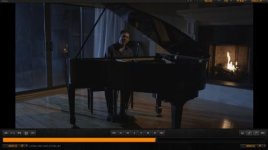
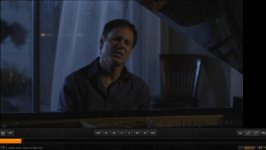
I am just hoping to see the rain drops on the window with little bokeh.
Whats lens / t stop / distance to subject / distance to windows?

Follow along with the video below to see how to install our site as a web app on your home screen.
Note: This feature may not be available in some browsers.
I am just hoping to see the rain drops on the window with little bokeh.
Whats lens / t stop / distance to subject / distance to windows?


Please excuse my ignorance, but isn't a Joker and HMI? Put another way, what's the difference between what you're calling an "HMI" and a Joker made by K5600? THANKS!...
Im thinking about a 2.5K HMI and not sure if this will over kill. Or maybe a 1200HMI + 400W Joker?
...

Please excuse my ignorance, but isn't a Joker and HMI? Put another way, what's the difference between what you're calling an "HMI" and a Joker made by K5600? THANKS!
I just finished lighting and shooting something similar where the script required a large indoor area (approx 1500 sq.ft.) to be lit entirely by "moon light". I can tell you a few tips that I knew going in, but even more that I learned coming out of it. :huh:
But first - what camera will you be using and how high an ISO can you use, and what's the highest f-stop you want for your shoot? The combination of these along with the size of the space you have to work with can help you figure out the minimum power HMI you need. I also had to "hand pick" the lights to rent for the shoot I was on, and didn't have the luxury of just reaching for the "next powerful" light on the day of shooting. So I studied the photometrics of different lights in advance, did some tests with my camera and light meter at home, and took the distances into consideration when settling for the HMI's I ended up renting. Actually that's not entirely true... the location only had three 15 AMP circuits so I had to also consider the max circuit power I'd have available. You will have to factor that in as well.
I had much smaller windows to pump light through so I ended up putting a 575w HMI 5 feet from outside each window angled down into the "set". (Two in total, one lit the positions of the actors, the 2nd light only lit the background). At around 16 feet from the window I had over f11 @ 3200 ISO and at around 20 feet I had around f5.6 @ 3200 ISO. At 32 feet I barely had f0.5. In my case, the windows were small but in your case you have a large window area to cover so you're probably going to need to bring that light far back and use a lens on your light that will match the angle of the light beam to the width of your large window.
So check this out, an ARRISUN 12 at around 20 feet with a "super wide lens" will give you a beam degree between 42° and 65° which will give you a beam diameter between 15 and 25 feet to cover your large window, which will give you a range of 139 to 273 foot candles of back light to work with. If your shooting with a RED or Alexa and let's say you want to keep your ISO around 800 this would give you a working f-stop between f8 to f11 (At 800 ISO you require 42 footcandles of light @ f4 to expose a grey card at 50%.) but in your case it is "back lighting" so you probably want that at least 1 to 2 stops higher than your "frontal fill" lighting so you would actually set your iris for maybe f4 - f5.6 and then use another light inside the room to expose your skin level where you like. On my shoot for certain scenes I actually picked out faces using ARRI 300w or 650w tungsten fresnels with CTB from 20+ feet away.. other times I used daylight balanced kinos for the front fill but the interior lighting you chose will depend on what kind of look you're going for.
COUPLE MOONLIGHT TIPS:
- The moon is like the sun in the sense that it is a light source point from very far away. It casts hard shadows and you should not be afraid of that.
- To cover a "large" area with light you either need a light with a very large surface area, or it needs to be placed far away until the angle of light covers that space you need. There are obvious trade-offs to that. The further back you place a light, the more powerful it needs to be to deliver the light you need - but I feel further back is far more realistic.
- You can never show the source of the moon light in your shot. This seems obvious but depending on where your camera placement is you have to make sure that the light isn't in the shot. And what if its simply on a stand in the background - will you see the stand? So considerations need to be made here for all your shooting angles. The further back you place the light the higher up it will need to go.
- HMI's can have a color temperature more around 6000k but in my case with two identical ones it was largely apparent even with the naked eye that one was somehow much warmer than the other. You can add CTB to get a more bluer/cooler light.
- To keep the moon light looking "bluish" or "cool" in-camera I kept my camera to 3200k (tungsten) white balance. You can tweak further in post if you like.
- If you are pumping light through windows (from the outside to interior) expect some light transmission loss. Anywhere from 1 to 2 (or even more) stops.
- You can always use a warmer source for the fill which will make a nice look, especially if there are suppose to be practical light sources in your interior. On my shoot I stuck with cool fill because there were not suppose to be any other light sources in the interior.
- If the moonlight is your "back light" have it brighter by 1-2 stops over your subject's key/fill light.
- Don't fight the sun! Shoot at night, or completely tent the location you are shooting at if possible.
- Some believe in shooting everything one stop lower and further adding blue or crushing tones in post but you have to experiment yourself and see what you like.
Here's an uncorrected frame grab converted from slog2 to REC709 using a standard LUT from Sony:
HMI backlighting on soldiers f5.6, Kino Flo fill lighting f2.8
You can read more behind the scenes that I published here but I'd be more than happy to answer any questions you have here in this forum.
Other "moon light" resources I dug up in my research leading up to my shoot:
http://www.adventfilmmakers.org/turning-off-the-sun-and-other-easy-tasks/
http://www.brighthub.com/multimedia/video/articles/64769.aspx
http://www.studentfilmmakers.com/forums/showthread.php/6027-Creating-Soft-Moonlight
http://www.dvxuser.com/V6/showthread.php?59009-re-creating-moonlight
http://www.videomaker.com/article/13540-night-lighting
http://www.videomaker.com/article/10368-shooting-day-for-night
http://www.lavideofilmmaker.com/filmmaking/film-lighting-tips.html
http://www.dvxuser.com/V6/showthread.php?173270-Best-way-to-moon-light-ambient
The best "day for night" tutorial online: http://www.videocopilot.net/tutorials/day_to_night_conversion/
Yeah, is there a circuit tester or some kind of device that you can tell if its on separate circuits? I definitely need one asap if there is such a thing!Thanks Ryan. BTW, is there a way other than switching the circuit breakers on and off to tell if a two sockets are separate or share the same line? (I've found home wiring schematics and markings on the breaker box to be rather unreliable/unintelligible.) THANKS again!

Ideal makes a circuit breaker tester. I don't own one so I can't attest to how well it works, but they do exist. The reviews I've read for that one seem pretty good, whereas models from other companies seem to be hit or miss. You plug a transmitter into the receptacle and go to the panel and run the receiver over the different breakers, it beeps when you hit the one corresponding to the outlet with the transmitter plugged in.Yeah, is there a circuit tester or some kind of device that you can tell if its on separate circuits? I definitely need one asap if there is such a thing!