Rain Scene Moon Light!! What light will you use??

Kenneth Lau

Active member
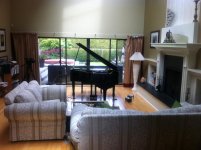
Hey guys, I am shooting a scene where a piano artist will be playing the piano in a lobby at night, and having the BG as window with pouring rain outside.

There will be a wide shot where I would see the whole window plus the piano. I am trying to figure out what kind of light source I need for my key light/ moon light.

Im thinking about a 2.5K HMI and not sure if this will over kill. Or maybe a 1200HMI + 400W Joker?

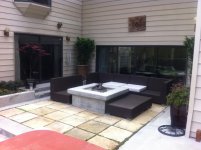
I was thinking, if the 2.5 HMI is too strong, I can place it all the way back, as you see in the picture there are lots of space outside. Also, I can scrim it to stop it down as much as I can. Rather than having 1200 + Joker and then finding it not enough for the wide shot.

What are your thoughts on this?

Btw, the lighting budget will only be around $600 and is a one day shoot kind of thing. So 18K rigged on condor is not going to work for this ... : (
 

Attachments

  • IMG_1070.jpg
    IMG_1070.jpg
    92.5 KB · Views: 0
  • IMG_1071.jpg
    IMG_1071.jpg
    82.8 KB · Views: 0
I just finished lighting and shooting something similar where the script required a large indoor area (approx 1500 sq.ft.) to be lit entirely by "moon light". I can tell you a few tips that I knew going in, but even more that I learned coming out of it. :huh:

But first - what camera will you be using and how high an ISO can you use, and what's the highest f-stop you want for your shoot? The combination of these along with the size of the space you have to work with can help you figure out the minimum power HMI you need. I also had to "hand pick" the lights to rent for the shoot I was on, and didn't have the luxury of just reaching for the "next powerful" light on the day of shooting. So I studied the photometrics of different lights in advance, did some tests with my camera and light meter at home, and took the distances into consideration when settling for the HMI's I ended up renting. Actually that's not entirely true... the location only had three 15 AMP circuits so I had to also consider the max circuit power I'd have available. You will have to factor that in as well.

I had much smaller windows to pump light through so I ended up putting a 575w HMI 5 feet from outside each window angled down into the "set". (Two in total, one lit the positions of the actors, the 2nd light only lit the background). At around 16 feet from the window I had over f11 @ 3200 ISO and at around 20 feet I had around f5.6 @ 3200 ISO. At 32 feet I barely had f0.5. In my case, the windows were small but in your case you have a large window area to cover so you're probably going to need to bring that light far back and use a lens on your light that will match the angle of the light beam to the width of your large window.

So check this out, an ARRISUN 12 at around 20 feet with a "super wide lens" will give you a beam degree between 42° and 65° which will give you a beam diameter between 15 and 25 feet to cover your large window, which will give you a range of 139 to 273 foot candles of back light to work with. If your shooting with a RED or Alexa and let's say you want to keep your ISO around 800 this would give you a working f-stop between f8 to f11 (At 800 ISO you require 42 footcandles of light @ f4 to expose a grey card at 50%.) but in your case it is "back lighting" so you probably want that at least 1 to 2 stops higher than your "frontal fill" lighting so you would actually set your iris for maybe f4 - f5.6 and then use another light inside the room to expose your skin level where you like. On my shoot for certain scenes I actually picked out faces using ARRI 300w or 650w tungsten fresnels with CTB from 20+ feet away.. other times I used daylight balanced kinos for the front fill but the interior lighting you chose will depend on what kind of look you're going for.


COUPLE MOONLIGHT TIPS:
- The moon is like the sun in the sense that it is a light source point from very far away. It casts hard shadows and you should not be afraid of that.

- To cover a "large" area with light you either need a light with a very large surface area, or it needs to be placed far away until the angle of light covers that space you need. There are obvious trade-offs to that. The further back you place a light, the more powerful it needs to be to deliver the light you need - but I feel further back is far more realistic.

- You can never show the source of the moon light in your shot. This seems obvious but depending on where your camera placement is you have to make sure that the light isn't in the shot. And what if its simply on a stand in the background - will you see the stand? So considerations need to be made here for all your shooting angles. The further back you place the light the higher up it will need to go.

- HMI's can have a color temperature more around 6000k but in my case with two identical ones it was largely apparent even with the naked eye that one was somehow much warmer than the other. You can add CTB to get a more bluer/cooler light.

- To keep the moon light looking "bluish" or "cool" in-camera I kept my camera to 3200k (tungsten) white balance. You can tweak further in post if you like.

- If you are pumping light through windows (from the outside to interior) expect some light transmission loss. Anywhere from 1 to 2 (or even more) stops.

- You can always use a warmer source for the fill which will make a nice look, especially if there are suppose to be practical light sources in your interior. On my shoot I stuck with cool fill because there were not suppose to be any other light sources in the interior.

- If the moonlight is your "back light" have it brighter by 1-2 stops over your subject's key/fill light.

- Don't fight the sun! Shoot at night, or completely tent the location you are shooting at if possible.

- Some believe in shooting everything one stop lower and further adding blue or crushing tones in post but you have to experiment yourself and see what you like.


Here's an uncorrected frame grab converted from slog2 to REC709 using a standard LUT from Sony:
HMI backlighting on soldiers f5.6, Kino Flo fill lighting f2.8


You can read more behind the scenes that I published here but I'd be more than happy to answer any questions you have here in this forum.

Other "moon light" resources I dug up in my research leading up to my shoot:
http://www.adventfilmmakers.org/turning-off-the-sun-and-other-easy-tasks/
http://www.brighthub.com/multimedia/video/articles/64769.aspx
http://www.studentfilmmakers.com/forums/showthread.php/6027-Creating-Soft-Moonlight
http://www.dvxuser.com/V6/showthread.php?59009-re-creating-moonlight
http://www.videomaker.com/article/13540-night-lighting
http://www.videomaker.com/article/10368-shooting-day-for-night
http://www.lavideofilmmaker.com/filmmaking/film-lighting-tips.html
http://www.dvxuser.com/V6/showthread.php?173270-Best-way-to-moon-light-ambient

The best "day for night" tutorial online: http://www.videocopilot.net/tutorials/day_to_night_conversion/
 
Last edited:
Are you sure it's moonlight? If it's pouring down rain, there isn't going to be any moon.

Hitting rain with strong cool back light is pretty much an accepted convention, and necessary to see the rain. I have always thought that it was never very realistic, but whatta ya gonna do? (Cue squealing tire sound with a car on a dirt road!)
 
No, I get hitting it with light, but it's probably not necessary to think of it as "moonlight" and try to emulate it. There may be easier solutions to be had by thinking of it as coming from a different kind of light source.
 
No, I get hitting it with light, but it's probably not necessary to think of it as "moonlight" and try to emulate it. There may be easier solutions to be had by thinking of it as coming from a different kind of light source.

Oh yeah. Night exteriors can get very "Creative" when it comes to lighting motivation. I like the story, attributed to David Lynch on "Twin Peaks: Fire Walk with Me", where the DP wanted to put some lights behind some trees on a night Forrest exterior for depth and definition. David Lynch asked, "... But where is the light coming from?". The DP said, "The same place the music comes from". I guess David Lynch didn't laugh!
 
Oh yeah. Night exteriors can get very "Creative" when it comes to lighting motivation. I like the story, attributed to David Lynch on "Twin Peaks: Fire Walk with Me", where the DP wanted to put some lights behind some trees on a night Forrest exterior for depth and definition. David Lynch asked, "... But where is the light coming from?". The DP said, "The same place the music comes from". I guess David Lynch didn't laugh!

I know this feeling. For the shoot I did where "moon light' was suppose to be the only source of light I was asked where the fill light from the opposite direction was suppose to be coming from, and when we switched camera angles and shot with the moonlight as the key and I backlit the actors to separate them from the "black" background I was asked where the rim light was coming from? :huh:

Regarding the rain, if you plan on having it hit the glass be prepared for possibly very distracting patterns and effects being projected on the floors and walls on your wide shots. (or maybe you might like them?). If you will hit the glass with the "rain" you can always stop the "rain" for the wide shots but leave the glass sprayed with water drops, then for medium and closeups turn the "rain" on again. This is a continuity break, but c'mon its an artsy music video by the sounds of it. (Cue horse galloping sound with a horse running in a field!)
 
I am curious about how the OP is going to do the rain effect. It is noted that the lighting budget for the shoot is $600.00. I don't know how much it would cost to rig and run a rain effect, but I would think that it would be more than $600.00.
 
Hopefully he's not going for that straight down serious down pour effect, otherwise if he just wants the glass being sprayed that could be much easier.
 
If you want moonlight (or sunlight), you need a large source as far back as possible. The rays coming from the sun and moon are parallel since they're so far away, so any shadows they produce will be the exact same size as whatever is causing the shadow. If you have a light only 10 feet from a window, you'll see that the area the light covers inside is much larger than the window itself, which would be physically impossible with the sun or moon. It doesn't have to be perfect, but it is easy to screw up. For this reason, I would go with a more powerful source walked back as far as possible. Whether a 2.5k is necessary depends on how far that distance is, what camera you're using, and the desired prominence of the effect

Then again, as others have mentioned, hard moonlight when it's raining is a questionable idea. Maybe something softer or an urban street lighting effect would do better.
 
If you want the rain drop texture to be projected very distinctly and clear on the piano and pianist, you'll want a very hard point source light. Forget fresnels. You want pin sharp.

However, if you don't want this, you can soften it up for that nice feel as well. Maybe a VERY big source to angle the camera and a 12x12 outside to get a nice reflection off the piano.

So many ways, it's why cinematography is so fun.
 
When I think of the dramatic use of rain outside a window, I always go back to the below scene from Richard Brooks' 1967 film of Truman Capote's "In Cold Blood"; photographed by the great Conrad L. Hall.

 
Key points I took away from your post.

Interior / lobby / pianist will be lit via interior sources. If you want to see the rain clearly you would want a hard light source that isnt smashing the rear window too heavily as any water on it well deflect your exterior scene (unless you're OK with that - detracts for me). Therein would lie the tricky part based on your location as you'd want to back light the rain. Once you work that out - youll need to calculate your interior lighting exposure to then calculate how much light you need outside for adequate exposure +/- light position and controls.

P.S. Theres a lot of variables we're all kind of guessing at here.
 
When I think of the dramatic use of rain outside a window, I always go back to the below scene from Richard Brooks' 1967 film of Truman Capote's "In Cold Blood"; photographed by the great Conrad L. Hall.


That came to mind when I was writing my first post. This is what I meant. Hard light will project the texture/shadow of the rain onto the scene.
 
You are going to need a medium size, at least 2.5 to 4K HMI par placed far away to get the effect your looking for. The 400 watt joker is a total waste for this unless you want to use it for fill. However, with the light and the genie to run it $600 is going to be tough.
 
I thought of similar also, but the scene is too wide.

Is it? We were given a wide reference photo and there is a wide shot, but that doesn't mean we weren't going to get CU's, no? Maybe he can not do that for the wide, depending on what he wants, and then go really hard for the CU's to get that texture.
 
Hi everyone,
Thanks for your time and advice. Yes I forgot to mention, I will be shooting with a RED Scarlet and I do not hope to go over 800 ISO.

I have another scene in the same video where the main character is feeling empty and lonely in the room by himself. In this room, I am hoping to cast hard rain shadow on him and the wall. HOwever, in the piano scene, I never thought of casting rain shadow. I am just hoping to see the rain drops on the window with little bokeh.

As I stated, budget of $600 will be very tough to pull this off. I am not renting any Gene for this one, I am hoping to plug the 2.5K into dryer plug. Also, the rain effect will be from backyard sprinklers and 3 hosts, the gettle way
 
Back
Top