Question about color temperature and film.

Okay thanks people.

I was trying to go for a blue night light look, like some thriller movies. I could do everything yellow-orange, but that looks home video-ish, and not very cinematic. I know I can't get T2 exactly, or not even close, but it is closer to go this way than to have everything too normal looking I figured. Is their also a written cinematic rule that their has to be some white or can I have all colored lights, and it's okay to do something unconventional? I will try to do the test on a street with no large signs giving off weird lights, but usually in my experience, those streets with bright signs are better for exposure, so their is less noise. That would be with my Canon T3i settings at 1/50, 800 ISO, so it's not too noisy, and the f-stop at wherever I find a good exposure at.
 
Last edited:
Okay thanks people.

I was trying to go for a blue night light look, like some thriller movies. I could do everything yellow-orange, but that looks home video-ish, and not very cinematic.

Yeah, I know what you mean, I almost stopped the player when this amateur photog named Roger Deakins had this shot in the move "In Time"(2011)... totally video-ish and uncinematic...
I mean not only does he have this amateur 'yellow cast', but also some flair in the bottom of the shot, because of those stupid bright lights in the background. Anyone who is anyone will know that only amateurs have lights in the shot like that...

And now that I think of it... almost the entire film has significant 'yellow' in the color cast... and it is known that amateur Deakins uses 'tungsten' film in broad daylight... any pro knows you only use 'daylight' film in daylight... I think the production should demand their money back for such amateurish efforts...

in-time-movie-image-justin-timberlake-amanda-seyfried-1.jpg


On the other hand, one can note the subtle use of complementary colors of 'bluish' of the background lights, and the 'yellowish' of the foreground, to give visual depth to the shot, and perhaps realize there is a 'thought' going on here... which of course the 'amateur' would never think of...
 
Last edited:
Who is this Deakins hack... ;-)

BTW, Tungsten film in daylight goes very very blue, where Daylight film under Tungsten light goes very yellow-amber.

I couldn't find an example from "In Time", but I think Deakins mentioned on his site using 'tungsten' outdoors for the specific blue cast shots... What I find interesting is how some people 'fetishize' certain looks, or 'avoid' certain looks, labeling them as 'amateur' when in fact, pros use all manner of techniques, but in such a way that they do distinguish themselves from 'happy snappers'.

I happen to like Deakins' style and philosophy, which is pretty much a 'naturalistic' approach to lighting, even when using 'big lights', in many of the films he has shot. And now as ISO values have gone up, and 'graininess' lessened, or with post tools mitigated considerably, one can 'almost' realistically use 'ordinary' lights for film making... at which point it becomes a matter of light placement, composition in the frame, etc... and not whether one can afford a 100K Watts of lighting to achieve a look... (I'll still be dependent on 'sun' light for high 'wattage' lighting... for the foreseeable future...).

But then most of the short scripts I write are on the 'grittier' side, and so can probably stand 'grain'... although I to tend to not like 'digital' grain as much as 'Grain grain'... but, then with some 'noise reduction' and 'adding in grain effects', I can make that work for my aesthetic sensibilities...

I've been thinking about this relative to doing some 'period' shots, not major film or even short film stuff, sort of like small 'vintage' clips. Since I'd be shooting for eventual monochrome presentation (aka B&W)... I would not worry about the color of light so much, but the other problem is that the 'fixtures' are completely different from 30's/40's street lighting... (Think Lili Marleen standing outside the Barracks illuminated with a modern Sodium Vapor on top of a modern lamp pole... doesn't quite work...).

As for modern shooting, eliminating the 'yellow' cast of the street lighting would probably have the opposite effect, well for some people, of kicking them in the eyes that the shot is not 'real', as most modern cities have much 'yellow' for street lighting... or at least a mix yellow with white.... -ish...

Update: Here's one that may be 'tungsten' outdoors, although shot with an ARRI Alexa... Deakins has mentioned many times that he likes to get as much of the 'image' in camera as possible.

2011_in_time_004_article.jpg
 
Last edited:
What I find interesting is how some people 'fetishize' certain looks, or 'avoid' certain looks, labeling them as 'amateur' when in fact, pros use all manner of techniques, but in such a way that they do distinguish themselves from 'happy snappers'.

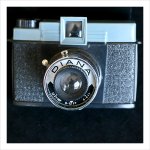
I love when I see magazine cover shots made with a $5 plastic Diana camera...

Gear is gear, but talent is everything!

Dianna_Camera.jpg
 
The movie In Time can make yellow light look good, cause they have control over the lighting. I want to shoot on streets, under natural street light, so when you make NATURAL street light look yellow, it looks more home video-ish, compared to a Hollywood production where they have much more control over the lighting.
 
The movie In Time can make yellow light look good, cause they have control over the lighting. I want to shoot on streets, under natural street light, so when you make NATURAL street light look yellow, it looks more home video-ish, compared to a Hollywood production where they have much more control over the lighting.

Ok... sure... anything you say... but, why bother asking a question, if you already know the answer.
 
The movie In Time can make yellow light look good, cause they have control over the lighting. I want to shoot on streets, under natural street light, so when you make NATURAL street light look yellow, it looks more home video-ish, compared to a Hollywood production where they have much more control over the lighting.

Well, how do you know that setting your wb to make the streetlights appear as white still won't look like home video? Maybe you're happy with the test you shot, but have you actually done any test in which you have a PERSON in front of the camera? Big difference between that and what is essentially 2nd unit coverage.
 
I'm going to try to do a test this week with a person. I figured out how to flush out a good portion of the purple. I raised the color temperature from 1500 k to 2000 k-2200 k. Somewhere in between their is good, perhaps 2100 k is a good middle ground, between the blues not being purple-ish, whilst still keeping the orange light fairly white.
 
Back
Top