Professional variable ND filter for film

Are there any good variable ND filters out there besides the Cinefade VariND that are fast and easy to setup and calibrate? Doing an interior to exterior Steadicam shot without riding the iris or changing shutter angle/ISO to maintain depth of field and look. The problem with taking two rotating polarisers and fashioning your own rig is that they don't have any end stops to calibrate or any readout of the current ND value.

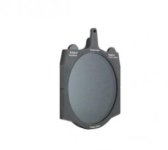
Cinefade-Home-cmotion-CinefadeVariND-combo.jpg
 
Am I correct in assuming that it's not practical to light the interior to lower the contrast ratio?

The poor man's method is to put a gear on a screw-on VND and use a Tilta Nucleus-Nano for the exposure pull.

I don't have any experience with the Cinefade.
 
Let me just say, this is why the DP on a project I produced insisted on using a FS7mk2. He shoots a lot of food series and the variable electronic neutral density filter lets him maintain a consistent DOF etc as we moved along. We were filming craftspeople (baker, luthier, etc.) and that feature really helped us maintain a consistent look and make our days. Anyway...

He was willing to consider the Lindsey Optics variable ND if I -insisted- on using a different camera (I checked my email log; that's the brand he mentioned). But I'm not enough of a dope to force a camera choice on a good DP. Anyway, I have no personal experience, but perhaps worth checking out?

https://www.lindseyoptics.com/neutral-density/variable-neutral-density/

Screen Shot 2020-04-29 at 8.30.47 AM.jpg
 
I don't see any concern with doing your interior to exterior Steadicam shot with the method you describe. It's helpful to use a lens control that gives you the ability to set a custom range, so you can set it for the full ND effect or tailor it to the shot itself (the exact pull you are planning, although if there are any clouds in the sky you'll want the ability to adjust the exterior exposure). Then it's just a matter of doing the pull. As long as you have both ends marked on the knob, you are good to go.
 
Yes exactly, for a long one-shot where you travel through the entire building and then exit into bright daylight it is not practical to light, like this example: https://vimeo.com/406924690

The problem I have with the 'poor man's method' is that it takes time to build and setup your own rig and there are no end stops to calibrate or any information about the ND value, which the Cinefade provides. But thank you for the tip anyway.
 
Let me just say, this is why the DP on a project I produced insisted on using a FS7mk2. He shoots a lot of food series and the variable electronic neutral density filter lets him maintain a consistent DOF etc as we moved along. We were filming craftspeople (baker, luthier, etc.) and that feature really helped us maintain a consistent look and make our days. Anyway...

The FS7mk2 is certainly a great camera for this situation, especially when shooting docs run-and-gun style but it is not a camera that is used in higher end productions. Maybe the VND will be integrated into the Venice one day but there are quality concerns with electronic VNDs, which is why I guess they haven't done so yet.

The Lindsey Optics filter is an option but it takes time to build and setup this rig and there are no end stops to calibrate or any information about the ND value, which the Cinefade provides.

Thanks for your insights!
 
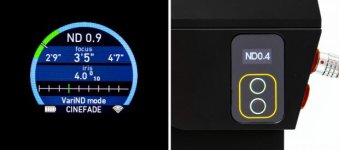
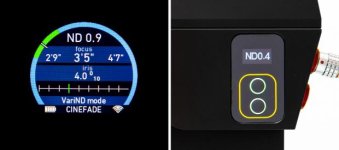
Yes, absolutely. The Cinefade also gives you an exact ND readout on the VariND's OLED screen itself and on the hand unit, so you can even adapt on the go if some unexpected clouds change the lighting levels.

Cinefade-VariND-OLED-ND.jpg
 

Attachments

  • Cinefade-VariND-OLED-ND.jpg
    Cinefade-VariND-OLED-ND.jpg
    18.6 KB · Views: 0
OK so, real world feedback on the build/setup time.

In this thread I discuss an ad hoc version I built after looking into the Cinefade and not being able to fit it into the budget on top of the two FIZ systems I was already planning on: http://www.dvxuser.com/V6/showthread.php?364453-Fair-Uber&highlight=uber/fair

If one doesn't already have access to a FIZ, that would complicate things for sure. In terms of the rest of it, attaching a zipring to a variable ND is easy.

On the day, the calibration aspect took a little extra time versus traditional method of using the iris control on the iris ring. Because we were using a continuously rotating variable ND (there are some with hard stops I believe), the motor had to be stopped by hand after a full rotation on each calibration, which was done when we changed lenses. In the case of using it for a single shot, this would be once on the shoot day. Then by watching the monitor, I remotely rotated the ND until I saw the effect maximized/minimized and set the limits electronically. For the shot described, the camera would have to be placed outside to set the exterior level, then brought inside to set the interior exposure and proceed from there.

Where I can see a concern would be if the exterior was constantly changing in level due to sun going in and out of clouds. Positioning someone with an exposure meter outside who could call in the "stop" (level of ND) as the camera approached would be easy to work with the Cinefade system, as you are able to dial it in on the fly mathematically. The variable ND version is more loosey-goosey in this regard and would have to be done visually. In real world, the degree of success largely depends on the design of the shot and whether you see the exterior coming or not. If the subject is approaching a solid door and flinging it open, requiring a very fast ND pull with little time to react to potential changes, this would be tougher. The Cinefade example above makes it a lot easier as you can see the exterior level through the window in the door with plenty of reaction time possible. Honestly this clip is not a good one to show off the capability of the system, as the interior is already being played largely in silhouette, so the ND pull is not that aggressive.

I had to manage an exposure change of some 7 stops on this clip, back in 2012. This pre-dated variable ND's and Cinefades, so we did it on the iris using a SuperSpeed prime. I don't have notes on it but I am fairly sure the pull was from T11-16 to T1.3, virtually the whole run of the lens, across 6 or 7 seconds. (:28 to :35 in the clip). This shot required the interior to be lit up several stops hotter near the entrance, then we flew in nets over the lights to compensate during the end of the iris pull to create a more seamless effect.


So bottom line on all of this: while the Cinefade system takes a certain amount of the guesswork out of it, the down and dirty method is not terribly complicated either, as long as you already have access to a FIZ (as you will certainly be pulling focus as well as exposure on a shot like this) as well as the ability to maintain clean transmission to a trusted monitor for whoever is pulling exposure. If all of this needs to be assembled by scratch, I can see the value of removing some of the variables by going legit, if your budget allows.
 
Last edited:
Here's something weird. There's a guy with the same name as the OP of this thread who's the founder of Cinefade. What's up with that?

"In this video Oliver Janesh Christiansen, founder and inventor of Cinefade walks you through the setup process and operation of the Cinefade system."

 
Oh holy crap. Thanks Jim.

Oliver, the mods can choose to do with you and this post what they will, but know that you just turned me off as a future client. You should have identified yourself as the inventor of the system and encouraged feedback and discussion and you would have gotten it, but not this faux "we are trying to do a shot, what else is out there?" stunt. Bad move, man.
 
Why the cloak-and-dagger approach? Couldn't you have led with "I'm writing a blog post comparing my product with the competition"?
 
I have obviously upset people and I apologise for my actions. Will be revealing my full affiliation instead of just my full name in any future posts. Thank you for all your insights so far.

All the best,

Oliver
 
Back
Top