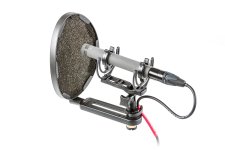
Pop Filter on a Shotgun?

Is it normal to use a pop filter on a shotgun mic in a studio setup? Is the mic's foam cover instead of a pop filter a good alternative or should I really be using a pop filter?
 
If the mic is stationary, and plosives are not an issue, there should be no need for a windscreen. If there's turbulent air and/or the mic is being whipped around on a boom, a windscreen would be wanted.
OTOH, a windscreen offers a bit of protection should the mic get dropped on the floor. A good windscreen should not affect the sound enough to be an issue.
Depending on the acoustical nature of the 'studio', an interference tube mic may not be the best mic choice.
 
Most of the time when I use a pop filter is when I am using a an MKH60 or 416 for trailer or commercial work. After 35 years of voice work I know how to work different mics, but attaching a pop filter in front of the mic is just good insurance. If we are doing ADR, then we will equip the mic exactly as it was on location as a starting point.
 
As the shotgun mic capsule is down the end of the interference tube - it's a fair way away for conventional pops and blasts, but the lightweight foam windshields do offer a bit of extra protection from nose noise - which I've often found you can hear using things like 416s close in.
 
That's because the capsule is right at the front of the mic in that photo. It really depends on the mic, but using a short shotgun in the studio I put the mic above the talent just like I would on production, only I get really close, about brow level.
 
Back
Top