Disclaimer: I know that you probably aren't lawyers, but I'm not necessarily seeking legal advice, just a better understanding of patents based on the opinions of you all. Here's the scoop:
I've been doing some research lately on patents after having a lot of success building a sweet camera slider with my Dad DIY style (he's a machinist). Seeing the recent success of the Rhino Slider, I was hoping that maybe we could sell a handful that he could manufacture via Kickstarter. I'm all for doing things fair and the morally right way, so I did a little patent searching just to make sure we wouldn't be stealing something someone else had already laid claim to.
In my searching, I found that Cinevate has a patent for their different slider systems, which appears to be fairly broad and thus encompass not only our slider design, but also many others that are on the market including CPM's, Cinezen's, and Rhino's, to name a few.
Here's a link to the patent page from Google: http://www.google.com/patents/US7891888?dq=slider+for+camera
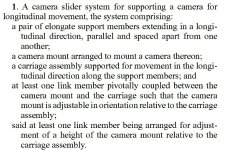
The first claim is pretty broad and seems to encompass these other brands' designs. Is my thinking correct on this? Must these other companies have licensed the patent from Cinevate? Or am I mistaken and those other sliders not violate Cinevate's patent?
I've been doing some research lately on patents after having a lot of success building a sweet camera slider with my Dad DIY style (he's a machinist). Seeing the recent success of the Rhino Slider, I was hoping that maybe we could sell a handful that he could manufacture via Kickstarter. I'm all for doing things fair and the morally right way, so I did a little patent searching just to make sure we wouldn't be stealing something someone else had already laid claim to.
In my searching, I found that Cinevate has a patent for their different slider systems, which appears to be fairly broad and thus encompass not only our slider design, but also many others that are on the market including CPM's, Cinezen's, and Rhino's, to name a few.
Here's a link to the patent page from Google: http://www.google.com/patents/US7891888?dq=slider+for+camera
The first claim is pretty broad and seems to encompass these other brands' designs. Is my thinking correct on this? Must these other companies have licensed the patent from Cinevate? Or am I mistaken and those other sliders not violate Cinevate's patent?
Last edited: