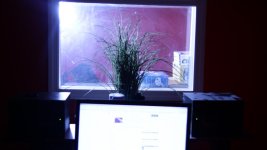
Party (effect) gels.

jamani

Active member
I have done a great deal of research lately on party gels and also conducted some tests. I am new to lighting so there are a few things that still boggle my mind. I do a great deal of music videos and I have always liked the blue-lit background look. Something like this...
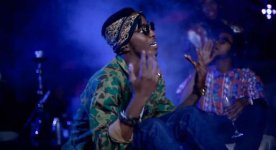

Screen shot 2013-06-26 at 3.16.35 PM.jpg


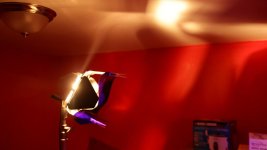
I bought THIS lee filter pack to start experimenting with different filters and so far the diffusion filters work as expected; they diffuse the light. The party gels on the other hand are a whole different animal. I cannot for the life of me get dark colors out of the gels I have. At first I made the mistake of using CTB gels to create the above effect only to find out that those are meant for color-correcting lights and NOT effects. So I tried the 181 (Congo Blue) which I understand is supposed to be one of the darkest blues available but I could not even see the blue effect once I had it on the light. What am I missing here? Then there is the problem of spill from the sides when the gel is pegged to the barn doors using C47s. How are you guys dealing with this? These are some stills from earlier tests I conducted in my studio.
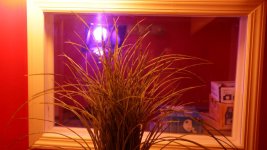
IMG_1468.jpg


IMG_1470.jpg


In the first still, I was trying to rim the plant with blue light but it seems the light is hitting it only it's not blue! The second still shows the spill from the sides.
 
Well to get rid of the spill wrap the lamp with black wrap, also called Cine-foil. Watch out... it is going to get hot and if too close to the bulb will smoke.

http://www.amazon.com/dp/B001KVMK38

I don't know about that gel. What is your white balance set at? The colors look very warm to me.
 
You don't need something as dark as congo blue there. Something like dark blue or moonlight blue would do fine. Congo blue might be cutting too much light for you to see an effect.

Also there clearly is a smoke machine in play in the screengrab you posted.
 
What would really help you is to change your white balance. Looks like your way up there like 7000k. If it was at 3200k then you would see a better result. 2 light loss, your choice with Congo blue may not be the best to begin with, moonlight blue is a better option with less light loss. When ever your trying to turn a tungsten source blue, you always get a lot of light loss. I would try a HMI pr LED light with some blue party gel. As since its already in the blue spectrum you dont have to be so intense with the strength of the gel resulting in more throw, and bigger beams through smoke. 3 looks like you have another source lighting your plant washing out any back light you Congo light could of produce hence the light loss from the gel. Do what you did in the other room and shut the light off. Black wrap your lights whenever you put a effect gel to reduce spill. 4 in your reference there's smoke being lit which is a white source. Your object your lighting is a dead plant that is a warmer spectrum. That plays a big part too. As its easier to turn a white source a color then a source on the different spectrum a different color.
 
Lee 181 is actually a color that is almost pointless in a tungsten fixture. While I have used it in rock and roll rigs the only time I ever used it closer to its real purpose was when I put it on a HMI to do a blacklight effect for a film shoot. A couple of colors that would make more sense to try are:

L119 - not as dark as 181 but still pretty low transmission rate
L132 - medium blue, I use it often in theater and r&r
L201 - while it is CTB it can work very nicely when you WB and key to 2800k
L195 - one of my more favorite blues, only problem is that it tends to burn out quickly on me

Here is the Lee site and a good reference to see what there is, http://www.leefilters.com/lighting/colour-list.html. I would really recommend looking for a local production house or theatrical dealer and picking up a swatch book. They may also have used cuts they could give you to play around with to see what works best.
 
Dont try the experiment in an orange room. turn all other lights off. Your effect is getting overpowered by everything else.
 
Lee 141 is my favorite. Congo Blue is too dark. You have to experiment to find gels that are saturated yet don't get too dark to be useful. Also don't clip your gel to the barndoors so that the gel is inside the door- its likely to leak.
Place the gel around the outside of the door and clip it so the c47's are coming from slightly behind the gel ( hope that makes sense.) Listen to what the guys above said and Learn about color balance. You have a lot of studying to do. Your off to a good start though. Just keep practicing.
 
What is your white balance set at? The colors look very warm to me

What would really help you is to change your white balance. Looks like your way up there like 7000k. If it was at 3200k then you would see a better result

This crossed my mind but I did not experiment with it. Just wondering how it will affect my subject. Will do some tests and report any changes I observe. I had it on "Flash". Not sure exactly what value that is.

Congo blue might be cutting too much light for you to see an effect.

Congo blue may not be the best to begin with, moonlight blue is a better option with less light loss

Lee 181 is actually a color that is almost pointless in a tungsten fixture

Lee 141 is my favorite. Congo Blue is too dark

So the consensus is that Congo blue is useless for my needs. Will give the other suggested ones a try. Interesting though that this particular topic about gels and what people prefer for specific situations hasn't been explored that much on this forum. I scoured for hours and couldn't find that much.

Also there clearly is a smoke machine in play in the screengrab you posted.

in your reference there's smoke being lit which is a white source. Your object your lighting is a dead plant that is a warmer spectrum. That plays a big part too. As its easier to turn a white source a color then a source on the different spectrum a different color.

I have a shoot in a few days and the intention was to use smoke in the BG too. I thought the smoke probably served to increase the effect but I just didn't know by how much. I was hoping to still be able to see the effect without the smoke as I have seen it done elsewhere.
 
Last edited:
Update!

Update!

UPDATE!

New tests with somewhat of an improvement. I took the pieces of advice above and made some adjustments. First, my white balance was set to "Flash" before. Not sure exactly what value that is but this time I did a manual white balance and set it to 2600K. Then I changed the gel from 181 (congo blue) to 201 (Half CTB) for improved output. Then I turned off all the other lights. These were the results...


IMG_1472.jpg


I still need to take care of the spill problem. I just ordered the black wrap linked to by David above so hopefully I should get it before Saturday when I intend to shoot a scene like this. I also have some PAR64s on the way so I'm guessing I should see even better results considering their much-touted punch.

Looking closely at a couple videos that employ this effect with smoke, I realize the smoke machine seems to be intentionally placed near where the light is. Perhaps to hide the actual light at the source where it's more white than blue with as much smoke as possible and further out where the light is bluer the smoke is less concentrated?

What smoke machines are you guys using? Any affordable recommendations?
 
Last edited:
There are two different ways to go with "smoke". I prefer to use haze when enhancing light beams. Haze is a fine mist in the air, think concert lighting and "beamage". Your example shot could actually be fog which tends to be more of a cloud. The trick to using fog is to get the burst timing and amount right. Haze is something you fill the room with and just maintain the same density.

When it comes to haze, if you want to be kind to the camera, physically, then you want a water based haze. I would stay away from oil based haze when cameras are involved even though that haze is much nicer. A good hazer is very pricey and always high maintenance. I always recommend renting one since it will be ready to go out of the case. A couple of machines that would work and that I have used are the Ultratec Radiance Hazer and the Look Solutions Unique 2.1. Both of which put out plenty of haze for what you want to do.
You should also find out if you need to do anything in the venue relating to the fire alarm. While many people will say that water based haze doesn't set off smoke alarms, I have personally done it more than a few times. A couple of other tips when using haze, test it with the airflow in the room. HVAC can do crazy things with it. You also should have an extra fan to put next to the hazer to help break down the haze and even it out. Also, haze looks much better when backlit. You don't need the hazer next to the source.

With fog you won't need much to do the effect but you will have to keep experimenting and trying to match the same amount in each shot/take. Smaller machines will do what you want. Once again, I recommend renting since they are just as high maintenance as hazers. If you want a throw away machine you can get a cheap American DJ one at Guitar Center but I'm betting you'll only get one shoot out of it. I like the Ultratec Stage Fogger for my fogging jobs but they also make some smaller machines. Usually if you rent you may end up with a bigger machine but they are very easy to dial the amount back.

In the end you will just have to keep testing and trying things out. That's the only way to really know what is going to happen. I can do the same show in the same venue year after year and I still find I have to change up my hazer position each time. It's the same thing as lighting, test, experiment and play. It is all an art.
 
Back
Top