PARALINX Triton - A Wireless HD revolution

Dan Kanes

DVXuser Sponsor
Two years after the Debut of the Revolutionary ARROW+ , Paralinx is Proud to announce the all-new Paralinx Triton! Triton is the next-generation wireless video solution for Lightweight Wireless HD videography. It's just as comfortable rigged to a handheld gimbal system as it is being carried on something like a DJI Phantom 2 Quadcopter. With a compact and lightweight design, integrated battery plates and unheard-of range at an affordable price, the Triton system fits seamlessly into any production environment.
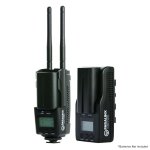

Triton_TX+and+RX.jpg


One of the best aspects of Triton, besides the ease of use, great range performance, and image quality, is that it is SHIPPING NOW!


Please check the TRITON here:


http://www.paralinx.net/store/paralinx-triton-system


Additional Receivers


http://www.paralinx.net/store/paralinx-triton-receiver


https://www.youtube.com/watch?v=VwjkY2WvWuc
 
Hey Dan!

Looks nice! A few questions:

1)While I might be interested in purchasing one or two, would you guys or someone else have them for rent anytime soon and if so, for about how much?

2) How does the reliability compare to the Arrow? It looks like it's got 50% more range and is lighter, etc, but I'm really curious on how the signal is improved or if its the same as the Arrow when you start getting in environments with lots of people and possibly obstructions that might get in the way of line of sight. I don't really plan to ever use them at distances beyond 100ft but still, I'd love to know if it's improvement in signal reliability vs. the Arrow since I've used the Arrow and its nice but had issues around corners or with people in the way of line of sight at mid-range distances.

3) And maybe also how does it compare with your Arrow-X? I know the range is 450ft vs 700ft but I once spoke to you guys and you mentioned that the Arrow-X would be better suited if you needed to be in large groups of people and maybe even around corners etc. and that it performed really well still in those cases vs. the regular Arrow. How does the new Triton fit in that mix?

4) In another forum you mentioned that it can go through concrete walls "most definitely"...keeping on the signal theme, is that something you would say about the Arrow as well?

5) Is "next-generation" a marketing thing or is this really better tech than even your more recent Arrow-X?

6) Finally, and forgive me if this is a dumb question, but if the camera shooting has a bitrate of say 50Mbps or even higher, would the receiver be receiving all that detail when in range?

Thanks Dan!
 
Last edited:
great questions and id like this info as well.

david

Hey Dan!

Looks nice! A few questions:

1)While I might be interested in purchasing one or two, would you guys or someone else have them for rent anytime soon and if so, for about how much?

2) How does the reliability compare to the Arrow? It looks like it's got 50% more range and is lighter, etc, but I'm really curious on how the signal is improved or if its the same as the Arrow when you start getting in environments with lots of people and possibly obstructions that might get in the way of line of sight. I don't really plan to ever use them at distances beyond 100ft but still, I'd love to know if it's improvement in signal reliability vs. the Arrow since I've used the Arrow and its nice but had issues around corners or with people in the way of line of sight at mid-range distances.

3) And maybe also how does it compare with your Arrow-X? I know the range is 450ft vs 700ft but I once spoke to you guys and you mentioned that the Arrow-X would be better suited if you needed to be in large groups of people and maybe even around corners etc. and that it performed really well still in those cases vs. the regular Arrow. How does the new Triton fit in that mix?

4) In another forum you mentioned that it can go through concrete walls "most definitely"...keeping on the signal theme, is that something you would say about the Arrow as well?

5) Is "next-generation" a marketing thing or is this really better tech than even your more recent Arrow-X?

6) Finally, and forgive me if this is a dumb question, but if the camera shooting has a bitrate of say 50Mbps or even higher, would the receiver be receiving all that detail when in range?

Thanks Dan!
 
So, this got me thinking...is there any device that you connect to camera (small battery powered hdmi brick), that transmits video to your phone/tablet?
 
Hi! Just saw the response here and wanted to follow up answering all your Q's

1)While I might be interested in purchasing one or two, would you guys or someone else have them for rent anytime soon and if so, for about how much?

We Can rent you units direct from Paralinx - Rental rate would be $125/day for a 1:1 set. Please email info@paralinx.net for rental arrangement. They should be carried by some rental houses very soon as well - notably Keslow Camera, and Digital Film Studios (818)-771-0019.

2) How does the reliability compare to the Arrow? It looks like it's got 50% more range and is lighter, etc, but I'm really curious on how the signal is improved or if its the same as the Arrow when you start getting in environments with lots of people and possibly obstructions that might get in the way of line of sight. I don't really plan to ever use them at distances beyond 100ft but still, I'd love to know if it's improvement in signal reliability vs. the Arrow since I've used the Arrow and its nice but had issues around corners or with people in the way of line of sight at mid-range distances.

When I say "Triton is a Revolutionary product" - I definitely mean it. It has 50% more advertised range (I think anyone who tests it will be pleasantly surprised on the upside). One of the things that tangibly makes it better, is you have the ability to select a channel yourself manually - this takes the responsibility for finding the best channel off of the System internally, and leaves it up to the user to make the decision "This channel is not giving me the best results - I want to try something different." - I like to call it Full manual Override - a really nice option for those of us who like to use our own brains to try different things for better results. I would say it's More Reliable, more efficient, and really a "NEW WORLD" of product, not an Upgrade or crossbreed of our existing Arrow Family platforms.

3) And maybe also how does it compare with your Arrow-X? I know the range is 450ft vs 700ft but I once spoke to you guys and you mentioned that the Arrow-X would be better suited if you needed to be in large groups of people and maybe even around corners etc. and that it performed really well still in those cases vs. the regular Arrow. How does the new Triton fit in that mix?

I would say Triton is a Huge Improvement over the Original Arrow and Arrow+, but still for the most robust, highest image quality, Automatic Smart Channel Selection, and SDI connectors on transmitter and Receiver - the Arrow-X is a no Brainer. The Triton Slots in nicely for people who want to spend less than $1400 for a 1:1 system that works really well, but can't afford to spend way more than $3000 for a 1:1 Professional Grade HD-SDI link system. I think the manual channel selection and lightness of the product also put it into another category - lightest weight DSLR style HDMI system that is extremely flexible - you want Triton, PRO Grade, all aluminum chassis, HD-SDI connectors, lemon Connectors, you want Arrow-X. I think they make good companions.

4) In another forum you mentioned that it can go through concrete walls "most definitely"...keeping on the signal theme, is that something you would say about the Arrow as well?

Arrow and Arrow+ will work through concrete walls - HOW many concrete walls, and "will I get full range through concrete walls" is a very different story. The thing about these products is that we all have to still obey the laws of physics, and even beyond that FCC Regulations on Output power. Triton features External Omnidirectional Antennas which will greatly enhance the likelihood of having a stable wireless HD Link between camera and monitor.

5) Is "next-generation" a marketing thing or is this really better tech than even your more recent Arrow-X?
Great Question. I wouldn't say it's better - it's just VERY different. We took two completely different product design Approaches to these products. The easiest way to look at Arrow-X is it is a hardcore Pro Grade system - just as ready to hit the biggest Michael Bay Film, as it would be used on a music video you film for your friends on the weekend. It's like the "Red Epic" of Wireless HD systems - its aluminum, it's sexy, you get a LOT of power, and it's a beast. I would compare Triton more to a Sony A7S - you can still do Professional Grade projects with it, but its made for a Grab and Go kind of world, much like the original Arrow - it was born out of a need to move fast, be lightweight, and really for DSLR filmmaking - which is where I really began a lot of my cinematography career - the fast paced DSLR Revolution (for better or for worse).

6) Finally, and forgive me if this is a dumb question, but if the camera shooting has a bitrate of say 50Mbps or even higher, would the receiver be receiving all that detail when in range?

Another really smart question - our system is designed to be UNCOMPRESSED - so, if you are shooting a 50mbps XAVCS codec - your film is actually going through a lot more compression than our wireless system is generating. We don't use a traditional codec approach (which takes time and poops on quality) instead we intelligently modulate the signal and auto-patch dropped bits in a visually lossless manner. What this means is that I don't recommend using a wireless recording as your master - although you could - but when you are in range and not being interfered with, you will have a truly excellent image quality. The way Triton handles Errors is different than Arrow-X. When Arrow-X is getting a lot of interference or Errors, it will change channels automatically and try to keep the picture quality as pristine as possible. Triton is all manual ,which has tradeoffs - you may be able to go further than 450 feet - in fact much further potentially, but your viewed image quality will suffer... you will start to lose picture information - but still be able to see where you are, or generally what you are filming. This is a tradeoff in the product line that I think is really cool and compelling. For best image quality ALL THE TIME, you still want Arrow-X or Tomahawk. For a HARDCORE reliable Link that you can still see image - even if your DJI phantom is a tiny Spec and you aren't sure which way you are turned around - I would go with a Triton.

Food For thought... I know that's a lot to digest, but I recommend getting your hands on the product.

if you want a hands on demonstration in the near future, perhaps we can arrange a demo at Abel Cine or another of our Los Angeles Resellers (and maybe some NYC ones too) where we let people get a hands on feel for the product!

Look out for more videos soon!

Best,

Dan

Thanks Dan!

I appreciate the detail in your answers. A few follow-up questions if you don't mind...

1) Does the Triton have the option to have the system auto select what it thinks is the best channel much like the Arrow-X? Or is it manual only all the time?

2) If the Triton will be $125 to rent, what are the typical rental costs of the Arrow-X and where (LA area)?

Because our particular use is live stream, and we ARE recording the mix, I'd love to get the best image quality all the time as you mentioned the Arrow-X is more suited for. But in most cases, the regular Arrow has worked just fine for us (with one exception where people were in the way of the TX and RX so there was notable degradation of the picture). I'm assuming this Triton will be a better solution for us than the regular Arrow with it's extended range, generally more reliable signal, and ease of the canon/sony battery power, no SDI needed on the TX cuz it's an A7s with HDMI outs... so it comes down to budget on Triton vs. Arrow-X. It's great to have options I guess so maybe I'll swing by Abel Cine or somewhere like that and push them a bit to see how it goes.

Thanks again for your feedback.
 
Hi, is there anyone who is willing to sell a Triton system? Its a bit out of my budget as a new item, so I am looking for a 2nd hand.
 
Back
Top