Parabolic Mic Help

Aaron Jones

Member
I'm looking to play with a parabolic mic with my filming gear to see what possibilities that i can come up with. I got a decent reflector from Ebay HERE, and I'm trying to decide on a mic to use for this project. I originally was going to use my Zoom h4n, but I found that it would not be suited for this purpose because of the angling mic directions. So now I'm still looking to grad a omni mic to use while keeping down cost. Any help would would be great.
 
I've built a number of directional mikes over the years. I'd suggest a cardioid mike for your parabola to reduce off-axis sounds from entering the mix. Place the mike at the focus point of the parabola, pointed at the surface.


Jim
 
Love some of the pictures on the ad and the last one with a 416 type shotgun is rather interesting as the capsule is at the rear of the phase cancellation tube and will not give very good results.

The whole point of the dish is to focus the sound the the same way as a convex mirror or radio dish so a single receptor (mic to me and you) needs to be mounted at the focal point of the dish. Plonking a zoom type stereo recorder as also pictured will give questionable results and the phasing will be way weird.

Parabolics have their uses but as others have said speech is not one of them as they give a unique sound, personally I do not like them and a good quality shotgun will give better results for most applications.
 
Parabolic dish mics are really only good for sports and bird-call type acquisition. Most dishes I've encountered had an omni mic head element.
 
Thank you all for your help, suggestions, and comments. I was thinking of mounting this mic entering in from the rear of the dish like this HERE. So if i am mounting from the rear a omni mic would seem to be best. If mounting it where the mic entering the dish from the open end or front like this HERE then the cardioid would probably be a good fit so that other unwanted sound is not recorded that happens behind the mic.


CARDIOID PATTERN

03P_Cardioid.jpg


OMNI PATTERN

01P_Omni.jpg


So my next question is would phantom power give me any advantage? Again, this build is just for fun and experimentation to capture sound to try and see what I can and can not do with it. For whatever reason i want to try this out as it seems to be a nice toy to play with and maybe find some use for it in my projects. For me it is all about being different and trying to take a different approach to things.
 
I doubt if cutting a hold and pointing the mic thru the parab will give a good sound and you need to mount it facing the dish at the focal point but I seem to recall that the plastic dish will add to the tonal qualities of the audio so as others have said they are mainly for sport FX and bird sounds when pure tonal qualities are not the primary goal.

Remember that no mic is a magic zoom device and all the phase cancellation tubes or a parab is doing is enabling you to focus frequency wise on a particular sound and reject background noise, at the end of the day the mic capsule will still be 10-50 feet from the sound source!
 
You are free to experiment with different mic capsules point in whatever direction you want. But if you look at any of the several million satellite dishes that cover most of the populated parts of the planet, you will note that the pickup (the LNB horn in the case of an antenna) is pointing TOWARD the surface of the dish and AWAY from the source (the satellite up in the sky). Now if you think you are more clever than the people who design satellite dishes, go for it. You can either read up on how parabolic reflectors and directional microphones work, or you can do the experiments and come to the same conclusion as everyone else who came before you. But you will probably learn something either way.

Most of us have been there and done that, and dismissed parabolic reflectors as an impractical novelty for implementing directional microphones. Unless the dish is unmanageable large, it has poor frequency response over a wide bandwidth like audio. That is why you rarely see them except for bird-watchers. At one time they tried them for picking up the voices of football players on the field, but I believe they have taken to putting wireless transmitters in the helmets now. I still see them used a props in scripted fiction on TV. But presumably you know the difference between a scriptwriter's fantasy and reality.
 
" would phantom power give me any advantage? "
Most powered mics inherently have a higher output level than dynamics, which is very desirable in low SLP situations. This results in lower overall system noise as less gain would be needed in the preamp stage... especially with the budget variety. Phamtom pwr. is just a powering source. Most electret condenser mics will run nicely on plug-in power via a AA battery.
 
In that photo the grip is on the back and they have a ? Coming through the back but the capsule must be rear facing for you to get any advantage from the parabolic reflector.

The entire point of the shape is that it take all things, sound light, etc., and because of the angle bounces all that are coming straight in at it to the focal point. This is used in reverse in lights knows as Pars and in spotlights. Also in those search lights you see in front of movie openings and such.

Pointing the capsule forward will bring all of the reflections to the back of the capsule which is a pretty universally dead area. You might get some in the back of an omni, but you will also be picking up a wide angle of sound from the front and the whole point of the reflector is to eliminate that spread as much as possible and to try and get your pickup pattern looking like one of those spotlight beams.

Focusing sound at the back of the capsule is also probably going to give you a bunch of weird phasing, like talking through a megaphone.

As a side note if the dish is reflective at all to light, it will do the same thing to sunlight it does to sound waves so don't point it at the sun or you will quickly destroy whatever is sitting at the focus.
 
Thank you all for your help, suggestions, and comments. I was thinking of mounting this mic entering in from the rear of the dish like this HERE.

Who knows what the internal structure of the mic assembly is in that picture.

In any case, the 'rule of thumb' for parabolic reflectors is that one needs to have several times the longest wavelength desired, in essence a 'high pass' filter.

For audio signals, say not 'several times' but just 1x the lowest desired frequency is 80 Hz, then the diameter of the parabolic reflector needs to be about 4 meters, or 12 feet...

For a 1/2 meter reflector, (about 19 inches...), the frequency cut off is about 700 Hz... which is well into the frequencies of human speech.

For 'surveillance' purposes this type of device is good as long as the listen can understand the spoken utterances.
 
Who knows what the internal structure of the mic assembly is in that picture.
Yes I concur with Mr. Clark.

It seems quite probable the appropriate mic element (likely an electret capsule) is properly located (at the focal point) and oriented (facing the reflector),
but they just slipped a "shotgun" foam gag over the whole assembly because it was convenient. Or maybe they did it for visual effect.
The chances of there being an operable shotgun or cardioid microphone under that foam gag facing OUT are effectively zero.

In any case, the 'rule of thumb' for parabolic reflectors is that one needs to have several times the longest wavelength desired, in essence a 'high pass' filter.
For audio signals, say not 'several times' but just 1x the lowest desired frequency is 80 Hz, then the diameter of the parabolic reflector needs to be about 4 meters, or 12 feet...
For a 1/2 meter reflector, (about 19 inches...), the frequency cut off is about 700 Hz... which is well into the frequencies of human speech.
For 'surveillance' purposes this type of device is good as long as the listen can understand the spoken utterances.
Which is why the only practical applications you see are trying to eavesdrop on the quarterback in the huddle, (where only faint voice sounds are expected),
or birders recording bird-calls (which rarely go below 1KHz).
You also see spies in fictional drama using them, but then you see them using other fictitious hardware as well.
 
Great information fellas and thank you all for your input. I want to build this because to me it looks fun. Secondly, because I'm a electrician and I like to tinker with different projects. It is not to be more clever than anyone or to be a pioneer of any sort it is just to have fun with it. That's the main reason why I'm keeping this budget down as much as possible. That being said, after reading your comments mounting the mic facing into the dish sounds like the best route. There are plenty of examples on the web on how to do this and with different styles of framing and all that. So this brings me to the million dollar question, what mic would you use for this project keeping in mind trying to keep cost to a bare minimum, but needing something that will respond properly or with a reasonable performance? What would be your strategy in picking one out (As far as specs go)? I have read some blogs and other internet literature about the specs one should look for, but I would like to ask you professionals your opinion. What would you look for and why?
 
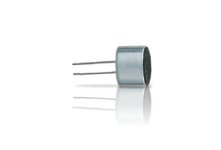
What are you plugging it into? The reason for asking is because IMHO, the first choice would be an inexpensive electret condenser mic capsule like this...

pRS1C-2160122w345.jpg

At your local Radio Shack storefront....
http://www.radioshack.com/product/index.jsp?productId=2062215#

By simply attaching a shielded cable with a 3.5mm mini-phone plug, you can connect to anything that provides "plug-in power" (such as the "External Mic Input" in your H4n)

Or, for only a buck, you can order online a mic with the cable already attached...
http://www.allelectronics.com/make-a-store/item/mic-11/electret-microphone/1.html

480x480-13189.Jpg
 
LOL! Now that is bare minimum... I thought about that type of a condenser mic (the first one listed above) and actually building it from this stage. I also thought of maybe one that I can buy already is assembled like this one HERE. It is phantom powered and can use batteries as well.

Frequency Response: 20Hz~16kHz
Sensitivty: -38dB ± 2dB(0dB = 1V/Pa at 1 kHz)
Output Lmpedance: 150Ω ± 30%(at 1 kHz)
Load Lmpedance: ≧ 1000 Ω
Equivalent Noiselevel: 16dBA
Max. SPL: 132dB(at 1 kHz ≦ 1% T.H.D)
S / N Ratio: 78dB
Electrical Current: 3 mA
Color: Black
Cable Length: 2.5m
Directivity: Omnidirectional
Dimensions: (16 x 4.7)cm (L x D)
Voltage: 1.5V Battery

Which specs would you say is the most important? I have read to look for Signal to Noise Ratio around 70db in this case it is 78db.

[URL="http://www.dvxuser.com/V6/member.php?53316-Richard-Crowley" said:
Richard Crowley[/URL]]What are you plugging it into


I have the Zoom h4n that can deliver phantom power and Both of my cams can also deliver phantom power.
 
I'm not sure if you are joking or you are serious. That microphone is totally unsuitable for use in a parabolic reflector assembly. On several levels.

There are probably hundreds of kits and power supplies and pieces for making all manner of microphones with electret capsules.

Frankly almost none of those specifications are important at all because of the severe limitations of the parabolic arrangement.
You will just have to do the experiment for yourself to discover why they are not very popular.

Please recognize that there is a HUGE DIFFERENCE between "phantom power" (48V) and "plug-in power" (~5V)
Yes you can operate those little electret capsules from 48V phantom power (as from your camcorders), but you will need to use a special circuit to convert the high phantom voltage down to something that won't explode the electret capsule.

If you want to buy something assembled, take a look at some of the products at Naiant

http://www.naiant.com/naiant/microphones.html
X-X_stock_480.JPG
 
You also see spies in fictional drama using them, but then you see them using other fictitious hardware as well.

Well for spy equipment there's the infrared laser bounced of a pane of glass... which I'm sure has similar bandwidth characteristics...

But just think of it... put a object on the set near the talent, let them talk... and take the audio from the voice vibrations picked up by the object...
 
The most important spec is not in that list, the weight! That sucker will have you begging for mercy in a matter of minutes, plus it's way to big, it's going to cast a large acoustic shadow on your reflector making it's pickup pattern more of a donut. But since you won't be able to hold it for more than a few minutes than may not be noticeable ;~)

As others have pointed out they are VERY limited in what you can get out of them.

I find it really interesting that the diagram in Gary's link has the sound wave interaction completely wrong. Well I guess not "completely" but it shows the sounds that the mic WONT be getting. IF you have it set up correctly the only sound that should hit the capsule are sounds that are straight in front of the dish all off axis sounds because of the curvature will be directed to miss the capsule.

Because sounds are far more directional at higher frequencies the sound you get from a parabolic reflector tends to be way over balanced in the treble and very thin. You can also get some reflection from the mic and clamp giving you some phasing.

So for high sounds you have no other way of getting or for surveillance where just hearing is what you want and quality doesn't mater they have their place. But for most things they sound quite bad.
 
The most important spec is not in that list, the weight! That sucker will have you begging for mercy in a matter of minutes, plus it's way to big, it's going to cast a large acoustic shadow on your reflector making it's pickup pattern more of a donut. But since you won't be able to hold it for more than a few minutes than may not be noticeable ;~)

The "father of the cell phone" was being asked questions about his first working model, around the size and weight of a brick.
They asked him "Do you think the weight of the phone will be a problem to users?"
He is reputed to have replied: "Well, since the battery lasts only 20 minutes, they probably won't notice."
 
Back
Top