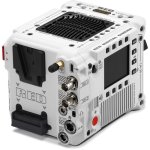
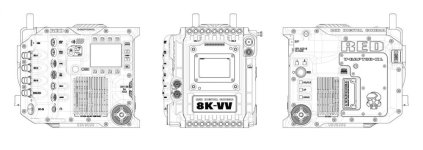
New RED V-RAPTOR 8K VV 120FPS Camera

Phantoms are like $100K-$150K depending on the package so RED's never been up that high.

Your 4K S35 300fps mention is actually exactly what I was thinking for way less than the money above (obviously).

You need RAW proprietary formats for those kind of speeds and it seems like they would be the perfect company to do it, and not necessarily compete with Phantoms but just offer a nice high-speed camera.

But I guess it's moot because they indeed are about resolution, and S35 is probably done, and FF probably can't do much HFR for any reasonable prices, and 4K/120p is enough for 99% so that's that.
 
It does seem like readout speeds and framerates are still on an upward trajectory (unlike, say, dynamic range). I dont know if its strictly tied to computing speeds... I would think so for framerate/throughput/recording. But I wouldn't necessarily think so for readout speed.

But clearly red is doubling their 8K VV framerate. Same thing happening in a host of other cheaper video and stills cameras.

Maybe the trajectory continues? Maybe their 2025 RED T Rex can do 480fps uncropped 8K without breaking a sweat? I dunno

Side note - naming your product after an extinct animal may not be a great move. "RED? Wasn't that the dinosaur camera company?"
 
Well this is interesting. I think I've finally pieced together how the "Production Shell" accessories will sit on the Raptor. I've thrown together a quick little mashup in Photoshop (for those, like me, who have similarly been struggling to piece things together in their heads):

tCmnaHJ.jpg


I was a bit annoyed at first (that the camera didn't simply have these basic functionalities built in), but the more I ponder it, the more I think it's actually a really interesting take on the modularity that has defined DSMC2.

Instead of DSMC2's build-a-cam approach (and all the complexity that it creates), this keeps all of the essentials self-contained (and familiar to everyone who encounters the camera). And then adds a (hopefully) really tidy "Production Shell" to provide the accessory power outputs, and control I/O that conventional productions will need.

And although I'd still prefer a tidier (and lighter) version of the camera, that simply had these three components built-in from the start. If this is essentially what the "production" version of the camera can be - then it suddenly grew much more appealing to me.

From the look of the render of the gold-mount plate, it would appear we'll end up with 2x DTAP outputs, and the 2x Lemo outputs on the top plate. And four outputs is going to be enough to cover the majority of rigging situations without having to add further accessory gack. This is really pretty significant.

It also looks like the "shell" battery plates, will bring the battery-mounting out far enough from the back of the camera, that we can (hopefully) use any existing V-mount or Gold-mount batteries (which will be a relief).

The camera's starting to make considerably more sense to me now (the lens mount/ND situation is the main remaining issue). I just don't understand why they didn't present these aspects of it clearly at the release.
 
I haven't read anything about the camera - zero - but are you saying the current back that it ships with is interchangeable?

Totally aware of the module ecosystem, but if it's not then not sure how you're getting that gold plate and the 2 LEMOs from the rendering on the current version unless that's a separate black model that will be released like that?

image_128596.jpg
 
I haven't read anything about the camera - zero - but are you saying the current back that it ships with is interchangeable?

Totally aware of the module ecosystem, but if it's not then not sure how you're getting that gold plate and the 2 LEMOs from the rendering on the current version unless that's a separate black model that will be released like that?


The built-in v-lock plate is fixed. The “extension” plates will (presumably) slot into the built-in plate (to pass through power), and then be held in place by being secure into the extension top plate.

It’s a battery plate on a battery plate situation.
 
Wooden Camera does that for the REDs, but RED should have created this beautiful camera in different models.

Although the cool thing about WC is you can customize the plate slots from the drop-down menu order page and choose a various combination of D-Taps, USBs or 2-4 pin LEMOs, Hiroses, Fischers.

Random one (they have specific ones for RED): https://woodencamera.com/products/d-...ount-base-unit
 
The built-in v-lock plate is fixed. The “extension” plates will (presumably) slot into the built-in plate (to pass through power), and then be held in place by being secure into the extension top plate.

It’s a battery plate on a battery plate situation.

Surely they could also offer a fixed gold mount at this price point? I guess not a massive deal but would be nice.
 
The built-in v-lock plate is fixed. The “extension” plates will (presumably) slot into the built-in plate (to pass through power), and then be held in place by being secure into the extension top plate.

It’s a battery plate on a battery plate situation.

Not really in the market for this camera, but I hate V-locks... And hate having to use a battery plate adapter on a battery plate. One of the things that bugs the hell out of me about my F55.
 
Not really in the market for this camera, but I hate V-locks... And hate having to use a battery plate adapter on a battery plate. One of the things that bugs the hell out of me about my F55.

You'll be proud I just bought my first gold mount batteries - 2x bebob micro 150W. They even come with a small light on them which you can use for a bit of fill.
 
Surely they could also offer a fixed gold mount at this price point? I guess not a massive deal but would be nice.

You’d think so. You’d also think they could have at least included the two DTAP ports by default, and made a Venice-style over-the-top PL mount, so that people using PL glass with $25k cameras (which is presumably most people using $25k+ cameras) wouldn’t have to fret about the damned lens mount.
 
You’d think so. You’d also think they could have at least included the two DTAP ports by default, and made a Venice-style over-the-top PL mount, so that people using PL glass with $25k cameras (which is presumably most people using $25k+ cameras) wouldn’t have to fret about the damned lens mount.

Good point, there shouldn't even be battery plates with only a single dtap!
 
As long as battery plate ratings or cameras are less than the short circuit current of the battery, d-taps are subject to potential burnout. I would rather use the d-tap that come on some batteries.
 
Good point, there shouldn't even be battery plates with only a single dtap!

Believe it or not, most of the battery plates or our ENG(style) cams, at least the Anton Bauer plates for our ENG cameras, only had one d-tap. But AB made(makes) these nice little four position splitters that solved the problem. I have one on each of my ENG bodies going back to my Betacams. But then they started adding ports to “stand alone” and adapter plates and most of them have three ports, like the plates for my F55 and C300.

And now most batteries have at least one d-tap and some up to two or three. Plus USB ports, too.
 
Good point, there shouldn't even be battery plates with only a single dtap!

Well, they used to make complete cameras.

the fact that we need so many d-taps just shows how far gone we are down that franken rig modularity and endless accesories rabbit hole.
 
Well, they used to make complete cameras.

the fact that we need so many d-taps just shows how far gone we are down that franken rig modularity and endless accesories rabbit hole.

I mean, the basics you can't really avoid on most shoots these days are:

- Wireless Video Transmitter
- Wireless FIZ motors
- EVF
- Monitor
- Rangefinder

Now a lot of builds simplify to just an EVF or just a monitor these days. But you really do need three outputs at the BARE minimum. And four regularly (assuming you have at least one proprietary EVF/monitor that uses a specific conneciton from the manufacturer).

So any new "cinema" camera that doesn't provide AT LEAST 3-4 accessory power outputs is problematic these days, as it guarantees you'll have to frankenrig.

Ideally, they'd spread them around a bit too - two at the front (one for FIZ motors, one for your EVF or Monitor) and two at the back.

This is another area where I'm just blown away by how well designed the Kinefinity Mavo Edge is - they've got two proprietary video ports (for an EVF + Monitor) that handles power and video. A port next to the lens mount (for FIZ motors), and then two additional accessory outputs at the back (for Wireless TX and whatever else). Everything you need can be routed directly on the camera body, with no additional gack (you might just need a couple of custom cables made up). And all you need to do is slap a single v-mount on the back and you're off and running.

That kind of build-simplicity has been the dream for years, and it's finally (almost) here on a camera or two. Hopefully other manufacturers take note, and this just becomes the default approach to standard cinema camera layouts from now on. It's going to save a lot of people, a lot of time, energy, and money on silly little rigging solutions, that should have been designed into the cameras from the get go.

If the Edge had proper customer support channels in the States, I'd be all over that camera.
 
I mean, the basics you can't really avoid on most shoots these days are:

- Wireless Video Transmitter
- Wireless FIZ motors
- EVF
- Monitor
- Rangefinder

Now a lot of builds simplify to just an EVF or just a monitor these days. But you really do need three outputs at the BARE minimum. And four regularly (assuming you have at least one proprietary EVF/monitor that uses a specific conneciton from the manufacturer).

So any new "cinema" camera that doesn't provide AT LEAST 3-4 accessory power outputs is problematic these days, as it guarantees you'll have to frankenrig.

Ideally, they'd spread them around a bit too - two at the front (one for FIZ motors, one for your EVF or Monitor) and two at the back.

This is another area where I'm just blown away by how well designed the Kinefinity Mavo Edge is - they've got two proprietary video ports (for an EVF + Monitor) that handles power and video. A port next to the lens mount (for FIZ motors), and then two additional accessory outputs at the back (for Wireless TX and whatever else). Everything you need can be routed directly on the camera body, with no additional gack (you might just need a couple of custom cables made up). And all you need to do is slap a single v-mount on the back and you're off and running.

That kind of build-simplicity has been the dream for years, and it's finally (almost) here on a camera or two. Hopefully other manufacturers take note, and this just becomes the default approach to standard cinema camera layouts from now on. It's going to save a lot of people, a lot of time, energy, and money on silly little rigging solutions, that should have been designed into the cameras from the get go.

Older cameras used to have plugs and power for the basics like EVF and lens servos, and often a place for wireless video or audio.


So, yes, we need all the power for those things now, but camera philosophy is different. We get minimalistic modular things that we build upon. it is not worse or bad, but it explains why we used to have only one P-tap on the battery plate.

The Mavo EDGE is cool. I'll be getting some time with it this month I hope.
 
Phil Holland:

"V-Raptor XL seems to have:

- Bolt Driven Smart Interchangeable Mount
- 3X SDI
- Dedicated Gig-E, CTRL, 2X AUX
- 3X front facing AUX - ideal for FIZ
- 1X forward facing EVF BNC, likely an additional SDI from the image
- Internal ND. Graphic shows ND/CLR configuration, we can assume there's a mechanical mechanism in there
- Internal ND Up and Down Controls
- 2X User Programmable Side Buttons
- What looks to be a more robust Dual Antennae configuration
- Front Facing Tally Light
- 2X Rosettes
- Significantly larger Fan intakes, heat sync, and likely different cooling (similar it seems to how Ranger vs DSMC2 is for example)
- Smart Side facing Record Button (V-Raptor is front facing)
- Snazzy Integrated Focus Hook, love that. Though looks removeable too".

vr-xl-teaser.jpg - Click image for larger version  Name:	vr-xl-teaser.jpg Views:	0 Size:	53.5 KB ID:	5676321​
 
Last edited:
It does seem like readout speeds and framerates are still on an upward trajectory (unlike, say, dynamic range). I dont know if its strictly tied to computing speeds... I would think so for framerate/throughput/recording. But I wouldn't necessarily think so for readout speed.

But clearly red is doubling their 8K VV framerate. Same thing happening in a host of other cheaper video and stills cameras.

Maybe the trajectory continues? Maybe their 2025 RED T Rex can do 480fps uncropped 8K without breaking a sweat? I dunno

Side note - naming your product after an extinct animal may not be a great move. "RED? Wasn't that the dinosaur camera company?"

"Side note - naming your product after an extinct animal may not be a great move. "RED? Wasn't that the dinosaur camera company?"

What we do know for certain is that dinosaurs are most definitely NOT extinct. Alive or dead, the Stormtrooper Raptors have already sold out.

"But clearly red is doubling their 8K VV framerate. Same thing happening in a host of other cheaper video and stills cameras."

Really? The question is, which other large format cinema camera shoots 8K 120p for under $25,000? Oh right, none.
 
Last edited:
Back
Top