Need help achieving this look

Hi,

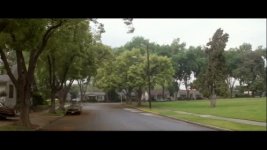
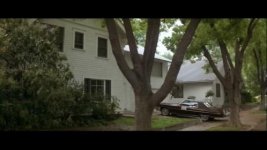
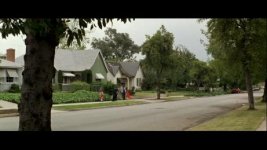
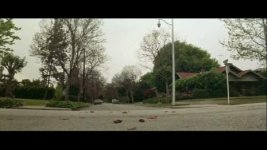
I would love to try to get my project to have the look of this film, (color wise I mean) or something close to it, if possible, any suggestions would be greatly appreciated. I'm using a DVX100b, Sony Vegas Pro 9 and Magic Bullet Looks.

Here's a few pictures
 

Attachments
  • vlcsnap-2010-09-06-22h04m14s186.jpg
    vlcsnap-2010-09-06-22h04m14s186.jpg
    19.5 KB · Views: 0
  • vlcsnap-2010-09-06-22h04m59s116.jpg
    vlcsnap-2010-09-06-22h04m59s116.jpg
    19.2 KB · Views: 0
  • vlcsnap-2010-09-06-22h05m27s138.jpg
    vlcsnap-2010-09-06-22h05m27s138.jpg
    19.2 KB · Views: 0
  • vlcsnap-2010-09-06-22h06m57s21.jpg
    vlcsnap-2010-09-06-22h06m57s21.jpg
    20.1 KB · Views: 0
Last edited:
not sure that this film has any particular 'look'. Just seems like raw footage from most cams. Seems a bit un-contrasty so perhaps not raw footage from something like 7D, maybe it's desaturated just a tad bit and has some of the autumnal colors boosted slightly i.e. the brown greens and such.
Also the fact that it seems to show good dynamic range latitude suggests it was shot on film, or Red or something nice so that could be part of the look in case you are trying to replicate that with a DVX100 which probably has poor latitude (not sure).

Are there other better pictures you can post that show more specifically the look you're trying to achieve? These just don't seem to show that much other than a slightly faded / desaturated color look with hints of boosted yellows in color correction for that slightly antique sepia look.
 
Essentially he wants to mimic the day exteriors from Halloween.

2r1k.jpg
 
Thanks for your reply Homunculus, Zak Forsman is right, I would like to try to mimic the film stock used in Halloween. Basically I'm trying to make a few presets with Magic bullet looks that mimic 70's and 80's film stocks used in popular horror films.(Rosemarys Baby, Friday The 13TH, Halloween etc..) I was hoping somebody has a good working knowledge of Magic bullet Looks ,and could give me some parameters I could punch in and save. I know it won't be "exact" with the gear I have , but even something close would be cool. Anybody that has some tips and tricks to achieve the look of old specific film stocks , I would love to hear them.

Thank you
 
Well considering I don't think they had much color correction back then and the film is probably 16mm or 35mm, it could be more important to talk about cinematography rather than color correction. What I mean is, the specific choices the DP and director made in the creation of the movie that are responsible for its look and that add to the particular atmosphere that they are trying to portray.
For example, the colors you see in the film are indicative of fall as I said, calling them "autumnal" this is a deliberate choice on their part as the movie is after all about "Halloween" and presumably takes place during such time, which IS in the fall.
Everything is deliberately chosen by a good cinematographer.
For instance, notice the patchy front lawns strewn with leaves, giving the subtle feeling of decadence and degradation, notice the deliberately chosen cloudy sky giving not only a "flat" look to the image, but a less saturated look to the colors taking away from their vibrance and also contributing to the gloomy, bleak feel of the film which sets you in this autumnal hazy mood that they are trying to portray for the killings.
If they had shot in sunny atmosphere with bright faces, vibrant lawns and greenery, it would be quite anti-thetical to the mood and atmosphere that they are trying to convey for this type of film.
So with that said, my point is basically in a dated film with no color correction, it's important to study their shot choices and cinematography rather than shooting any which way you like and hoping to match the 'look' of the film with a magic bullets preset.
If you truly want to match the look of it, you have to delve deeper beyond the superficial concept of color correction. For example just look at the lady's clothes that Zak Forsman posted, even the colors of the clothing are diluted, pale, bleak, looking. You can't have vibrant colors then hope to color grade that down to achieve the same look so like I said my advice is to study the DP's decisions on this film in each frame and go from there.
 
The biggest thing this look has is a gray sky giving INCREDIBLY diffuse and nearly shadowless light. I remember those fall days growing up in the north east. You could easily get a month of them. Time to shoot a film. I don't thin I've ever seen more than 2 days in a row here in Florida like that.

I'm pretty decent in Magic Bullet, but this isn't a magic bullet problem. You can do some things like to desat a bit to say 75-85%, lift the blacks a bit, drop your whites to about 80 IRE, slightly boost the blue gamma. And maybe soften the focus just a touch. But beyond that this is a Cinematography issue.
 
Thanks so much for your feedback guys, really appreciate it. Thanks again Homunculus.

PerroneFord I read a lot of your posts, very informative and helpful, you are a very knowledgeable guy, always a pleasure reading your stuff, thanks for taking the time out to respond.

I was reading up on when Halloween was filmed, from what I understand it was shot in the spring of 1978 in various parts of California, South Pasadena, Sierra Madre and Orange Grove Avenue (near Sunset Boulevard) in Hollywood. It was shot in 21 days.

PerroneFord, do you think it would be possible to emulate different film stocks with the parameters in Magic bullet looks, so I can save them as presets? like Kodachrome, Eastman Color Negative, Ektachrome...Each of these have subtle differences, it's something I would like to work on, it would be nice to have a bunch of specific film stocks as presets . Only thing is i don't know enough about it. Since you have a better understanding of Magic Bullet Looks than I do, do you think its possible?, if so i would look into it, if not you could save me some time.

Thank you
 
Emulating is not the same as replicating.

That said, why are you talking about Chromes? Nearly no one shot in Hollywood on chromes. That's what students and broke people did!

Trying to replicate old color stocks isn't too hard. Doing it near perfectly is impossible. But the basics are that older film stocks were less contrast, more grainy, didn't have solid blacks in most cases, had more subtle color, etc.

But to really emulate that stuff you need to do a lot before it hits the sensor. Older glass, filters, hard light, etc. A lot of the look of the 60s and 70s films was that the techniques and technology of the day were different. There wasn't a whole lot of diffusion going on with the lighting back then.

Try to get copies of older, well shot movies. Butch Cassidy and the Sundance Kid, the Sting, Bullit, Apocolypse now, etc. Watch them and learn from them. The lighting, the color, the camera movements (no steadicams back them), etc.
 
that's a good point. I never thought about that but it does seem that diffusion didn't come into its own until relatively recently. I wonder why that was? Films have that super rounded photogenic type of look to the facial modeling now. I wonder where this 'evolution' spawned from, or was just a natural sort of path way
 
that's a good point. I never thought about that but it does seem that diffusion didn't come into its own until relatively recently. I wonder why that was? Films have that super rounded photogenic type of look to the facial modeling now. I wonder where this 'evolution' spawned from, or was just a natural sort of path way

Perhaps I don't understand what you are referring to by 'diffusion'... as this technique has been used extensively since the beginning. There are just 'zillions' of examples of closeups, especially women, where diffusion is used to soften the woman's look. There are also examples where men have diffusion as well.

In the ancient days, lenses didn't have (or didn't have as good) a antiflair coating, and so, point source lights in the frame, or even just 'bright' areas would have a 'softness' that was eliminated in the 60's as the coatings were developed to eliminate the flair. There's also the issue of the actual glass and its transmission characteristics that have changed over time as well...

But using 'netting', or, 'nose grease', have been used for centuries... to create 'diffusion'...

Classic example from 1950...

Marlene_Dietrich_Stage_Fright_Trailer_1.jpg
 
yes I meant hard light sources like a fresnel 2k blasting you in the face without anything in between it as opposed to a fresnel being bounced backwards off a wall or white board or through a diffusion material in order to give a softer light source to model the actor's face in a softer more pleasing way although that's a good point about the lenses also I suppose
 
Thanks again for your reply PerroneFord, lol students and broke people lol, like I said, I don't really know much about it yet, but I'm learning thanks to people like you and Homunculus who take the time out to share their knowledge.

I will definitely re-watch those films you mentioned, with your post in mind.

It's not like I'm trying to find a bunch of easy answers here, or short cuts, or presets. it's more like...a professional musician doesn't listen to music the same way an average person does, the same goes for somebody who knows film, they don't watch a movie the same way an average person does, they see things, how it was made from a technical point of view. So I might watch a film 20 times and still not get what is going on behind the scenes, cause i don't know what to look for, but if a pro tells me what to look for, I have a better chance of seeing it.

Point is, once again your words were very helpful and clear, its obvious your speaking from experience. When somebody speaks from experience, the words have a certain weight to them, your threads and posts seem to stick out to me for some reason..maybe cause they have weight to them lol

I have other questions about work-flow that I would love to hear what you have to say on the subject, like dvx100b to NLE, to DVD, and what would be the most efficient way to go about it to achieve the best quality, but I'm starting to feel like I'm breaking your balls here with stupid question's lol

Anyway, much appreciation, thanks again
 
by the way Jimmy don't get me wrong it's not like it's wrong to ask about color grading or anything like that. It's just on this particular example that you gave, the "look" that you displayed from the screenshots that you want to achieve happens to have nothing to do with color grading and more to do with the stylistic choices that the DP made on this film. If you were talking about something else, transformers perhaps then you can ask about how to match that same color grading. Like I said it's mostly to do with the fact that they didn't even have color correction back then and they had to resort to those stylistic choices as I said to get the exact mood that they want out of the film.
 
Perhaps I don't understand what you are referring to by 'diffusion'... as this technique has been used extensively since the beginning. There are just 'zillions' of examples of closeups, especially women, where diffusion is used to soften the woman's look. There are also examples where men have diffusion as well.

In the ancient days, lenses didn't have (or didn't have as good) a antiflair coating, and so, point source lights in the frame, or even just 'bright' areas would have a 'softness' that was eliminated in the 60's as the coatings were developed to eliminate the flair. There's also the issue of the actual glass and its transmission characteristics that have changed over time as well...

But using 'netting', or, 'nose grease', have been used for centuries... to create 'diffusion'...

Classic example from 1950...

Marlene_Dietrich_Stage_Fright_Trailer_1.jpg


Well, yes, diffusion on the lens has been around almost since the start of photography and was the bread and butter of glamour photography for a very long time, but if you look at the photo, and you see that it is lit with relatively hard light in the classic 3 point lighting style. It is the use of soft, large source lighting that is a rather recent development. Soft lighting really came into it owns with European films of the 1960's, especially the films of the French New Wave, and the British New Wave. Hollywood films, shoot under almost a factory like labor structure up until the late 1960's were hesitant to use innovative styles, and maintained the same ways of doing things, including lighting, that evolved from the B&W days. The late 1960's, early 1970's were a watershed for film. The Hollywood studios' factory structure was dismantled and a new crop of younger filmmakers, influenced by the European styles, were given a chance to make films. You add that to changes in technology, faster film stocks, the advent of smaller, more light weight cameras, sound recording and lighting gear, along with a pennant for shooting on real locations, and you get a great change in how Hollywood films began to look. It amazes me to look at mainstream films from the early to mid 1960s and compare them to films made in the late 1960's to late 1970's. They look like they came from different planets. The faster filmstocks, and portable lighting gear, helped to bring in styles that were more closely linked to real motivated light sources, especially with the use of soft light, like bounced sources, and helped the filmmakers move away from the more stylized established conventions of the high key lighting that was the norm in mainstream films.

While a cinematographer working strictly in the photo-chemical realm has nowhere near the control over the look of a film that newer digital techniques afford, they still have a tremendous amount of control. The suggestion of setting up pre-sets to emulate a specific film stock, is not the answer. Choosing a film stock is the start. After that, the cinematographer can make choices as to the exposure of that stock, the processing of the stock, the printing of the stock, and choices about lenses and filtration. Then there are choices as to the lighting. Finally, and probably, if not more important, at least as important, is the contribution of the art department/production design in the set and costume design and the colors used.

The suggestion of studying older films and their look is paramount. Try to figure out what part of the look that you admire is the contribution of the production design, what part is the contribution of the lenses used, then the stock used, how it was exposed and processed, and what effect any choice of filtration may have had. The next step is to learn the tools you have at your disposal, and how they can be manipulated to get the look that you want. That includes everything, how do you do your production design, how do you light, how do you shoot, then how do you manipulate the image in post. In your example from Halloween, if you shot some scenes under bright sun light, with a DVX on out of the box settings, and then tried to make it look like the scenes from Halloween in Magic Bullet, you will be disappointed. The look of a film is, in most instances, a case of, "All of the above".
 
Like I said it's mostly to do with the fact that they didn't even have color correction back then and they had to resort to those stylistic choices as I said to get the exact mood that they want out of the film.

You're just making up this last bit. There are many ways to manipulate color that are not digital.
 
Thanks a bunch for that post David G. Smith, that was a great read, very informative.

In my limited understanding of film, it seems I over simplified what I was asking, BIG TIME lol.

I think I just need some help in the very very basics, some sort of starting point.

For example, lets just say somebody came up to you and said, all you get is a dvx100b and Sony Vegas 9 lol, and I want you to replicate the over all look of Halloween, as close as possible with only those tools, how would you go about doing it? like right down to the very basics, starting from what scene file settings to chose.

Somebody humor me please, anybody!
 
Well, yes, diffusion on the lens has been around almost since the start of photography and was the bread and butter of glamour photography for a very long time, but if you look at the photo, and you see that it is lit with relatively hard light in the classic 3 point lighting style. It is the use of soft, large source lighting that is a rather recent development. Soft lighting really came into it owns with European films of the 1960's, especially the films of the French New Wave, and the British New Wave.

PerroneFord clarified that the 'diffusion' was on the lighting, not on the lens. I do agree that film speed, and significantly more location shooting, and the necessity of 'different' lights than what were available on a studio set, had a significant change for The Look of film.

Of the 60's era, I had always remembered Zeffirelli's films as having a Look that I liked... but then when I viewed the films on DVD recently, in the case of "Romeo and Juliet"(1968), and "Brother Sun, Sister Moon"(1972), both looked like sh*t, grainy, major desaturated, etc... only "Taming of the Shrew"(1967) seemed to have a 'flavor' of what I remember...

Then again... memory is a fickled thing...
 
I have other questions about work-flow that I would love to hear what you have to say on the subject, like dvx100b to NLE, to DVD, and what would be the most efficient way to go about it to achieve the best quality, but I'm starting to feel like I'm breaking your balls here with stupid question's lol

Most efficient is certainly not the way to best quality. Choose which method you want, and tell me what software you have.
 
Back
Top