P13
Well-known member
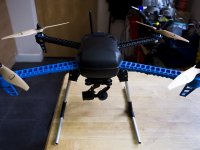
After over 3 months on the pre-order list, I've finally got my hands on the 3D Robotics IRIS quadcopter which can carry a GoPro and has the Tarot gimbal as an option (together with extended legs). I ordered the gimbal hence the wires showing in the photo, I've not connected the gimbal yet, but it's clearly easy enough.
The IRIS is based off open source software developments, which means you won't find release notes that never list bug fixes as being such (DJI record bugs as enhancements which is disingenuous and misleading), you won't find unexpected software limits imposed on you, for example you can set a fully autonomous flight plan without worrying about the number of waypoints. I guess the only downside is when you start delving into the software you can be overwhelmed with options.
I find the telemetry is very useful, even if just used to get real time feedback, the included telemetry comes with a USB that will connect to a tablet so whilst flying, you can have a Nexus (for example) providing you with useful information such as number of satellites locked and the remaining battery life, which it reads out verbally at every loss of 10% remaining charge.
I always fly any multicopter I use with a GPS tracker (in my case I use the Fi-Li-Fi) to be able to find my copter in the event of a GPS glitch (if in GPS mode) or any other error that might result in an unexpected flight out of sight. With the IRIS any such tracker should be mounted at the back so as not to block the built in GPS. A nice software feature is present in the IRIS software called GPS glitch protection which should prevent some fly-aways, it's nice to see this issue being tackled, especially to give new users protection, where DJI much prefer denial and damage limitation:
Details on the algorithm here:
http://copter.ardupilot.com/wiki/gps-failsafe/
http://www.youtube.com/watch?v=wN0c0bKlFUs
I've only had a day with the IRIS so far but my initial thoughts are (based off experience with DJI products):
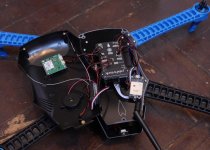
1) The IRIS is nicely put together - with neat wiring, it is also easy to remove the top cover for upgrades.
2) This is a very complete pack right down to providing tools, a lipo bag and even an SD card is already installed to record the telemetry.
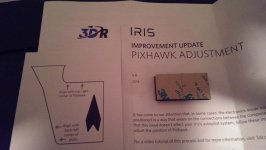
3) The manual and accompanying guides are good but miss details on using a tablet.
4) The handling is user friendly, especially in GPS the IRIS is very tame, far more than a Naza based copter - this is great for new pilots and video people but will likely not be to everyone's taste, RC people in particular will feel restricted.
5) Start up is very quick compared to a Naza, in the same spots I've flown before the IRIS was ready to fly reading well over 7 satellites where the Naza takes longer, I'd guess maybe twice as long but I'd need to time them both side by side to be sure.
6) The GPS lock seems as good as a Naza but the height doesn't feel as well locked in, it sometimes felt the IRIS was losing a bit of height (not enough to be alarmed however).
7) There is a manual mode called Stabilize (STB) for those wanting to unleash the potential of the IRIS which may go some way to address the concern of more experienced RC pilots finding the IRIS tame.
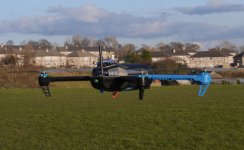
8) The RTL (Return To Launch) mode works with the landing looking smooth.
9) Flight time is poor compared to the DJI Phantom, with the provided 3500 mAh battery, the flight time is claimed at 10-15 minutes, but you're not going to see over 12 minutes in reality, with a gimbal this time is trimmed by 4-5 minutes from feedback I've heard from another user. The IRIS can fly with a 5000mAh battery squeezed in. so I see this problem being solved with a more suitable battery than the one provided. A 5000/5450 mAh will provide a fair 17 minutes without a gimbal.
In summary, the IRIS is a very capable entry level multicopter, it's the first genuine competitor against the DJI Phantom, offering more advanced features in some areas but is taking an unwelcome step back where flight time is concerned, this is one area 3D Robotics need to address seriously along with gimbal integration which ideally needs to be with retractable legs (especially to allow evolution to a 3 axis gimbal) rather than using ugly looking extended legs.
Value for money is an issue I've not addressed, it's not a simple equation, especially for new users such as photographers wanting their first multicopter to learn the ropes. The IRIS is more expensive than similar DJI products, you could argue the IRIS with its autonomous features is a more advanced multicopter, but DJI does offer upgrade paths to add such features, yet at the same time you'd have to concede with the IRIS the battery life and the ergonomics of the gimbal solution fall short of consumers expectations these days.
My personal feeling, especially as a European consumer, is DJIs customer service and software testing falls well short, especially when you weigh it up against the standards you get with photography equipment, 3D Robotics has still to prove itself in this area, but it did send out the right signals with the IRIS by producing a developer edition (effectively a beta test) and was clearly seen to work out potential bugs before the IRIS went to consumers, if 3D Robotics continues this approach along with knowledgeable and helpful after sales support both in the US and Europe then it could justify a higher price tag and consumers would pay it.
For consumers buying a multicopter right now, there's no easy choice, as yet there's no perfect ready to fly multicopter, there's little in the way of redundancy and an expensive crash is likely a matter of when rather than if, but at least there's now more options, more competition and in the long run competition will drive better products.
I like the IRIS from my first day with it, would I recommend an IRIS over a Phantom 2? As yet I don't know, only time will tell.
The IRIS is based off open source software developments, which means you won't find release notes that never list bug fixes as being such (DJI record bugs as enhancements which is disingenuous and misleading), you won't find unexpected software limits imposed on you, for example you can set a fully autonomous flight plan without worrying about the number of waypoints. I guess the only downside is when you start delving into the software you can be overwhelmed with options.
I find the telemetry is very useful, even if just used to get real time feedback, the included telemetry comes with a USB that will connect to a tablet so whilst flying, you can have a Nexus (for example) providing you with useful information such as number of satellites locked and the remaining battery life, which it reads out verbally at every loss of 10% remaining charge.
I always fly any multicopter I use with a GPS tracker (in my case I use the Fi-Li-Fi) to be able to find my copter in the event of a GPS glitch (if in GPS mode) or any other error that might result in an unexpected flight out of sight. With the IRIS any such tracker should be mounted at the back so as not to block the built in GPS. A nice software feature is present in the IRIS software called GPS glitch protection which should prevent some fly-aways, it's nice to see this issue being tackled, especially to give new users protection, where DJI much prefer denial and damage limitation:
Details on the algorithm here:
http://copter.ardupilot.com/wiki/gps-failsafe/
http://www.youtube.com/watch?v=wN0c0bKlFUs
I've only had a day with the IRIS so far but my initial thoughts are (based off experience with DJI products):
1) The IRIS is nicely put together - with neat wiring, it is also easy to remove the top cover for upgrades.
2) This is a very complete pack right down to providing tools, a lipo bag and even an SD card is already installed to record the telemetry.
3) The manual and accompanying guides are good but miss details on using a tablet.
4) The handling is user friendly, especially in GPS the IRIS is very tame, far more than a Naza based copter - this is great for new pilots and video people but will likely not be to everyone's taste, RC people in particular will feel restricted.
5) Start up is very quick compared to a Naza, in the same spots I've flown before the IRIS was ready to fly reading well over 7 satellites where the Naza takes longer, I'd guess maybe twice as long but I'd need to time them both side by side to be sure.
6) The GPS lock seems as good as a Naza but the height doesn't feel as well locked in, it sometimes felt the IRIS was losing a bit of height (not enough to be alarmed however).
7) There is a manual mode called Stabilize (STB) for those wanting to unleash the potential of the IRIS which may go some way to address the concern of more experienced RC pilots finding the IRIS tame.
8) The RTL (Return To Launch) mode works with the landing looking smooth.
9) Flight time is poor compared to the DJI Phantom, with the provided 3500 mAh battery, the flight time is claimed at 10-15 minutes, but you're not going to see over 12 minutes in reality, with a gimbal this time is trimmed by 4-5 minutes from feedback I've heard from another user. The IRIS can fly with a 5000mAh battery squeezed in. so I see this problem being solved with a more suitable battery than the one provided. A 5000/5450 mAh will provide a fair 17 minutes without a gimbal.
In summary, the IRIS is a very capable entry level multicopter, it's the first genuine competitor against the DJI Phantom, offering more advanced features in some areas but is taking an unwelcome step back where flight time is concerned, this is one area 3D Robotics need to address seriously along with gimbal integration which ideally needs to be with retractable legs (especially to allow evolution to a 3 axis gimbal) rather than using ugly looking extended legs.
Value for money is an issue I've not addressed, it's not a simple equation, especially for new users such as photographers wanting their first multicopter to learn the ropes. The IRIS is more expensive than similar DJI products, you could argue the IRIS with its autonomous features is a more advanced multicopter, but DJI does offer upgrade paths to add such features, yet at the same time you'd have to concede with the IRIS the battery life and the ergonomics of the gimbal solution fall short of consumers expectations these days.
My personal feeling, especially as a European consumer, is DJIs customer service and software testing falls well short, especially when you weigh it up against the standards you get with photography equipment, 3D Robotics has still to prove itself in this area, but it did send out the right signals with the IRIS by producing a developer edition (effectively a beta test) and was clearly seen to work out potential bugs before the IRIS went to consumers, if 3D Robotics continues this approach along with knowledgeable and helpful after sales support both in the US and Europe then it could justify a higher price tag and consumers would pay it.
For consumers buying a multicopter right now, there's no easy choice, as yet there's no perfect ready to fly multicopter, there's little in the way of redundancy and an expensive crash is likely a matter of when rather than if, but at least there's now more options, more competition and in the long run competition will drive better products.
I like the IRIS from my first day with it, would I recommend an IRIS over a Phantom 2? As yet I don't know, only time will tell.
Attachments
Last edited: