low dof can kiss my rear

nycineaste

Well-known member
ive been studying great art and photography, and the great soviet silents (which were often stunningly composed) and learning about great composition, which has alot to do with interesting subject placement, VARIED SIZES OF OBJECTS, interesting shapes/negative space, creating depth, foreground objects, etc, and realized i have absolutely no interest in fighting the video look and crying that my DVX images dont look like "film".

http://www.amber-online.com/exhibitions/weegee-collection

https://www.youtube.com/watch?v=yE2L045qTxc

http://wellmedicated.com/inspiration/an-ode-to-criterion-box-art/

excelsior!
 
So you have been studying a lot of old "celluloid films" and come to the conclusion you do not see any necessity to make your DVX cameras images look like "film(celluloid or just theatrical?).. ? Fair enough. . .
 
So you have been studying a lot of old "celluloid films" and come to the conclusion you do not see any necessity to make your DVX cameras images look like "film(celluloid or just theatrical?).. ? Fair enough. . .


lol, no, way to miss the point.

im actually learning to compose images using the shapes in the frame, and would rather focus my energies on that, then being overly concerned with the video look and thus shooting in close-up disproportionately in order to get blurry backgrounds.

and if the audience isnt "visually literate" as I call it, and cant tell somethings well composed/a good picture , Im going to simply not care (im sure alot of folks might look at the weegee photos and eisenstein shots and see nothing special, like I did years ago).

If you watch The ID channel at alot of the shot-on-video crime shows you often see some good compositions like im talking about...
 
Last edited:
Bravo! IMO the excessive use of shallow DOF is not automatically "cinematic", just lazy or ignorant.
Go buy the Blu ray Criterion Collection release of Jaques Tati's "Playtime", shot in 70mm over 3 years. A visual feast and a true example of fine art cinematography as visual storytelling. Not a shallow DOF shot to be found anywhere in it! Great use of selective color, strong composition, moving frames of reference, and sound design as support for visual narrative, not as narrative itself. French social satire at its best. Very funny.
 
Bravo! IMO the excessive use of shallow DOF is not automatically "cinematic", .

Totally.

but more importantly, there is A SKILL SET that goes into CREATING PICTURES, be they MOVING PICTURES (ie "movies" for short), photographs, paintings, graphic design, etc.

It largely involves creating interesting shapes and dynamic divisions within the frame (also depth- foregrond elements, etc) It is VERY prevalent in eisensteins work, as his shots are gorgeously and tightly designed.

That skill set is the big secret to making "cinematic" images that everyone is looking for, or, more accurately, turning your video "snapshots"/home video into MOVING PHOTOGRAPHS. Its NOT SHALLow DOF. Its COMPOSITION/PICTURE MAKING WITH A CAMERA

Its takes becoming "visually literate" as i call it- in other words, you can tell a good picture when you see one. if you look at the weegee photos or the eisenstein shots posted above, and you cant tell why they're freeking awesome, then sorry, you dont have it yet.

the only reason i figure this out is because i trained as a fine artist and have a stack of painting books on composition. you wont hear it tallked about in film books except for the rule of thirds, which is just a little entryway to creating asyymetrical yet balanced images with interesting division of space in the frame.

now i know ppl are gonna fight me on this, i could care less, as im quite sure i know what im talking about and wont push the issue beyond this- im trying to share a big lesson im leanring and if you umiss out, you miss out.

if anyone is curious about all this, then look up arthur wesley dow.
 

Attachments

  • Arthur_Wesley_Dow_Sunset_b.jpg
    Arthur_Wesley_Dow_Sunset_b.jpg
    234 KB · Views: 0
Aha, that's not as vague to me as the first post was.. I am glad to hear that you have started bringing more options into your toolbox! Looks like the filmmaking community has gotten a phobia with the shallow depth of field anyways... If only more people started thinking about these choices for themselves instead of just looking inspiration(I'm pointing at Hollywood mostly here..) don't you think?
 
"art is the elimination of the unnessesary"

Shallow DoF is great for close ups since it isolates the characters emotions.

But Orsen Wells used extremely deep focus to achieve his shots; by placing action in all places of the frame and eliminating unnecessary editing cuts.

My general rule is: if you can't hold the entirety of a person in focus on a frame, your far too shallow
 
This laughable, "low dof can kiss my butt" Then adds a picture that is clearly using shallow dof as a tool to move your eyes to the trees in the foreground. Im floored someone thats studied fine arts is so quick to dismiss one of the most important tools in imagery. I'm not saying abuse it, and use it without motivation. But come one, lets get real here.
 
  • Like
Reactions: N3D
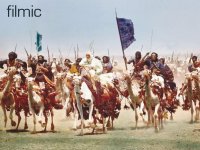
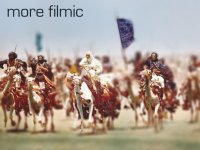
Used these in a presentation I gave a last summer:
 

Attachments

  • Arabia-filmic.jpg
    Arabia-filmic.jpg
    116.4 KB · Views: 0
  • Arabia-more-filmic.jpg
    Arabia-more-filmic.jpg
    74.5 KB · Views: 0
This laughable, "low dof can kiss my butt" Then adds a picture that is clearly using shallow dof as a tool to move your eyes to the trees in the foreground..


I apologize then. I should've called this thread , "there a tons of other composition tools and principles besides shallow dof and I will happily focus on learning and using and mastering those because my dvx100a doesnt excel at shallow dof but I could care less now".

Im not going to bend over backwards to shoot at f1.4 and move back/zoom in when I can focus on learning to compose decent pictures by choosing and adjusting the size and position of the shapes in the frame.
 
Last edited:
I never got a kick out of those Eisenstein flicks - same goes to a lot of other "masters" - especially French films of the 50s to 70s, novel vague, dogma and similar attempts.
They never worked for me - don't know why, but I find them barely watchable.

Frank
 
They probably don't work for a lot of people. .

movies earlier than 1990 dont work for a lot of people. I dont know if I would trust these ppl to lead my taste ;)

eisenstein made some movies that are better than others.

noone should insist that you like or admire something just because its ' famous" or "historically important", but it is true that the more you delve into any particular art form, the more your tastes tend to naturally broaden to encompass that art forms' "great works". It happens because your tastes, your senses, your ability to notice and appreciate things gets sharper. Also its because you start to give these works A CHANCE, whereas before you harbored prejudice because of it's older style.

for my own study and curiousity, I just watched "life of the american fireman", "Trip to the Moon" and the early Lumiere movies. They didn't make me do backflips of enthusiasm or anything, but I dug them for what they were.

you check these things out and give them a chance because you LOVE CINEMA, not because a history book told you to.
 
Last edited:
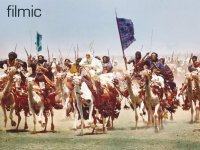
Notice though that this image achieves absolutely the same effect of shallow DOF - implied depth and dimensionality - through the use of a very similar technique, aerial perspective.

That is, the dust and atmospheric haze implies that objects that have less contrast/definition/"presence"are further away in space. It also renders the foreground objects sharp and clear, while blurring those in the background.

I guess this thread should really say:

"There is no one rule that always works?", or

"Fashions change with the times."

"First This; Then a reaction; Then more of That" (ie: Abstraction and the end of narrative painting in the 50's etc. Or: Short skirts, then longskirts again.) :cheesy: Cheers! Michael
 

Attachments

  • Arabia-filmic.jpg
    Arabia-filmic.jpg
    116.4 KB · Views: 0
you check these things out and give them a chance because you LOVE CINEMA, not because a history book told you to.

And then it's easy to fall into the trap that you must love and respect some otherwise **** film because you need to prove you LOVE CINEMA to the other people who you think also LOVE CINEMA.

It's an endless cycle.
 
They probably don't work for a lot of people. There's quite a bit of "The Emperor's New Clothes" in the art world.
I couldn't have said it better myself. I agree with this 10000 times. I am sooooo
tired of art snobs in my town telling me how good some CRAP foreign art film is
and how if i can't see that, I must lack 'appropriate artistic sensibilities' . Nope,
I just don't happen to agree with your crappy 'artistic sensibilities'. I tend to
like more Nat Geo nature films and see those as examples of great cinematography
rather than art house films. Just my opinion but everyone is entitled to an opinion
without being told that you 'must not have developed your artistic side enough to
appreciate this'. Nope, I just think it's crap, sorry.

As for shallow depth of field, I'd say just look at it as another tool. Time and a
place for it but not in EVERY situation. I like to have the option to use it but also
can iris down and use deep depth of field when I want. Having the option is
better than not having it. I remember DVX users using this same argument
when PD150 users argued that 24p was not the 'be all end all'. They said
'yeah but why not have the option to use it if you want?'
Same thing applies here. Options are good. Of course if you DON'T have
the option you do the best you can with what you have!
 
Last edited:
Back
Top