bob'slaststand
Member
I bought an old steadicam by Floatcam. It was really cheap and I know their kit from their jib/sliders and it’s always well made so I was curious. When it arrived I was amazed at how well put together the thing was, made my Steadicam Flyer look cheap and flimsy. So I set about doing it up.
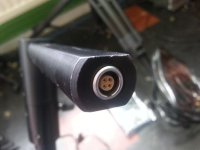
It has a 2 pin Lemo for power and a BNC for video on the stage. The bottom has a cross bar with a battery mount on one side and a monitor mount on the other. All the wiring is internal with a 2 pin Lemo on the battery side that the battery plate plugs into and a 4 pin Lemo on the other side for the monitor.
It came with a standard definition monitor with one cable coming out ending in a 4 pin Lemo for both power and video signal.
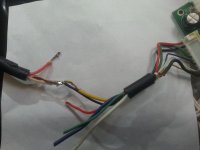
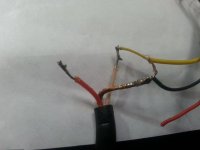
Now the monitor was broken and I needed to upgrade it to SDI anyhow so I removed the cable from the broken monitor but was surprised to find only 3 wires inside. One red, one white and one running in the sheath.
I contacted Floatcam and they told me that the white wire was video the red DC positive and the video and Power shared the negative/ground in the sheath.
I made up some cables just with connecting blocks to test everything before putting the cables together permanently. I built a V-mount battery plate for the power and plugged it in the 2 pin Lemo end of the bottom bracket. I checked the 2 pin Lemo in the stage and it was live, 15V. I checked the red positive and sheath negative wires in the monitor cable and there too 15V, all was working as it should with the correct polarities.
So I wired up a temporary video cable splitting of the monitor cable with the white to the BNC pin, the negative to the BNC barrel and the red, the DC positive, I left unconnected as both the camera and the monitor were running of their own batteries and the monitor was 12V. I just wanted to see if there was a video signal.
This is where it goes terribly wrong. I plugged the SDI from the camera into the BNC in the stage and plugged the BNC from the monitor cable into my monitor and it fried the SDI unit on the back of the monitor.
I was confused, how could the video signal from a battery powered camera fry my monitor SDI in. So I checked the voltage coming out of the white video wire in the monitor cable and it was 15V! I unplugged the camera and checked again, still 15V. I checked the red cable and it was 15V too?
I was a bit confused about how the video would work in this set up. I presumed that the white video cable just ran from the BNC on the stage to the monitor but now I see there must be somewhere in the steadicam that the battery positive is connected to it.
I’m not too good with electronics and I’m trying to lean as I go along, dose it make sense that the current from the battery plate would be coming down the video feed? Was it simply that 15V was too much, if it had been 12V would the SDI in be fine? Do video feeds normally carry high voltage like that?
I’m really confused and not sure what to do next. I am hoping someone on here who knows more about this kind of thing would read this and help me out with some explanation.