live performance set up

couldn't find a suitable section for this but i'll just post here.

For one of my university assignments I had to write all you have experienced whilst working in the television studio over the past semester. I have finished it but am confused with the audio live performance set up as I never worked in the sound role that often.
help.jpg

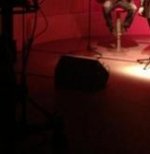
Here is the stage monitor cabinet.

i remember there was a piece of equipment called 'the snake' which i think the microphones were attached by xlr cables. would the snake have then been plugged into the stage monitor cabinet?
The stage monitor cabinet was then connected to the wall box of the studio via xlr again.

my terms are probably all wrong though
 
A "snakes" is a bundle of audio cables with one end either branching out into a set of individual cables like the arms of a hydra or terminated at a breakout box to provide a connection point. The breakout end would be where the various mics on-stage would connect while the other end would go to the wall-box, ultimately to connect to the audio board in the control room. The audio board would send a monitor return back into the studio that would connect to the stage monitor speakers to provide feedback to instrumentalists or dancers. The monitors might be fed through a return cable bundled with the other cables in the snake or it might have a separate cable altogether. It's very unlikely stage mics would connect directly to the monitor cabinet. Vocalists would typically receive their monitor mix through earpieces fed by a wireless IFB (Interruptable FoldBack) system through a bodypack receiver that they wear. Watch 'American Idol' closely and you can see how the big boys do it - the performer's earpieces are clearly visible and with certain camera angles you can get a glipse of two packets concealed on their backs; one packet is a transmitter for a wireless lav mic while the other is the receiver for the IFB system feeding the monitor mix and director's cues to their earpieces during their performance.
 
A "snakes" is a bundle of audio cables with one end either branching out into a set of individual cables like the arms of a hydra or terminated at a breakout box to provide a connection point. The breakout end would be where the various mics on-stage would connect while the other end would go to the wall-box, ultimately to connect to the audio board in the control room. The audio board would send a monitor return back into the studio that would connect to the stage monitor speakers to provide feedback to instrumentalists or dancers. The monitors might be fed through a return cable bundled with the other cables in the snake or it might have a separate cable altogether. It's very unlikely stage mics would connect directly to the monitor cabinet. Vocalists would typically receive their monitor mix through earpieces fed by a wireless IFB (Interruptable FoldBack) system through a bodypack receiver that they wear. Watch 'American Idol' closely and you can see how the big boys do it - the performer's earpieces are clearly visible and with certain camera angles you can get a glipse of two packets concealed on their backs; one packet is a transmitter for a wireless lav mic while the other is the receiver for the IFB system feeding the monitor mix and director's cues to their earpieces during their performance.

The singers we recorded definitely never wore ear-pieces, from my memories of the events I am certain we plugged an xlr cable into the monitor cabinet before we went near the wall box. Not much detail is needed in this write up though as I only need to make up another 200 words or so.
 
IFB is something only TV presenters use - interruptible foldback would, if use, wreck a vocalists performance. IEM monitors usually are run from the same set of busses in the mixer. Normally a mix of pre-fader sends from the individual channels or groups. IEMs can be mono, stereo or twin channel, depending on what the person needs. In-vision presenters need the director, the singers just want themselves, track, and frequently reverb on their voice!


Current monitor kit that uses loudspeakers seem split between passive types, where the only connector on the wedge is a speak on - the amplifier being elsewhere, but more frequently they have internal amps, and then do get a feed via XLR, at line level (and they need a separate power cable too). They're a bit heavier, but this system is quite common now.

So the snake stage box could well have been connected to a powered monitor cab via XLRs - you probably won't remember, but this would have been a reversed gender connection. Mic box inputs are female, and their outputs male.

It's actually quite complicated how they actually set the kit up for these shows - and in general, they will hire in PAs for the bigger shows, while they just 'manage' small ones.

The studios with decent kit could actually do a monitor mix from their main audio desk, but most don't - despite the kit being capable. The monitor mix comes from a mixer on the studio floor where the operator can communicate with the band. If the band can play with one or just two monitor mixes, then for a short program segment or insert the audio mixer in the control area can do the job.

It's odds on your lecturers won't know exactly how it was done, so keep to basics. Mics go to the stage box. The 'snake' is usually the mic box and the multi-core cable, this goes to the facilities panel on the studio wall. The other end appears in the audio control room. The audio mixer has auxiliary outputs that can be fed back to the snake, and then from the stagebox to the monitor speakers (if powered), or to an amp in a rack, then to the monitors if ordinary speakers. These auxiliaries can also feed an IEM system (In Ear Monitor) system that then allows the performers to wear small radio receivers that provide their monitoring. In a more sophisticated system, each performer can have an individual mix - only what they want. The singer might want their own voice, the keyboards, and a bit of drums, while the bass player wants the drums and no singer, and the drummer wants bass and LOTS of himself - that kind of stuff.

Studio comms is a very, very different thing. In general there are lots of individual needs - many sources, many destinations. Some need to be continuous, others drop in and out as needed. Some presenters simply cannot talk with all the jibber-jabber going on in the gallery - it throws them. They like IFB - the interruptible feature meaning somebody presses a button and only then, do they hear the director or other source (other source being perhaps a researcher, who feeds them data they can magically repeat!). Better presenters develop the knack of having continuous talkback (Talkback being a better term for this reverse audio than Foldback, which is generally what the monitors and IEMs are fed with) and can 'tune it out', simply ignoring it, but subconsciously being able to switch back when something important happens.

That's a quick tour around music for TV. I'm not sure how deep you have to go. Feel free to PM me if you need specifics for your work. Paul
 
Back
Top