Lighting continuity

Ronald Gerald Smith

Active member
I know that it is attractive for the far side of the face to be lit brighter than the near side. But I find that some times it is taken too far, as people will sacrifice continuity for it. I know that this is almost a late-night rant on my part, but I see this so often in films, especially the newer studio produced films, such as the upcoming "Love and Other Drugs" starring Jake Gyllenhaal.


I know that these lighting continuity changes don't generally make the average viewer protest angrily, but these are some major lighting changes. I do see this all the time. But I most often see this on closeup singles, or over the shoulders, or dirty two shots (whatever you call those shots). Are these the only types of shots that allow this type of drastic lighting change? How do you all feel about lighting like this? Does it distract you? Do you accept it as a natural way of lighting a set?

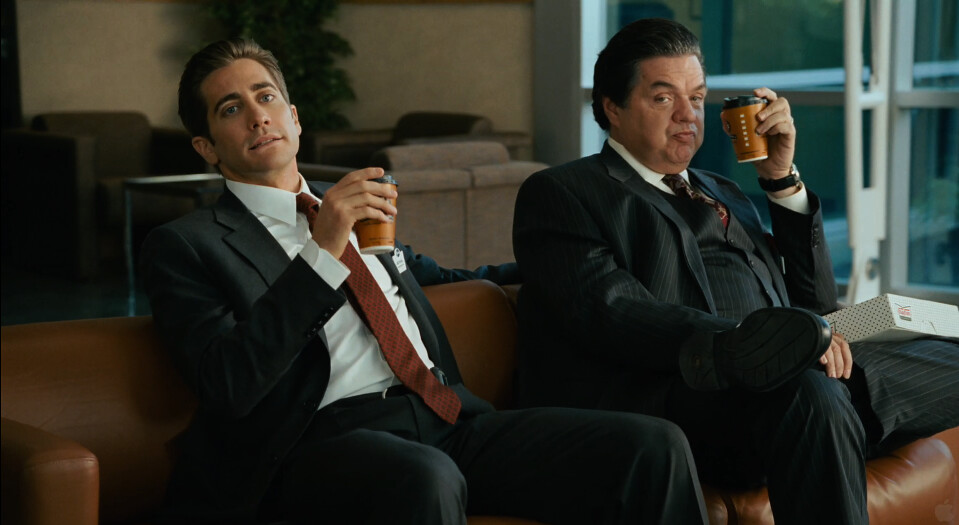
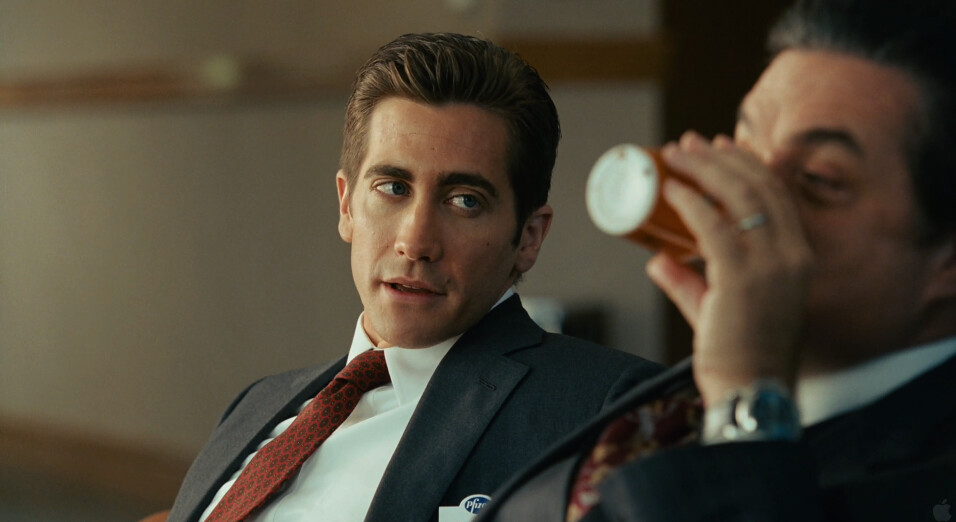
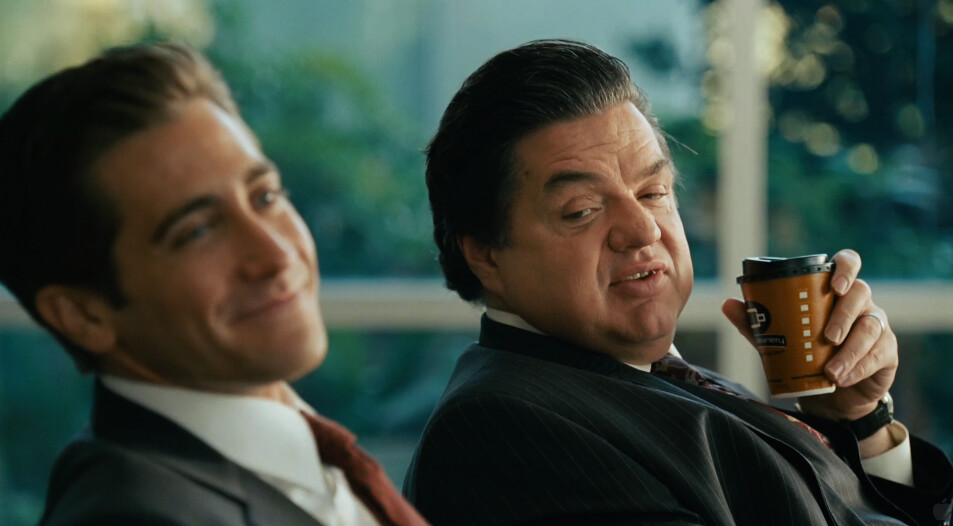
Check out the following stills:
4889962371_07579a2cb5_b.jpg


4890558950_fb76aceee4_b.jpg


4889963063_cedb9b1898_b.jpg
 
Last edited:
1. Most audiences never see it
2. Agents want their stars to look great on-screen
3. Actors want to be "taken care of"


Doesn't bother me at all. Lighting continuity is one of the HARDEST things to get. Especially on outdoor, or predominant outdoor light shots.
 
Definitely, I can see the reasoning behind it. I do think that it is a major change though, as they are moving the key light to the other side---which is almost like moving the sun from one side of the room to the other. Is this change not as noticeable because we are seeing reverse angles of closeups?
 
The change is noticeable because you are technically savvy, and you are looking for it. Practically any large film that shoots over multiple days or in multiple locations will have these kinds of changes.

The changing of the key side is particularly troublesome, but they were fighting daylight versus indoor light. The question is would the change of key position been more bothersome, than the change in color of the scene as that warmer tungsten indoor light would have been dominant in the reverse.
 
Actually, I do think if the lighting direction changes, a lot more than just technically-savvy people notice, particularly if it changes significantly.

In the first couple of shots, the motivation for the light is the window to their left. But then in the last shot, it looks like the window shifted 90 degrees. Now, I haven't seen this in context, so I don't know what the impact really is, but I'd bet it would distract a good chunk of the audience if it's a sudden, hard cut.

They might rationalize it by saying "there's another unseen window," but I do think they'd notice.

Then again, I haven't seen it, so maybe there IS another window which was visible, and this wouldn't cause any problems at all . . .
 
I notice it any time they do it (at least I think I do) - most of the time I don't care, but sometimes it is really distracting when they push it too hard.

Frank
 
David, look at the wall behind the subject in the reverse. I don't think the motivation is another window. I think the motivation is a lamp of some kind.

The other thing that kind of snaps you about these two shots juxtaposed is that we're looking at a 2-shot master and then a reverse. The missing shot is the original OTS so that we can get to that reverse. And we'd need to see how THAT is lit before we can look at this rather jarring sequence as shown.
 
I dunno, kinda looks like a mimic of natural lighting to me. Something you'd see in an airport, maybe.

But yes, the full context would reveal all. There isn't a whole lot to go on in these three shots.
 
There's no way an audience would notice that..if they did there's such serious problems with the pacing/script etc that the lighting problems will be immaterial anyway.
 
What you are looking at there is an accepted dramatic convention, called "Direction". Yes, there are differences in the lighting, but they are very subtle, and when combined with the other elements of the shot that are manipulated, like the focus, change in angle and which actor appears to be speaking, they tell the audience where to look, and what is important in that shot.

In the first shot, Oliver Platt is lit to a higher level, is in focus, and appears to be talking. In that shot, the audience is supposed to be looking at, and concentrating on, Oliver Platt.

In the second shot, both actors are lit to an equal level, are both in focus, and appear to both be reacting to something off screen. In this shot the audience is supposed to look at and concentrate on Oliver Platt and Jake Gyllenhaal's reaction to what is happening off screen.

In the third shot, Jake Gyllenhaal is lit to a higher level, is in focus and appears to be talking. In that shot the audience is supposed to be looking at, and concentrating on, Jake Gyllenhaal.

Telling the audience where to look in a shot is an important part of a cinematographer's job, and subtle differences in lighting between shots is one tool to help do that.
 
Last edited:
I just re-watched "Visions of Light" and was taken by a sequence where they are discussing the great cinematographer William Daniels A.S.C, who was the cinematographer on many films staring Greta Garbo (They assert that she insisted that he shoot her films). It is said that Daniels would light Garbo to a higher level, like at 110 FC when the rest of the scene is lit at 100 FC, to make her "Pop" out on the screen. While lighting styles have certainly changed in the 70 years since Daniels and Garbo worked, using subtle differences in lighting can still be a powerful tool to add emphasis and focus in a shot.

William Daniels A.S.C:

http://www.imdb.com/name/nm0200125/
 
Back
Top