Lighting a Prison Cell

StevenBills

Active member
Hey All.

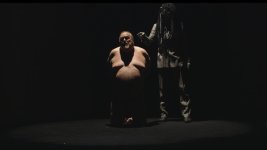
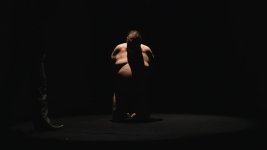
I'm shooting a scene in a few weeks that takes place in a prison cell that is supposed to be lit with only the shaft of light coming through the barred window that is set high on the wall, and the bounce off the floor that is created as a result. Think 'The Man Who Wasn't There':
4310.jpg


So my question is this: for the closeups of the two characters talking (S, RS), should I just bounce a 1K off the floor through some silk or something similar? I don't want "unmotivated" lighting here.

Any suggestions?
 
Ellipsoidal/ smoke machine/ for the bars, I would make it out of either tin or black foil. Then experiment with the distance, meaning how close you put the homemade gobo in front of your light. I recently did a shoot where I folded some 2' wide black foil to make it thicker, then cut out slots/patters with an exacto knife to immolate tree leaves. Did a little messing around as to how soft or sharp I wanted the pattern to be, I think it was about two to three feet in front of the light, flagged off the spill. Viola! took all of about ten minutes.

The same effect can be done with high powered undiffused led's. I also experimented with this as well. You need the high watt leds to cast enough lumens for the given area. For a small pattern they work pretty well. Again, you need to flag the spill but that's pretty much a given.

On the screen grab you uploaded, the shadow on the floor is representative of their gogo shape.
 
By asking about a silk on the floor, it sounds like you want something more that just the hard light and shadow coming from the window to do some fill on the faces.

My take is to not add the silk. Let whatever bounce that happens to happen be enough. I always liked this look from Casino. They used it in several scenes to great effect. A hard light from above with blown out highlights. The light bounces off clothing to provide fill. The example here is not my favorite. The best one is the scene in the back room of the Kansas city market. Take a look at 12 seconds in on this clip - https://www.youtube.com/watch?v=JcZHSGyos6g

Of course, in the example, there is a lot of other light in the room. But I think you will find that the incidental bounce will look quite good.
 
Last edited:
A silk on the ground for close-ups might help. I'd try simply bouncing an additional fill source directly off the ground first to see if that works. It'll pick up the colours from the floor and play a bit more realistically than a clean fabric.
 
By asking about a silk on the floor, it sounds like you want something more that just the hard light and shadow coming from the window to do some fill on the faces.

My take is to not add the silk. Let whatever bounce that happens to happen be enough. I always liked this look from Casino. They used it in several scenes to great effect. A hard light from above with blown out highlights. The light bounces off clothing to provide fill. The example here is not my favorite. The best one is the scene in the back room of the Kansas city market. Take a look at 12 seconds in on this clip - https://www.youtube.com/watch?v=JcZHSGyos6g

Of course, in the example, there is a lot of other light in the room. But I think you will find that the incidental bounce will look quite good.

Let me guess, was that Robert Richardson? That looks like the nuclear top lighting that he likes to do.
 
To echo what's been said, the floor is very key(pun intended)

For example: did a scene in a studio with a white floor, put a focused liko up overhead to get a sharp circle. Of course, the entire room was exposed because of the white reflecting. Lay down a black cloth, and my intended design shaped up: the suit'ed actor could walk in and out of the shadows with a nice crisp cutoff. Your prison i would presume to have some varying shade of grey on the floor.

24.jpg32.jpg
 
Ha, I got to play Bob Richardson a couple of years ago on this: https://vimeo.com/123479988. The look was straight out of Casino but we took the combination dolly/zoom in at :14 out of Goodfellas, I had so much doing this.

In terms of the prison scene and what to do with the closeups: my recommendation is to light for the wide and then when you line up the singles, start with what the natural floor bounce does and either add or subtract from that. You will want a dark floor as Darren said to keep the walls from lighting up, so try adding some fabric on the floor (I'd suggest bleached or unbleached muslin instead of a silk, it has more flexibility in that the size of the bounce can easily be changed by folding or scrunching it up). By adjusting where it sits on the floor you can regulate intensity and directionality. If you just want a touch of fill, a medium gray material may do the trick.

If you need more control, in a situation for instance where the walls are light-colored and the actor is close to them so a bounce is too broad, just use a softlight with grid coming up from below. As long as the directionality is maintained, it will look motivated. Try to make the fill (whether bounce or light) as large as possible so it doesn't look source-y
 
Thanks for your replies, everyone. I understand the need for the atmosphere in the air for the wider shots in order to get the visible shaft of light. I'll experiment with bouncing the light off the floor to see if that's enough. If not, I could always bounce off another wall that's off screen as well.

SB
 
Trouble with bounce is that if you are using an ellipsoidal spot to enable the gobo to work, then the angles might not work, and uplight looks a bit strange. Ideally, you want to mimic the gobo, so a hard source is required, and a bit of care to match up the angles of the shadows. The fallout also needs to be outside of the area covered by the gobo, and worse still, you don;t want this beam to be visible in the haze. In the example, the head is out of the direct beam, but maybe you could cheat in a little gentle wash to pick up the face, and as it's wide, it might not be that visible in the haze. You're going to have to try this one out.

On the gobo front, to get this preciseness and sharp edges means using a proper fixture with gobo projection facilities. To do the same thing with a bigger gobo in front of a Fresnel or other wide fronted fixture, the gobo is going to have to be BIG, and rising that pointing down a tricky thing because the 'bars' will sag. LEDs tend to produce less sharp images, and worse, sometimes they produce duplicated edge lines that look weird. To be honest, if you want really sharp grid lines, even a normal fixture that can take gobos might not be sharp enough. There are a few available with special opticss. Source 4's are not too bad, but there's always a little softness and shimmer at the edges.
 
Back
Top