left to right vs right to left framing/ west framing vs east framing

So I was reading one of my cinematography books as I was planning out some framing for a video. It said that the viewers eye is more accustomed to reading from left to right than right to left. It explained this x axis framing using Hitchcock's "Strangers on a Train" opening scene. The dandy (the book's word) came from the left to right while the other man, who was the antagonist came in from the right to the left. I believe this concept was applied to photography and cinematography from western painting

My thing is, while framing this, I realized my storyboards have been influenced by manga, so everything I draw is right to left. I write left to right but my comics and storyboards are made from right to left. A pain since I have to always change them around for others to understand.

So is it a western viewpoint, this rule of going from left to right being more comfortable to the eye than going from right to left?
 
So is it a western viewpoint, this rule of going from left to right being more comfortable to the eye than going from right to left?

Many 'writing' systems used 'left-to-Right' sequencing. In fact the 'Semitic' 'Right-to-Left' is somewhat unusual. But beyond that, even the Maya inscriptions that have survived, are written basically 'Left-To-Right'.

Unfortunately much of the texts that the Mayans had, were destroyed by the Spanish during their conquest of the region, with mostly only stone inscriptions remaining. The 'native' languages where then given Latinized forms, if they were given at all.

Traditional Chinese, and by extension, Japanese, and Korean(Hangul a phonetic based script), were column based, starting from the right side of an area, and moving column by column to the left. China and Japan both have alternate systems which go Left-to-Right in along horizontal lines, while Korean is almost exclusively 'Left-to-Right' now.

The point being, that while it is clear that the 'modernizations' of Chinese, Japanese, and Korean scripts have been heavily influenced by the 'west', that doesn't explain the preference of the Mayan pre-Columbian system.

Some element of 'how things happened' have been explained by how the written word was placed on the surface of the material. In the case of Chinese, one explanation is the use of narrow strips of 'bamboo', interlocked with cord, then rolled in to scrolls. Using the right hand, writing on the strips top to bottom, and using the left hand to 'unroll' the scroll for fresh strips... would yield the 'top/bottom/right/left' order...

But such things are often debated, and there are counter examples in the earliest periods of a writing system, but eventually they reduce to the system that became the traditional form.

(As a note... one can still say the West influenced say Korean and Japanese styles... as their writing systems were heavily influenced by China... which is 'west' from those countries... ).
 
I've studied Japanese culture and history for the last 7 years so I fully understand the direction they write. But thanks for some of that information, for I didn't know some of that, especially about the Hangul system. But in regard to movies I began studying some Japanese films, more influenced by Japanese culture, so I watched Seven Samurai again I noticed now what I didn't know when I watched it 10 years ago. It did exactly what I was talking about, and I did remember feeling uneasy while watching it. I thought it was because it was subtitled, but I think its because our eyes were going in different directions. If you can't understand Japanese you were reading the subtitle but the way he shot it was right to left. Watch this clip and tell me if you agree with me.

http://www.youtube.com/watch?v=BMWsOyOHaS

Since anime tends to be very general in hero and villian, as well as uses cinematography techniques, I watched the opening sequences of the popular western liked Naruto shippuuden, Bleach, and Dragonballz and many of the openings open with the hero entering from the right to the left, while the villian tends to come from the left to the right.
 
Last edited:
I recently shot a Hebrew-language public-service-announcement-short-film in Israel. I had two pans from left to right. The protagonist's movements were roughly split direction-wise.

I hadn't considered anything deep when planning shots and I really doubt directions make any difference. Speed, angle, size, location yes. Left versus right, meh.
 
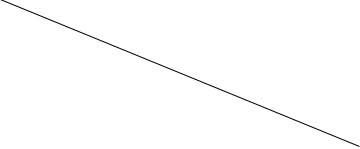
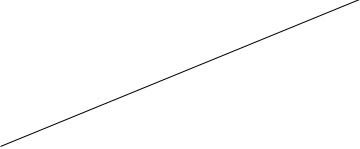
It does make a difference, though it is subjective, of course. Take a look at the drawings below and state which one represents "uphill" and which one represents "downhill". Most Westerners give the same answer.

Line 2.jpg
Line 1.jpg
 
Back
Top