ahalpert
Major Contributor
1984 happened too, the society we live in, revisionism, cancel culture, thought policing, disinformation, miniplenty, deepfake.
To varying degrees. Certainly, now that we're all carrying cameras and microphones that never turn off, we've invited the surveillance voluntarily, and Snowden showed what they can do with that.
But I think 1984 was a specific commentary on communism, and you see the the accuracy of its description there. You can't search for Tianenmen Square in China and find anything about the protest or tank man. And an army of revisionist historians, both government employees and private citizens, have filled the information gap.
I think that adversarial politics in the US prevents the type of total control described in the book. January 6 is the perfect example. There are still 2 sides to the story being told. And even when historical documents disappear -- such as when the Guardian recently took down Bin Laden's "letter to America" after it became a viral tiktok topic -- at least the document wasn't kept online and doctored. Cancel culture is nothing new, it's just more prevalent now. And it's not as if people pretend the canceled people never existed.
It's only when both major parties and all other relevant powerful institutions agree on a topic that you see the kind of massive information control described in the book.
By contrast, Brave New World was in my opinion more descriptive of the society we live in (and what that society will become on its current trajectory). For full disclosure, I read the book 15+ years ago. I didn't read it for a class or read any commentary on it. And I stopped reading it halfway through when it got boring. But I was really taken with the beginning of the book, where it described the mechanisms of the society and economy. It was an eye-opening depiction of my own society.
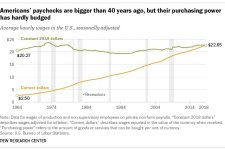
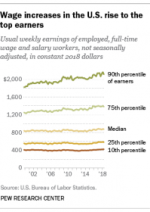
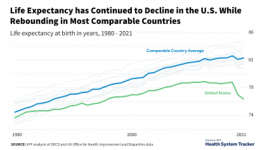
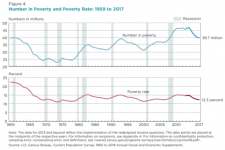
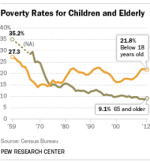
In the book, the entire society and its government are oriented around maximizing production. Just as our own is. (When I was a kid, I was always confused by the focus on GDP and the Dow. And sure, you might say that it's good to maximize those. But there are many other metrics of societal health we could focus on, such as median income or life expectancy or the poverty rate or homelessness rate or fertility rate.)
And family and work structures are organized around that goal. Everybody is a test tube baby and "vivisection" is seen as a grotesque practice of the past. (Most people aren't test tube babies these days, but people increasingly turn to fertility treatments to compensate for delaying child rearing until later in life for the sake of furthering their careers. Some Silicon Valley firms even offer free egg freezing (which is a scam) to their employees to incentivize delaying pregnancy. And most people still raise their own children, but if they're busy with work and have enough money they can usually outsource almost all of the child-rearing. You can even pay a surrogate to carry the baby for you.)
Children are born into different classes (Alpha, Delta, etc) that are destined for different jobs and raised accordingly. The future leaders of society are pampered and overeducated from their embryo stage. Future elevator operators are bathed in alcohol as embryos. (Although various conditioning like this isn't government-mandated in our society, it is in some ways cultivated by government policies.)
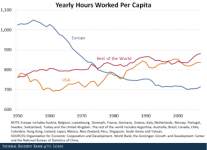
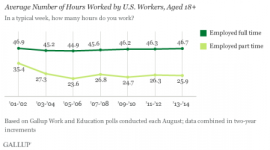
People devote all week to slavish labor and then blow off steam on the weekend with an orgy fueled by drugs that have been perfected to erase their memories and leave no hangover.
Toys and products are increasingly complicated for no good reason and are designed to fall apart after a short time so that people will have to buy more.
Anyway, one of the reasons I brought up the book was because I was curious if your interest in family values would bolster your support for the book's critique.
It's not much related to the discussion of Leave the World Behind, but I'm interested in how big picture conservatism might react to some of these themes.
Back on topic of the film - I was thinking about how you said I was glass half full because I think I try to live virtuously. And I thought - it's sort of glass half full to think that you're surrounded by good people. (I agree that most people have good nature and generally try to do the right thing and want to think of themselves as good.) But it's sort of funny to contrast that with the conservative ideas that we need to have a strong military because the world is full of bad people. And we need to have a strong police force for the same reason. And we all need to own guns. That's a lot of trouble to go to if you think people are so good.