Key Light On Opposite Side Of Cameras 180 Line

MagnumDB

Active member
Once I noticed it, it has been rare to ever see a shot diverge from it.

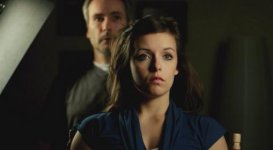
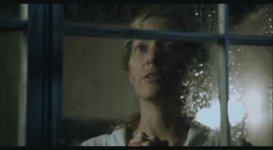
In almost every professionally shot film I've seen, the key light illuminated the side of the actors face which is on the opposite side of the 180 line from which the camera is on, thus the darker side of the actors face faces the camera.

I've been curious when this started and why it's so popular. Is it just a look that the majority of cinematographers like, or is there a benefit to shooting that way?

Testing this out myself I noticed how boom shadow was no longer a problem as the shadows from it were casted out behind and past the camera, but the difficulty came in setting up a light to get the lighting without the light itself being in frame behind the actors. I'd either place the light above the actor or behind practical objects in the room. If I was doing reverse shots it was much easier to place the light.

This is coming from someone who's been an editor most of his life, worked as a camera man for a long time too, and has finally started directing.

Thanks in advance for your insights!
 
Just one of those things that works, I guess. If it were the other way, you'd lose some of the benefit of the modeling.
 
Once I noticed it, it has been rare to ever see a shot diverge from it.

In almost every professionally shot film I've seen, the key light illuminated the side of the actors face which is on the opposite side of the 180 line from which the camera is on, thus the darker side of the actors face faces the camera.

Blame Vermeer... His excuse was that he only had a window facing north, and because of the way his studio was laid out, the window light came from left to write, and the most
natural pose presented the 'shadow' side to him.

18224-the-milkmaid-jan-vermeer-van-delft.jpg


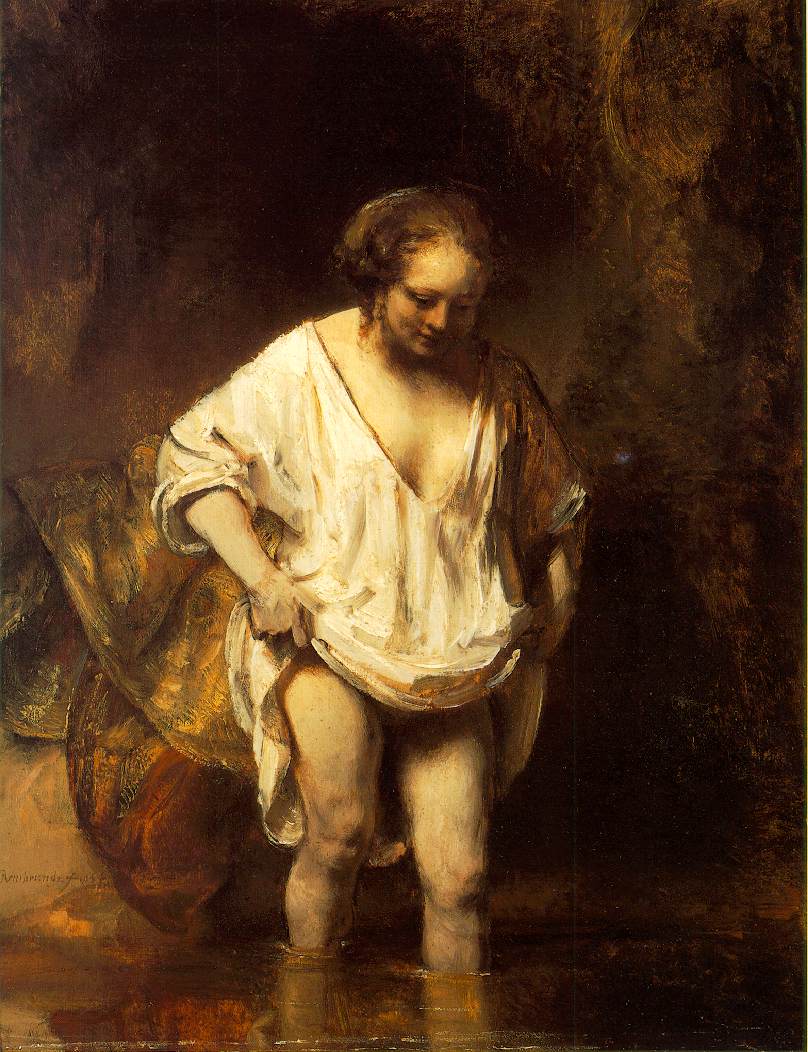
Rembrandt on the other hand, being more wealthy... well some of the time... could afford a bigger studio... and get a more frontal angle...

bathing-river.jpg


But even then in many paintings, light comes from the left at a larger angle to the viewer, resulting in 'shadow' areas being presented...

Artemisia Gentileschi...

artemisia_gentileschi_judith_beheading.jpg


On the other other hand... one has the 16th century... far less chiaroscuro...

Bronzino

1551venice_mmedici.jpg


In more modern times,

Preraphelite (no chiaroscuro...)

Collier

6291269ba8db8e0af97f2db964b9d577_l.jpg
 
In still photography portraiture, it is taken as a given that for women it is most flattering to key light the "short" side of the face, the side the camera can see less of, and to fill light the broad side of the face, the side the camera can see more of. This is so because it is visually slimming.

For men, the opposite rule applies, where strength and masculinity are implied by the fuller face produced by broad side key lighting.

Personally, whenever possible I follow the rule for women, but for men, I mix it up. But that's me.

Yup.
 
Yeah, once seen it cannot be unseen.

Once I figured that out I never went went back. I'm not sure of exactly when I figured it out or if I've always lit from upstage and at one point became conscious of it. But yeah, it sure does look better on average.

I send film students to this page to help them understand:
http://benjamineckstein.com/2011/05/lighting/

Looking at older films from the 60s back, it seems frontal was dominant.
 
Blame Vermeer... His excuse was that he only had a window facing north, and because of the way his studio was laid out, the window light came from left to write, and the most
natural pose presented the 'shadow' side to him.

18224-the-milkmaid-jan-vermeer-van-delft.jpg


Rembrandt on the other hand, being more wealthy... well some of the time... could afford a bigger studio... and get a more frontal angle...

bathing-river.jpg


But even then in many paintings, light comes from the left at a larger angle to the viewer, resulting in 'shadow' areas being presented...

Artemisia Gentileschi...

artemisia_gentileschi_judith_beheading.jpg


On the other other hand... one has the 16th century... far less chiaroscuro...

Bronzino

1551venice_mmedici.jpg


In more modern times,

Preraphelite (no chiaroscuro...)

Collier

6291269ba8db8e0af97f2db964b9d577_l.jpg

It is my understanding that in western cultures visual information is processed from left to right, top to bottom, probably in response to this orientation of western written languages. Even in compositions using the Golden Mean, the intent is to move the eye from left to right, top to bottom. I do not believe that this orientation of visual images is predominate in non-western cultures. Mirror images the above images... they just do not, "Look right"....
 
It is my understanding that in western cultures visual information is processed from left to right, top to bottom, probably in response to this orientation of western written languages. Even in compositions using the Golden Mean, the intent is to move the eye from left to right, top to bottom. I do not believe that this orientation of visual images is predominate in non-western cultures. Mirror images the above images... they just do not, "Look right"....

That would be an interesting study of film to see if there's a predominance of left to right lighting... many of the books that I have seem to follow that for stills and setups for filming...

Yet another thing to think about when watching all those oldies...
 
That would be an interesting study of film to see if there's a predominance of left to right lighting... many of the books that I have seem to follow that for stills and setups for filming...

Yet another thing to think about when watching all those oldies...

When I was in school, I was a Psyc major for a while, and help a grad student set up and run some experiments testing reaction time based on the visual field of presentation. If I remember correctly, the results did show a faster reaction to info presented in the left upper visual field (Subject looking straight ahead, visual field divided into quadrants, testing how fast they could push a button after a light flashed in one of the quadrants). I don't remember if the results were statistically significant or what became of his research, but I thought it was pretty interesting. That grad student was the first to tell me about the left to right, top to bottom visual orientation of western cultures.
 
After reading this, I went back and checked. Pretty much everything I've ever done is keyed from the right to the left (see sig banners, e.g.). If I were to pick a natural inclination, that would be it. Can't say why.
 
I don't think it's so much about left to right as it is about keying from the off camera side of the face vs on camera side. It's a well known thing among cinematographers, gaffers, etc. to key from the off camera side (so the fill side is toward cam). It just looks nicer. It's more dynamic, shows off the three dimensionality of the subject more, shows off modeling better, etc. Also allows you to place a complementary edge light on the other side. I've discussed this on other forums and cinematographers will often go out of their way/make it a point to key all scenes this way, positioning practicals/windows/light sources to accomodate it.
 
After reading this, I went back and checked. Pretty much everything I've ever done is keyed from the right to the left (see sig banners, e.g.). If I were to pick a natural inclination, that would be it. Can't say why.

Well, not all, but I see your point:

image002.jpg


image001.jpg

image015.jpg

and of course the outlier:

image019.jpg

However, if you look at your images you do see that you are directing the eye left to right, with your choices of key side, but more important, the eye lines, except for the noted outlier. I did note on your talking head shots (Which I could not down load and post for some reason), especially the shots of Barry and yourself at the top of the page that the key was from the right. On your image, there is balance with the monitors in the background, however, on the shot of Barry, I think that maybe with the key from the left, and the large monitor background on the right, that might have been more of a pleasing image. JUST SAYIN'!.

With fictional narrative shots I am not a true motivated light only purist so all bets are off and what works for the story, within the context of the scene is appropriate. However, in talking head corporate type shoots, my predilection is to key from the left. Personal preference is the hallmark for this I guess. In deference to the OP, the off axis placement of the lighting is to emphasis modeling, as noted above.
 
What an amazing response!

Thank you everyone for your input, I can see now I'm far from the only person to really think about this. I never really thought about directing the eye from right to left or vice-verca. It just seemed to be that in the case of say, two people talking, I notice they are most often placed in between the camera and a window so the person looking left had the key on the right side of their face and vice-verca.

And I of course know this isn't ALWAYS the way it's lit. Very interesting to read that men are usually lit the opposite. I've actually not noticed that, it seemed everyone had a key light on the short side of the face, no matter the sex of the actor, the genre of film, etc.
 
I don't think there's a great deal of explanation behind it - it just looks better to have the key on the 1/4 side of camera to allow for modeling and depth. The reverse would mean a flatter image - like how an external flash on a still camera flattens out the subject.

If the goal is to beautify or flatter the subject, key light on the 1/4 side of camera makes more sense than the open 3/4 side - and I often do this, placing the key or fill lights just right to put a catch in the talent's eyes in a high contrast setting, which helps their eyes pop from the darker fill side we see more of. If you watch the TV show Person of Interest, you'll see this a lot.
 
3D. You are dealing with a flat surface with only 2 dimensions (height and wights) and are trying to make people believe that what they are seeings three-dimensional. How do you make a face appear 3d? Well you need to show where light hits it and where it does not. It's easier to accomplish it with that kind o lighting set-up.
 
What an amazing response!

Thank you everyone for your input, I can see now I'm far from the only person to really think about this. I never really thought about directing the eye from right to left or vice-verca. It just seemed to be that in the case of say, two people talking, I notice they are most often placed in between the camera and a window so the person looking left had the key on the right side of their face and vice-verca.

And I of course know this isn't ALWAYS the way it's lit. Very interesting to read that men are usually lit the opposite. I've actually not noticed that, it seemed everyone had a key light on the short side of the face, no matter the sex of the actor, the genre of film, etc.

My examples were 'static images', and so, one can 'direct the eye' to elements in such an image... however, for 'moving pictures' one must also consider 'what comes next' and it may be that flow moves back
and forth across the imaging area.

As for different lighting for men vs. women. While it is perhaps not so true these days with more 'realism', one can often see different light on men and women in older films.

I believe Marlene Dietrich had special provisions in her contract about 'close up' lighting. Here's an example:

"Stage Fright"(1950)

marlene_dietrich-stagefright.jpg


Joan Fontaine on the other hand apparently did not...

"39 Steps"(1939)

rebecca-joan-fontaine-judith-anderson.jpg


The "39 Steps" shot, is trying to up the stakes in drama, hence the harsher light, and more 'full face'.
 
Ah, yet another tool to add to my filmmaking tool kit. This is one thing I hadn't noticed, and probably never would (and haven't seen it mentioned once by a professor or cinematography book). Thanks for pointing it out.
 
I'm still somewhat new to this stuff at time or just get so confused I forget everything and ask dumb questions.
So, the actor is lit from the far side with the shadow towards camera. Does that mean we keep the expose for the fill side and not the key?

*Its said to keep the same f-stop, so, that means we should be judging that by the fill side as its the side facing the camera?

You can expose for whatever you want. There's no rule that says you have to expose for your key light.

The idea posited in this thread was that it's more common (or more pleasing) to place the key on the far side of the camera, so that fill side is more open to camera. But you could expose for fill or key or whatever, depending on the look you are trying to create, how hot your key is, how much fill, etc. etc.
 
Back
Top