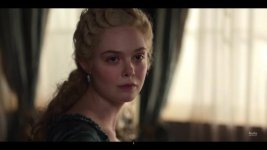
John Brawley's "The Great" on Hulu

ahalpert

Major Contributor
Huzzah! Fellow DVXuser John Brawley's new show, "The Great", premiered on Hulu on May 15. I thought it would be fun to trash-talk--er, I mean, to discuss it. You can binge the whole season here: https://www.hulu.com/series/the-great-238db0d4-c476-47ed-9bee-d326fd302f7d

According to IMDB, Anette Haellmigk shot episode 1 and then John Brawley and Maja Zamojda traded off shooting the rest of the episodes. John shot episodes 2, 5, 6, 9 and 10.

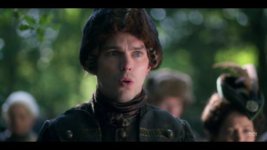
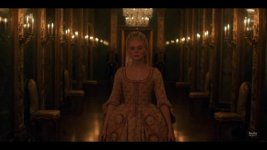
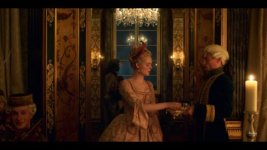
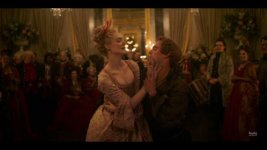
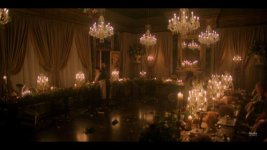
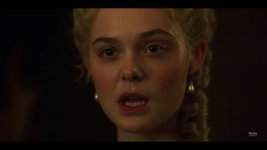
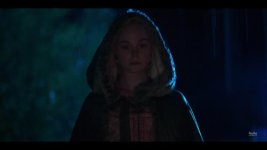
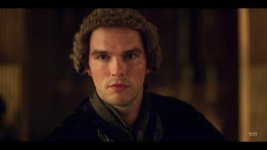
It's a gorgeous show full of romantic, warm, soft lightings and elegant camera moves that play off the sumptuous locations and costumes to create a rich period atmosphere while propelling the comedy forward with fast-paced dialogue and montage.

I've just finished episode 2 and here are some of my favorite shots:
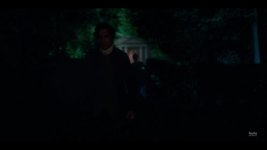
Screenshot 2020-05-19 at 7.51.07 AM.jpg
Screenshot 2020-05-19 at 7.50.38 AM.jpg
Screenshot 2020-05-19 at 7.40.57 AM.jpg
Screenshot 2020-05-19 at 7.48.56 AM.jpg
Screenshot 2020-05-19 at 7.49.47 AM.jpg
Screenshot 2020-05-19 at 7.41.01 AM.jpg
Screenshot 2020-05-19 at 7.44.37 AM.jpg
Screenshot 2020-05-19 at 8.04.09 AM.jpg
Screenshot 2020-05-19 at 8.06.59 AM.jpg
Screenshot 2020-05-19 at 8.09.13 AM.jpg

Has anyone else caught the show yet? What did you think?

John - if you see this - would you be willing to field questions about your process?
 
I have a few questions - feel free to ignore if it's too much of a bother

1. Here's a question one could ask of any multi-DP series although the answer may vary - who cooked up the style guide/lookbook? Was that a collaborative process between the DPs? Did the pilot DP exert extra influence from shooting the first episode? Or was it a less formal process that relied on communication between the director or showrunner and the DP on set?

2. Technical question - what filters did you employ? Did you have a standard choice for exteriors vs interiors or did you decide on a scene-by-scene basis?

3. Why did the UMP G2s play? Did they have an advantage over the SXTs?

4. You mentioned elsewhere that you shot at some estates with 8-foot thick walls - how much was filmed on location vs studio?

5. Did you favor using tungsten lights for warmth or a smooth color spectrum or what?

6. Were there any special challenges or surprises on this shoot or anything unexpected you learned? Or was it a relatively straightforward show?

Thanks for any insight you have time to share
 
Amazing write up John, thank you.
Question about your tungsten units, were you using them for daylight scenes and gelling to taste? What were the biggest ones on the truck?
Thanks.
 
Thanks for the great level of detail, John. I had a couple follow-up questions I wanted to ask, if I may:

1. What were your visual and stylistic influences? When I hear "candlelit period piece" it's hard not to think of Barry Lyndon. Did that film get another viewing during prep? What were some important influences for you? Or by the time you get involved, are you largely reacting to the pilot itself and tweaking its style? (PS I felt like the opening shot of Episode 2 was a nod to Handmaid's Tale where we often see that overhead shot of Offred being lovelessly humped.)

2. One thing I think came off superbly with this show is sort of walking the line between a period piece and a modern style. I feel like I see a lot of period pieces that have rich historical atmosphere and Production design but use a lot of "period" tropes: long, slow ensemble shots; tableaus; dwelling on period visual details; and "building porn" as you call it. Or, on the other end of the spectrum, is modern-feeling material than only gives a cursory nod to period costume and props without fully developing the atmosphere. In The Great, I felt like the atmosphere was rich (not that I have any historical knowledge of the setting by which to judge the accuracy) but that there was a modern feel in the pace of dialogue and montage as well as the use of sarcasm and swearing plus a sort of wink to the audience about the absurdly extreme sexism of the time. Could you talk about developing that modern feel in the context of a period piece?

3. Did you use a tilting matte box or an accessory to achieve tilt of the filters?

4. When you say a shot "trades" - do you mean moving from one character to another?

5. Why don't you love HMI on stage?

6. What is a sheer? A sheer muslin?

Thanks again
 
Thanks for taking the time to write these up, John. Looking forward to our paths crossing again some day.
Appreciate the G&E package you posted as well.

Cheers,
 
Blackmagic's hand strap stock just went up :grin:

Congratulations on your continued success!

I still have the BMCC's firework and pool girl DNGs somewhere on a hard drive.
 
Just to update everyone on the current situation... it appears "Huzzah!" has become my new go-to phrase on set when things actually go the way we plan.
 
Really great write-up on The Great over at NoFilmSchool: https://nofilmschool.com/the-great-john-brawley

I love the idea of "Punk History"

Sounds like the only issue matching G2 with Alexa was in the HDR master where the greater latitude became more apparent:

"The only issue was that in the Dolby Vision HDR pass the greater latitude of the ARRI over the G2 began to show in the highlights particularly against the set’s tall windows."

Makes me wonder about matching the 12K with the Alexa since it may have a touch less DR than the G2. Time will tell.

John - is Staples the colorist? They refer to Staples but I never saw an introductory description of him
 
HI,

Yeah Paul Stapels is the Colourist who worked with me on The Great. He’s based at Encore London.

Re matching the G2 and Alexa he also said this ?

“I’d like to say it was hard for me to match but it really wasn’t,” says Staples. “Often with the windows you want them to clip anyway. You want to see a bit of detail but you’d let it go because it’s just a studio wall outside.”

https://instagram.com/paul_staples_colourist?igshid=lk30fizb7m1u

And no one watching the show knows which camera is used on which shot to shot and that’s all that matters to me...

JB
 
And no one watching the show knows which camera is used on which shot to shot and that’s all that matters to me...

Can't argue with that...

Yeah I found those 2 adjacent paragraphs in the article to contradict each other a bit. Made me wonder if the writer went looking for trouble, so to speak, because who wants to acknowledge that the mighty Alexa can be matched...

In any case, no one can deny the show looks great
 
Hecks yesh! You actually used almost all tungsten on a huge digital production. How freaking awesome is that? And what a huge accomplishment to be working on such a large production that is getting attention everywhere. Thank you so much for spending the time to post in detail what your workflow was - it's super generous.

I've really wanted to post here, but I've been waiting until I started and finished watching the whole series. I realized that that wasn't going to happen for about a month or two so I decided to just join in based on the trailers.

Your framework of working within a manifesto resonates so strongly with me. I am the kind of person who could be drawn in so many different directions that having a set of limitations (as that is what a manifesto is, really) helps to focus on what is really important. It strips away all the excess and makes the focus on a certain set of things that one can then work on elevating. This is especially important if you have multiple people in the same role as you had. I've used similar limitations in music and it has really helped me to actually create, instead of just freezing up, because there are too many variables and too many things that could go wrong.

Your concept of free jazz is also lovely. Once you have the essentials set up, you have the ability to live in that space you've created. Then you have a controlled area to riff within, and the variability of the moment just enhances that space instead of being one more thing that could go wrong - you are free to move in that environment you created.

Tilting filter trays were a must to try and reduce secondary reflections from candle flames too)

Tilting filter trays are both a brilliant and stupid solution.

Brilliant because they work.

Stupid because they could be mitigated by just coating the darn filters.

Tiffen and Schneider do not currently have multi-coated filters because it is too easy for rental houses to scratch any coatings while cleaning the filters after they come back in from being rented. So, because of that, they aren't coated at all, leading to reflections and the light loss of about 4% per surface or about 8% total per filer. That's terrible, in my opinion. If you stack 3 filters, you're losing about 1/4 of a stop of light. It seems so ridiculous to me. If it's such a big deal, just make filters another expendable.

When Schneider entered the market, they initially experimented with coating their filters. I actually own a full set of nine 4x5.65 coral filters that have their "Maxtran" coating on them. They stopped coating almost all of their filters, though, because rental houses did not want the coating due to the fact that it was relatively easy to scratch and make it appear that the filter was bad, even though slight coating scratches are basically not an issue.

So, at least one of the big filter manufacturers can coat their filters, it's just not what the market wants because it is too hard or costly to deal with, which means that DPs suffer because of it. SMH.

I LOVE tungsten because they are CHEAP and the light from them is beautiful and still isn't matched by LED in terms of spectrum.* The downsides is HEAT which is a problem in period costumes and power consumption.

I was so happy to read this, because I've personally found that tungsten makes so much sense - it is cheap and perfect. Color is all about the correct ratios and tungsten gives a perfect ratio of color. It is literally 100 CRI - it's technically better than sunlight.

While not having watched a full episode, I was wondering why the Resident looked so interesting lighting-wise when the promos popped up and, when I read that you were using tungsten outside the windows, it clicked for me. It was like you frequently had a super-golden hour light coming in from outside and, based on the color ratios, just a perfectly flattering light.

I have personally gone off the tungsten deep end and explored as far as I can see the technology go. That's basically ETC Source Fours and Dedolights combined with dichroic filters. I'm pretty sure that dichroic filtered tungsten is the ideal light for digital sensors (of course, like you mentioned you can use gel filtered tungsten, but you end up losing 75% of the light, vs 50% with dichroic filters).

I've found that there is a downside to tungsten, though, that does not seem like it can be fully avoided. With digital sensors, Red often saturates first, because Red has longer wavelengths which are captured better. This is why the Blue channel is often so weak and noisy - Blue has shorter wavelengths which are harder to capture.

This means that Red is boosted less and Blue is boosted more. And when dealing with tungsten there is so much more Red than Blue.

This is exacerbated by going even more in the Red spectrum, which happens when dealing with candlelight.

I must say, though, that the candlelit scenes I saw in The Great did indeed look great - they had a warmth to them that just worked. Did you find that the sensors response to candlelight was something you had to work around?

Candlelight is around 1800-2000K. The mired shift between 2000K and 3200K is the same as it would be between 3200K and 8000K. That's really big.

Technically, one could get better ratioed colors if you added a filter to the lens (at the expense of noise from having less light).

You mentioned somewhere else that Red camera users decided that using 80 filters with tungsten was not worth the light loss penalty. However, Red was leaking Green into the signal to mitigate the noise penalty you would get with shooting tungsten, which meant that you would get inaccurate color: https://www.provideocoalition.com/reds_blue_noise_where_did_it_go/

There is no free lunch, unfortunately, with tungsten on digital - there is still some loss of color.

So, if one wanted less saturated color (mostly yellow) when using candlelight or a better color response to tungsten, it likely is still beneficial to use a color correction filter on the lens or to try to balance the lights closer to 5000k

Is it necessary? No. Like I said, the images in the Great definitely, definitely worked. But if one wanted a more normal response to the color of the candlelight, it is something that could be beneficial.

Again, everything looked great and kudos to the amazing job you did. I just wanted to add my meager response to this awesome thread.


[Note: I deleted this and re-added as I thought my initial tone was not right and after I checked with John to make sure I wasn't thread crapping. (: ]
 
Back
Top