I'm guessing it's because of the microbudgets. Indie films have poor set designs since they are using real locations on the cheap, so they have to have even more shallow focus shots than ever before, especially since the indie film scene has grown more in the last decade. I've noticed Hollywood has been doing it too since then. But why is Hollywood inspired by the indie scenes extreme shallow focus? I mean Hollywood can afford those goodlooking sets so why not embrace them? Does this sound about right, or are my interpretations why shallow DOF is more shallow than before, wrong?

Navigation
Install the app
How to install the app on iOS
Follow along with the video below to see how to install our site as a web app on your home screen.
Note: This feature may not be available in some browsers.
More options
You are using an out of date browser. It may not display this or other websites correctly.
You should upgrade or use an alternative browser.
You should upgrade or use an alternative browser.
I've noticed a lot of indie movies are using really shallow focus nowadays.
- Thread starter ironpony
- Start date
Chris Adler
Veteran
Shallow DOF except in rare circumstances has little or nothing to do with shoddy set design.

Cory Braun
Well-known member
I do think some people try to use it conceptually for the story (that was my intention with my short linked below), but I do agree that it has helped a lot of indie films get by in locations that wouldn't normally translate as well had it been in focus.

Joncarr
Well-known member
Shallow focus was more about not having enough light for the typical 4/5.6 split for day, 2.8 for night. Budgets are getting smaller, less lights are hitting the order more and more shoots using cheaper s35 sensors or getting access to cinema s35mm film or sensors. It does have its benefits of hiding backgrounds for tighter coverage but not ideal solution for wides. Up until 07, not many indies unless you had to have a real budget to shot s35mm or the only other solution was the 35mm adapter (which with the light loss alone, you had to shoot wide open), or 2/3 or 1/2" was the only cameras you could afford. The wide open indie look was huge in the 90's when the indie market was actually shooting film because they didn't really have the light. And now everyone thinks wide open is the way to go for a indie because its a established look. Times are different, no one shoots a indie on a small sensor unless its a documentary.
Last edited:
Makes sense. The reason I am curious also is because I want to shoot a movie with a lot of mastershots in the storyboards. More than usual for a modern movie. Mastershots that I thought I might shoot deep focus, so everyone is in focus. However with the locations I have available, they are kind of crappy and am not able to find new ones. So I was thinking of using shallow DOF to hide the backgrounds, but that would mean I would have to rack focus from person to person at a time. The point of a mastershot is to see everyone, so I feel shallow DOF sort of defeats the purpose though. Is that a good way to hide bad art direction, or should I just rely on lighting alone to hide it? I feel their is only so much lighting can hide as as well as shallow DOF and perhaps using both will hide it better, if that's a good idea.
Here's an example of a shot I want to do for my movie, but with a not so goodlooking location I need to obscure:
http://www.google.ca/imgres?imgurl=...SPOrj4APrpIDADA&sqi=2&ved=0CDcQ9QEwAw&dur=271
Here's an example of a shot I want to do for my movie, but with a not so goodlooking location I need to obscure:
http://www.google.ca/imgres?imgurl=...SPOrj4APrpIDADA&sqi=2&ved=0CDcQ9QEwAw&dur=271
Last edited:
A few years back, you could identify a low-budget film/video by lack of 'shallow DOF'. Now, you can identify a low-budget film/video by too much 'shallow DOF'! I'm sure the rationale is that it makes the movie look 'legit'. In reality, it's just kind of annoying. Of course, these are the same guys who think they don't have to light a set because their camera can 'see in the dark' and that a 'tripod' is something made by Apple! Ahhh... rant concluded!

paulears
Veteran
I'm glad it's not just me! I just don't get this notion that in the planning you discount the negatives and hide them with tricks. If the sets you have available are crappy, then surely you find alternatives or work-arounds? Attempting to hide them by making them soft just encourages the eye to wonder what they really are, and the viewer loses their attention span on the action. Shallow DoF is for specific purposes - where the effect is required. It's not for repairing dodgy sets or rubbish backgrounds, and it really should not be the primary shooting mode, it should be used when needed, for specific, planned shots.
If the budget cannot afford to use the set you want, then find a different one! Don't try to repair something that's unrepairable, find a decent plan B.
If the budget cannot afford to use the set you want, then find a different one! Don't try to repair something that's unrepairable, find a decent plan B.

maranfilms
Veteran
use it as a tool, If I want the audience to see something specific, use shallow dof to guide their eye to what you want them to see, with shallow dof your not giving them the choice to look into the shot. It can also be used as a way to create texture in a shot. It can be as simple as having a lens that produce beautiful bokah, and you want to see that. there's many reasons for shallow dof, and yes, those that don't know why they shoot with it, well, to them it would be a fad.
j1clark@ucsd.edu
Veteran
I'm guessing it's because of the microbudgets. Indie films have poor set designs since they are using real locations on the cheap, so they have to have even more shallow focus shots than ever before, especially since the indie film scene has grown more in the last decade. I've noticed Hollywood has been doing it too since then. But why is Hollywood inspired by the indie scenes extreme shallow focus? I mean Hollywood can afford those goodlooking sets so why not embrace them? Does this sound about right, or are my interpretations why shallow DOF is more shallow than before, wrong?
The Focus Follower Union has required shallower DoF so that the focus guy has something to do.
As for "Why Indie" seems have it as a popular technique right now... Because there has been this absurd idea that it make a film more 'filmic/cinematic'.
Here's a novel idea... by definition anything shot on a DSLR/BigBuxCamera is 'filmic/cinematic'...
Whether someone likes the result is a different matter...
j1clark@ucsd.edu
Veteran
Makes sense. The reason I am curious also is because I want to shoot a movie with a lot of mastershots in the storyboards. ..
From the IMDB Trivia on the film "The Honeymoon Killers"(1969)
Originally to be directed by Martin Scorsese, but he was replaced after a week of shooting due to creative differences by Donald Volkman who was subsequently replaced by Leonard Kastle. Scorsese was fired because he was filming every scene in master shots and not shooting close-ups or other coverage, making the film impossible to edit. According to Kastle's interview with the Criterion collection, the ultimate moment that caused Scorsese's firing was trying to get close-up on a coffee-cup lit perfectly for the intended tone.

nycineaste
Well-known member
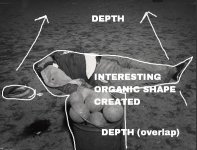
learn to compose a shot really well. Study great photography and learn about INTERESTING SHAPES AND INTERESTING DIVISION OF SPACE which they don't teach in filmkaing books (and schools, sadly - I used to sit in on my girlfriends NYU film classes). The rules of thirds helps you into this but its not the whole story. Doubtful you need to hide bad art direction. Interesting arrangement of shapes in the frame makes a picture. Every object has a shape, it doesn't matter what that object is. A solid picture can be made anywhere through interesting division of space (and use of depth). CONGRADS on ditching overly short DOF and leanring to composing pictures by actually thinking about the background aka composing ITS THE FUUUTTTUUURRREEEEEEEEEE <flies away in a saucer> beep beep beep
Attachments
Chris Adler
Veteran
Lots of silly grumbling going on in here. Shoot a damn film any way you want and stop complaining about others choices.