

Doc Bernard
Indie Arms Member
Let's talk about Air Mortars!
What is an air mortar? Well, an air mortar (aka air cannon, dust bomb, etc) is a means of "safely" recreating an explosion without needing pyrotechnics, which we all know is EXPENSIVE!!!!!!! I have placed "safely" in quotes for a reason because you can be seriously injured when using these, if you have no experience with them, or an accidental discharge occurs. But they are a better alternative to the cost/danger of having live pyro on set, especially if you cannot afford it.
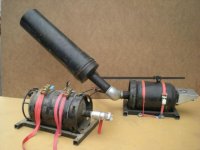
How they work: An air tank, with two openings in it (one for filling with a quick connect type of fitting, the other is a larger -up to 2" diameter- pipe with a solenoid valve attached) is pumped up to the approved pressure. This gives the "power" for the "explosion". On the output side of the tank, a cone or a 6-8" diameter "debris" tube is attached. This is where you load the "debris" that is to create the dust/smoke. I'll describe what is acceptable for debris a little later.
When the tank is at pressure and you have set your mortar in place, you load it. And when the magic moment is at hand, you operate the solenoid by switching it (or pushing a button) on. This dumps the entire volume or air into the debris cone and blasts the material out. Here is a good picture of an air mortar:
Safety concerns:
1. Must be sand-bagged in place. These can move! You want to also brace and support the discharge tube in the opposite direction of firing.
2. Safety glasses and ear plugs. When working around these, your safety is paramount. They are loud, and they fire the material out at hundreds of miles an hour at the tip. Trust me, I have been hit twice now from errant discharges and it is not a pleasant experience.
3. Only approved material is to be loaded. No hard objects! No sand or regular dirt! That is a recipe for seriously injuring someone or property damage. What you can use is Fuller's Earth, vermiculite, styrofoam, cork, crumpled paper, small pieces of cardboard. I even used glitter on one job to get a sparkle effect.
4. Only the people in charge of SFX are to get near it or operate it. It is easy, but you need training on how to use it safely.
You ask what is Fuller's earth? Well, it is a form of clay powder so fine, it almost acts like water sometimes (pouring out). It's actually great stuff for SFX and for MUA's, because you can get it in a variety of different colors.
Sample Procedure for an SFX Mortar Shot:
1. Locate where the camera crew is wanting the "blast" to originate from and what direction they want it going. If they want a wide blast, use a mortar with a cone. A more directional blast will use the tube. All non-neccessary people are to be far away from the device and the path of the material.
2. Set the mortar in place, unconnected, uncharged and unloaded. Sand bag it down so movement is restricted in all directions. Due to the pressures involved here, the mortar can move, so sand bag it well.
3. Aim the mortar tube.
4. Load the mortar with the material (Again, only use approved materials!!!!!!!!!!) Don't over load it! It will have decreasing returns.
5. Fill the mortar up to the approved air pressure with a compressor and disconnect the fill hose.
6. Just before camera is rolling, arm the device. One thing to note, some mortars come with a firing controller, other just have "stinger" plug. If you have just a stinger plug, then get a powerstrip with a switch. Arming it just means you have power to the switch and not beyond that. Once armed call out "Mortar/SFX/Whatever" IS HOT. That let's people know there is going to be a big bang soon, and that you are ready.
7. When you get your cue, fire the solenoid. That opens the valve and dumps the entire volume of air into the debris cone/tube and blasts it out. It shouldn't be more than a a half second to a second for the tank to completely empty.
8. Once fired, unplug the solenoid. This is a safety procedure to prevent it from firing accidently if you are resetting the shot. For a reset, repeat steps 3 through 8. For a new deal, start over from the beginning. Never pick up a charged mortar (loaded or unloaded) and move it.
The amount of material you can load in to the tube varies on type of material, size of the tube/cone, size of the tank, size of the pipe out of the tank, and the operating pressure of the tank. It is best to do a few trial runs before shooting to see what the balance is for the best explosion.
Always remember SAFETY FIRST!!!!!!!!!!! These are much safer than pyro, but they can still hurt you, the crew and the cast if done improperly! But do it right and couple the SFX with a little VFX and it is a work of beauty.
Wait, you wanna see one in action???????? You got it! Here is a film I recently did SFX and a couple other jobs on (the best looking explosion is at 2:20, IMO. We rigged the background to move/shake, and set up a fanner to blow her hair a few milliseconds after the explosion). The flames in the previous scene are not SFX, but VFX.
I hope this will get your creative juices flowing and if there is a subject you want discussed in my next SFX lesson, please let me know.
What is an air mortar? Well, an air mortar (aka air cannon, dust bomb, etc) is a means of "safely" recreating an explosion without needing pyrotechnics, which we all know is EXPENSIVE!!!!!!! I have placed "safely" in quotes for a reason because you can be seriously injured when using these, if you have no experience with them, or an accidental discharge occurs. But they are a better alternative to the cost/danger of having live pyro on set, especially if you cannot afford it.
How they work: An air tank, with two openings in it (one for filling with a quick connect type of fitting, the other is a larger -up to 2" diameter- pipe with a solenoid valve attached) is pumped up to the approved pressure. This gives the "power" for the "explosion". On the output side of the tank, a cone or a 6-8" diameter "debris" tube is attached. This is where you load the "debris" that is to create the dust/smoke. I'll describe what is acceptable for debris a little later.
When the tank is at pressure and you have set your mortar in place, you load it. And when the magic moment is at hand, you operate the solenoid by switching it (or pushing a button) on. This dumps the entire volume or air into the debris cone and blasts the material out. Here is a good picture of an air mortar:
Safety concerns:
1. Must be sand-bagged in place. These can move! You want to also brace and support the discharge tube in the opposite direction of firing.
2. Safety glasses and ear plugs. When working around these, your safety is paramount. They are loud, and they fire the material out at hundreds of miles an hour at the tip. Trust me, I have been hit twice now from errant discharges and it is not a pleasant experience.
3. Only approved material is to be loaded. No hard objects! No sand or regular dirt! That is a recipe for seriously injuring someone or property damage. What you can use is Fuller's Earth, vermiculite, styrofoam, cork, crumpled paper, small pieces of cardboard. I even used glitter on one job to get a sparkle effect.
4. Only the people in charge of SFX are to get near it or operate it. It is easy, but you need training on how to use it safely.
You ask what is Fuller's earth? Well, it is a form of clay powder so fine, it almost acts like water sometimes (pouring out). It's actually great stuff for SFX and for MUA's, because you can get it in a variety of different colors.
Sample Procedure for an SFX Mortar Shot:
1. Locate where the camera crew is wanting the "blast" to originate from and what direction they want it going. If they want a wide blast, use a mortar with a cone. A more directional blast will use the tube. All non-neccessary people are to be far away from the device and the path of the material.
2. Set the mortar in place, unconnected, uncharged and unloaded. Sand bag it down so movement is restricted in all directions. Due to the pressures involved here, the mortar can move, so sand bag it well.
3. Aim the mortar tube.
4. Load the mortar with the material (Again, only use approved materials!!!!!!!!!!) Don't over load it! It will have decreasing returns.
5. Fill the mortar up to the approved air pressure with a compressor and disconnect the fill hose.
6. Just before camera is rolling, arm the device. One thing to note, some mortars come with a firing controller, other just have "stinger" plug. If you have just a stinger plug, then get a powerstrip with a switch. Arming it just means you have power to the switch and not beyond that. Once armed call out "Mortar/SFX/Whatever" IS HOT. That let's people know there is going to be a big bang soon, and that you are ready.
7. When you get your cue, fire the solenoid. That opens the valve and dumps the entire volume of air into the debris cone/tube and blasts it out. It shouldn't be more than a a half second to a second for the tank to completely empty.
8. Once fired, unplug the solenoid. This is a safety procedure to prevent it from firing accidently if you are resetting the shot. For a reset, repeat steps 3 through 8. For a new deal, start over from the beginning. Never pick up a charged mortar (loaded or unloaded) and move it.
The amount of material you can load in to the tube varies on type of material, size of the tube/cone, size of the tank, size of the pipe out of the tank, and the operating pressure of the tank. It is best to do a few trial runs before shooting to see what the balance is for the best explosion.
Always remember SAFETY FIRST!!!!!!!!!!! These are much safer than pyro, but they can still hurt you, the crew and the cast if done improperly! But do it right and couple the SFX with a little VFX and it is a work of beauty.
Wait, you wanna see one in action???????? You got it! Here is a film I recently did SFX and a couple other jobs on (the best looking explosion is at 2:20, IMO. We rigged the background to move/shake, and set up a fanner to blow her hair a few milliseconds after the explosion). The flames in the previous scene are not SFX, but VFX.
I hope this will get your creative juices flowing and if there is a subject you want discussed in my next SFX lesson, please let me know.
Last edited:


 Offhand, air mortars look the kind of thing a home handyperson could build themselves, but one mistake could result in a nasty accident?