Is there a way to work around lights with 220v plugs?

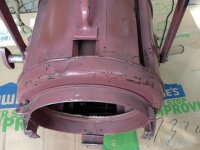
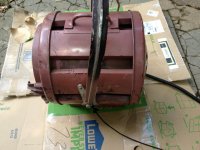
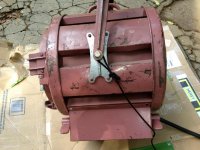
Some people take real good care of their gear, and others don't. Here is the Mole 412 2K from above which had seen better days.
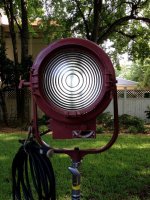
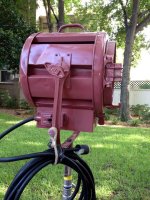
And a shot of it after I gave it a little love.
 

Attachments

  • Mole 412 01.jpg
    Mole 412 01.jpg
    98.6 KB · Views: 0
  • Mole 412 02.jpg
    Mole 412 02.jpg
    84.8 KB · Views: 0
  • Mole 412 03.jpg
    Mole 412 03.jpg
    90.8 KB · Views: 0
  • After 01.jpg
    After 01.jpg
    112.2 KB · Views: 0
  • After 02.jpg
    After 02.jpg
    102.7 KB · Views: 0
I didn't bother to remove many of the dents in this one as it had really been banged around.
Now lamped as a 1500w with a 15amp Edison connector as seen in the photo.
 
I'd also reinforce that unless you have a full on gaffer or very knowledgeable key grip I'd just never bring anything over a 1K on set. It's basically asking for a bad bad incident. Being careful not to overload circuits with 650s and 1Ks is challenge enough, getting into lights above that (again without the technical knowledge to use them safely) is basically asking for a fire that burns the location down.
 
The OP will be looking for quite a long time, if you intend for him to get something he can fit into a household socket on location.

I say that if you are about to post electrical advice, and you find the yourself typing any of the following (nothing personal, just noticing in many posts lately):
"I'm not sure which contact is which"
"You can do it that way, I've never had a problem"
"Just drill extra holes in it for ventilation"
"Dollar Store"
​
...then do not post. Sorry to sound ornery here, but dispensing misinformed electrical advice and burning up time, equipment, location and limb is just the height of rudeness.
Ok, I don't ever remember mentioning the dollar store but with specific regards to 2k's using edison plugs - EVERY 2k I've come across has had one. Blondes, 2k softlites, mighty moles, BJ's, studio 2k's, etc. I'm sure once I'm more "in" the industry I'll see more 2k's with bates connectors, I don't deny their existence, but I'm not talking about not having any problems with edison connectors from only limited experience.

Mole sells paint in that distinctive "Mole Maroon". I have seen folks paint up off brand lights with that color.
Looks great, but did you wirewheel or sandblast the unit before repainting it? Once the spraypaint heats up it can be rubbed off somewhat easily. It won't just come chipping off but with a bit of pressure it can get a streak or blemish in it, roughening up the surface first would help the adhesion of the spraypaint.
 
Last edited:
Looks great, but did you wirewheel or sandblast the unit before repainting it? Once the spraypaint heats up it can be rubbed off somewhat easily. It won't just come chipping off but with a bit of pressure it can get a streak or blemish in it, roughening up the surface first would help the adhesion of the spraypaint.

I have 4 different size media blasters with various media available depending on what I'm working on.
Having restored nearly a dozen classic Ferraris from the ground up, I think I should be OK working on an old Mole light. :thumbsup:
 

Attachments

  • Front After.jpg
    Front After.jpg
    80.4 KB · Views: 0
  • Front Before.jpg
    Front Before.jpg
    91.3 KB · Views: 0
Last edited:
Ok, I don't ever remember mentioning the dollar store but with specific regards to 2k's using edison plugs - EVERY 2k I've come across has had one. Blondes, 2k softlites, mighty moles, BJ's, studio 2k's, etc.

I didn't mean posts from you specifically, should have made that clear.

All I wanted to make understood is that there is no Edison plug, (or NEMA 5-15, U-ground, whatever you call it) with the usual parallel pins that's rated for 20 amps.
 
I didn't mean posts from you specifically, should have made that clear.

All I wanted to make understood is that there is no Edison plug, (or NEMA 5-15, U-ground, whatever you call it) with the usual parallel pins that's rated for 20 amps.

Now I am confused, and a little scared, as I have gotten 2K lights from rental houses that have the standard 3 prong Edison Plugs. So do you think that they were unsafely modified by the rental houses with those plugs?
 

A household 15 amp plug (aka Edison, aka NEMA 5-15P) can safely handle 20 amp service. The construction of a 15 amp plug (with the exception of the orientation of the blades) is identical in terms of power capacity. The materials, the gauge of the metal, the screw terminals, the wire capacity are all the same. So the capacity of the 15 amp plug is the same as a 20 amp plug (see below).

The intention of the different shape is to prevent you from plugging a 20 amp appliance into a 15 amp service. Notice in the wiki that David provided, that the 20 amp receptacle will accept both 15 and 20 amp plugs. That is because it is safe for a 15 amp appliance to draw 15 amps from a 20 amp service. But not the other way around.

Take a look at the Hubbel specifications for 15 amp and 20 amp. Notice that the construction materials and gauges are identical.

If you plug a 15 amp plug into a 20 amp receptacle with a 2k lamp, it will safely draw 17 amps. But thats assuming you have 12 gauge wire as is required for 20 amp service. 14 gauge will get warmer than desired.


[TABLE="width: 100%"]
[TR]
[/TR]
[TR]
[TD="class: ProductData, bgcolor: #E4E0D4"]
Plug​
[/TD]
[TD="class: ProductData, bgcolor: #E4E0D4"]NEMA 5-15P[/TD]
[/TR]
[TR]
[TD="class: ProductData, width: 30%, bgcolor: #E4E0D4"]
Voltage​
[/TD]
[TD="class: ProductData, width: 70%, bgcolor: #E4E0D4"]125 Volts[/TD]
[/TR]
[TR]
[TD="class: ProductData, bgcolor: #E4E0D4"]
Amperage​
[/TD]
[TD="class: ProductData, bgcolor: #E4E0D4"]15 Amp[/TD]
[/TR]
[TR]
[TD="class: ProductData, bgcolor: #E4E0D4"]
Poles and Wires​
[/TD]
[TD="class: ProductData, bgcolor: #E4E0D4"]2 Pole, 3 Wire Grounding[/TD]
[/TR]
[TR]
[TD="class: ProductData, bgcolor: #E4E0D4"]
Cord Dia.​
[/TD]
[TD="class: ProductData, bgcolor: #E4E0D4"].230 in. - .720 in.[/TD]
[/TR]
[TR]
[TD="class: ProductData, bgcolor: #E4E0D4"]
IP Suitability​
[/TD]
[TD="class: ProductData, bgcolor: #E4E0D4"]IP20[/TD]
[/TR]
[TR]
[TD="class: ProductData, bgcolor: #E4E0D4"]
Housing Material​
[/TD]
[TD="class: ProductData, bgcolor: #E4E0D4"]Nylon-Black[/TD]
[/TR]
[TR]
[TD="class: ProductData, bgcolor: #E4E0D4"]
Blade Holder Material​
[/TD]
[TD="class: ProductData, bgcolor: #E4E0D4"]Nylon-Natural[/TD]
[/TR]
[TR]
[TD="class: ProductData, bgcolor: #E4E0D4"]
Retainer Material​
[/TD]
[TD="class: ProductData, bgcolor: #E4E0D4"]Polycarbonate-Clear[/TD]
[/TR]
[TR]
[TD="class: ProductData, bgcolor: #E4E0D4"]
Cord Clamp Material​
[/TD]
[TD="class: ProductData, bgcolor: #E4E0D4"]Nylon-Natural[/TD]
[/TR]
[TR]
[TD="class: ProductData, bgcolor: #E4E0D4"]
Contact Blades Material​
[/TD]
[TD="class: ProductData, bgcolor: #E4E0D4"].060 in. Brass[/TD]
[/TR]
[TR]
[TD="class: ProductData, bgcolor: #E4E0D4"]
Ground Contact Blade Material​
[/TD]
[TD="class: ProductData, bgcolor: #E4E0D4"].040 in. Copper Alloy[/TD]
[/TR]
[TR]
[TD="class: ProductData, bgcolor: #E4E0D4"]
Terminal Screw Material​
[/TD]
[TD="class: ProductData, bgcolor: #E4E0D4"]#8-32 Brass / Ni Plated for Neutral[/TD]
[/TR]
[TR]
[TD="class: ProductData, bgcolor: #E4E0D4"]
Ground Screw Material​
[/TD]
[TD="class: ProductData, bgcolor: #E4E0D4"]#8-32 Brass, Multiple Drive (Green)[/TD]
[/TR]
[TR]
[TD="class: ProductData, bgcolor: #E4E0D4"]
Wire Clamps Material​
[/TD]
[TD="class: ProductData, bgcolor: #E4E0D4"].062 in. Steel-Nickel Finish[/TD]
[/TR]
[TR]
[TD="class: ProductData, bgcolor: #E4E0D4"]
Dielectric Voltage​
[/TD]
[TD="class: ProductData, bgcolor: #E4E0D4"]Withstands 2,000V Minimum[/TD]
[/TR]
[TR]
[TD="class: ProductData, bgcolor: #E4E0D4"]
Temperature Rise​
[/TD]
[TD="class: ProductData, bgcolor: #E4E0D4"]Max 30°C Temperature Rise @ Full Rated Current after 50 Cycles of Overload @ 150% of Rated Current @ a Power Factor of 75%[/TD]
[/TR]
[TR]
[TD="class: ProductData, bgcolor: #E4E0D4"]
Operating Temperatures​
[/TD]
[TD="class: ProductData, bgcolor: #E4E0D4"]Max Continuous 75°C, Min -40°C (w/o Impact)[/TD]
[/TR]
[TR]
[TD="class: ProductData, bgcolor: #E4E0D4"]
Terminal Identification​
[/TD]
[TD="class: ProductData, bgcolor: #E4E0D4"]Terminals Identified in Accordance with UL498 (Brass, White, Green)[/TD]
[/TR]
[TR]
[TD="class: ProductData, bgcolor: #E4E0D4"]
Terminal Accommodation​
[/TD]
[TD="class: ProductData, bgcolor: #E4E0D4"]18/3 - 10/3 Type SV, SJ[/TD]
[/TR]
[TR]
[TD="class: ProductData, bgcolor: #E4E0D4"]
Flammability​
[/TD]
[/TR]
[/TABLE]
.

[TABLE="width: 100%"]
[TR]
[TD="class: ProductData, bgcolor: #E4E0D4"]
Plug​
[/TD]
[TD="class: ProductData, bgcolor: #E4E0D4"]NEMA 5-20P[/TD]
[/TR]
[TR]
[TD="class: ProductData, width: 30%, bgcolor: #E4E0D4"]
Voltage​
[/TD]
[TD="class: ProductData, width: 70%, bgcolor: #E4E0D4"]125 Volts[/TD]
[/TR]
[TR]
[TD="class: ProductData, bgcolor: #E4E0D4"]
Amperage​
[/TD]
[TD="class: ProductData, bgcolor: #E4E0D4"]20 Amp[/TD]
[/TR]
[TR]
[TD="class: ProductData, bgcolor: #E4E0D4"]
Poles and Wires​
[/TD]
[TD="class: ProductData, bgcolor: #E4E0D4"]2 Pole, 3 Wire Grounding[/TD]
[/TR]
[TR]
[TD="class: ProductData, bgcolor: #E4E0D4"]
Cord Dia.​
[/TD]
[TD="class: ProductData, bgcolor: #E4E0D4"].230 in. - .720 in.[/TD]
[/TR]
[TR]
[TD="class: ProductData, bgcolor: #E4E0D4"]
IP Suitability​
[/TD]
[TD="class: ProductData, bgcolor: #E4E0D4"]IP20[/TD]
[/TR]
[TR]
[TD="class: ProductData, bgcolor: #E4E0D4"]
Housing Material​
[/TD]
[TD="class: ProductData, bgcolor: #E4E0D4"]Nylon-Black[/TD]
[/TR]
[TR]
[TD="class: ProductData, bgcolor: #E4E0D4"]
Blade Holder Material​
[/TD]
[TD="class: ProductData, bgcolor: #E4E0D4"]Nylon-Natural[/TD]
[/TR]
[TR]
[TD="class: ProductData, bgcolor: #E4E0D4"]
Retainer Material​
[/TD]
[TD="class: ProductData, bgcolor: #E4E0D4"]Polycabonate-Clear[/TD]
[/TR]
[TR]
[TD="class: ProductData, bgcolor: #E4E0D4"]
Cord Clamp Material​
[/TD]
[TD="class: ProductData, bgcolor: #E4E0D4"]Nylon-Natural[/TD]
[/TR]
[TR]
[TD="class: ProductData, bgcolor: #E4E0D4"]
Contact Blades Material​
[/TD]
[TD="class: ProductData, bgcolor: #E4E0D4"].060 in. Brass[/TD]
[/TR]
[TR]
[TD="class: ProductData, bgcolor: #E4E0D4"]
Ground Contact Blade Material​
[/TD]
[TD="class: ProductData, bgcolor: #E4E0D4"].040 in. Copper Alloy[/TD]
[/TR]
[TR]
[TD="class: ProductData, bgcolor: #E4E0D4"]
Terminal Screw Material​
[/TD]
[TD="class: ProductData, bgcolor: #E4E0D4"]#8-32 Brass/Ni Plated for Neutral[/TD]
[/TR]
[TR]
[TD="class: ProductData, bgcolor: #E4E0D4"]
Ground Screw Material​
[/TD]
[TD="class: ProductData, bgcolor: #E4E0D4"]#8-32 Brass, Multiple Drive (Green)[/TD]
[/TR]
[TR]
[TD="class: ProductData, bgcolor: #E4E0D4"]
Wire Clamps Material​
[/TD]
[TD="class: ProductData, bgcolor: #E4E0D4"].062 in. Steel-Nickel Finish[/TD]
[/TR]
[TR]
[TD="class: ProductData, bgcolor: #E4E0D4"]
Dielectric Voltage​
[/TD]
[TD="class: ProductData, bgcolor: #E4E0D4"]Withstands 2,000V Minimum[/TD]
[/TR]
[TR]
[TD="class: ProductData, bgcolor: #E4E0D4"]
Temperature Rise​
[/TD]
[TD="class: ProductData, bgcolor: #E4E0D4"]Max 30°C Temperature Rise @ Full Rated Current after 50 Cycles of Overload @ 150% of Rated Current @ a Power Factor of 75%[/TD]
[/TR]
[TR]
[TD="class: ProductData, bgcolor: #E4E0D4"]
Operating Temperatures​
[/TD]
[TD="class: ProductData, bgcolor: #E4E0D4"]Max Continuous 75°C, Min -40°C (w/o Impact)[/TD]
[/TR]
[TR]
[TD="class: ProductData, bgcolor: #E4E0D4"]
Terminal Identification​
[/TD]
[TD="class: ProductData, bgcolor: #E4E0D4"]Terminals Identified in Accordance with UL498 (Brass, White, Green)[/TD]
[/TR]
[TR]
[TD="class: ProductData, bgcolor: #E4E0D4"]
Terminal Accommodation​
[/TD]
[TD="class: ProductData, bgcolor: #E4E0D4"]18/3 - 10/3 Type SV, SJ[/TD]
[/TR]
[TR]
[TD="class: ProductData, bgcolor: #E4E0D4"]
Flammability​
[/TD]
[TD="class: ProductData, bgcolor: #E4E0D4"]UL 94 HB or Better[/TD]
[/TR]
[/TABLE]

 
Just because it can be done doesn't mean it should be done. I can frame a wall with drywall screws but if the inspector sees that he will tell me to tear it down and do it right because that is not to code.
 
Just because it can be done doesn't mean it should be done. I can frame a wall with drywall screws but if the inspector sees that he will tell me to tear it down and do it right because that is not to code.

The issue with a 15 amp plug on a 2k lamp is that it does override the purpose of the plugs and codes. A 2k lamp draws 17 amps. Having a 15 amp plug on the light allows plugging the light into a 15 amp service. This is a really bad idea. So while it is safe in a 20 amp service, having rental houses put a 15 amp plug on a 2k lamp can definitely be an issue. While one hopes that the 15 amp breaker/fuse will disconnect, it is indeed a violation of code and unsafe.
 
I ONLY use 2k's on circuits I know for a fact to be 20 amps, but do 20 amp circuits ever have 12 gauge wiring going to the outlet if it's a regular 15 amp outlet without the perpendicular blade receptacle? Or is this something that completely varies from one building to another?
 
No argument here, I believe we are in agreement :beer:

I hate relying on house wall outlet power! Since most places I go into have tie ins and cams (live production side of things), I would much rather use my own distro and cable.

Now that we have totally derailed this thread I think I will retire.
 
I ONLY use 2k's on circuits I know for a fact to be 20 amps, but do 20 amp circuits ever have 12 gauge wiring going to the outlet if it's a regular 15 amp outlet without the perpendicular blade receptacle? Or is this something that completely varies from one building to another?

Yes, indeed; as would any gaffer and that's why the rental houses can put a 15 amp plug on a 2k lamp. The gaffer has the convenience of being able to lamp the 2k light with a 1.5k and have the convenience of the 15 amp plug fitting into a 15 amp receptacle, while still being able to use it with a 2k lamp in a 20 amp receptacle.

All 20 amp receptacles have 12 gauge wire. All 20 amp receptacles have the dual-function 15/20 amp plug configuration. It does not change. That is, if it was built to code.
 
That is, if it was built to code.
Yeah, that is sometimes the question. I don't know where you are Paul, but here, in and around Detroit, I have run across a lot of residences, and some business, that have very questionable remodeling histories with wiring that, even with my limited knowledge on the subject, I know is not up to code. Shoot, the house I live in, a post war first ring suburban ranch, has basement remodeling, done in the early 2000s, with wiring that scares the sh&t out of me!

So, the DVXUSER lesson of the day is... When in doubt with electricity HIRE PROFESSIONALS!
 
All you have to do is have experience like yours or watch an episode of Holmes on Homes to get very nervous about house wiring.
 
Back
Top