Interview Shooting: from 1 shot to another

payal_choksi

Well-known member
hi all,

i have a very simple question to ask. many times i have to shoot interviews and normally i shoot with single frame (what i mean is the whole interview i keep the composition same). now i want to ask is, where to frame the subject after i zoom in from the first shot. e.g the first shot is bust size composition now i want to zoom in a bit. now for such composition where should i frame my subject?

this is not limited to interviews only. what i want to know is when i go from mid close to close up, where should i place my subject to avoid "jump" when the two shots are juxtaposed. should the position of the subject change a little bit when zoomed? if yes how much and where?

i hope i have been able to convey my query. pls throw some light

regards,
 
Unless i'm missing some obvious part of the question... yes, zoom in enough so that it doesn't look like a jump cut. Zoom in when the subject finishes answering the question then give it a beat in case the editor wanted a dissolve or something and as the interviewer is asking the next question.
 
Depending on the type of interview, cutaway shots may also be useful for hiding otherwise obvious jump cuts. You see this a lot in TV news interviews, which are usually filmed with only one camera.
 
i guess i might not have been able to convey what i intend to. my question is about framing. if in one shot i framed my subject to the right of the frame, when i zoom in, where should i keep the subject in frame so as to avoid "jump"
 
When you move in for a closeup, the best rule is to change your framing, height, angle and focal length for maximum reduction of a jump cut. Not all those are possible so you choose which ones you can do for your scenario.

My favorite method is to do a medium shot from chest up and a close-up to be mostly their head. In this video I had to be a little wider on the medium since I was shooting couples.


thanks for the reply. when u say change the frame do u suggest to change the position of the camera? what i think/do is when i have framed my subject on the right side of the frame and for the next close shot, i tend to change the position of the subject on screen without moving the camera.

from mid shot to close, if my subject is a person, i would change the position of the subject by panning the camera little to the right or left. i want to know is this correct method?

i just want that when these 2 shots come back to back, i don't get jump/jerk effect.
 
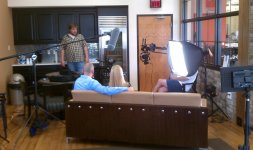
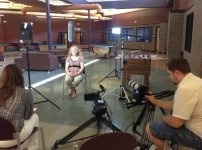
For the medium shot, I had the couple frame right. I kept this framing for the tight shot, but the camera was at a slightly different height, angle and focal length. I also enjoy putting the tight camera on a slider for some added energy. Here are two examples I've done recently.

interview 1.jpginterview 2.jpg
 
Ive always heard the "20% rule." This means change the focal length or angle of subject to cam by at least 20% from shot to shot to avoid jump cuts.
 
When I used to teach college film courses, we called it the "30° rule." Change the camera position relative to the subject, or the angle of view of the lens, by at least thirty degrees between shots you intend to cut together.

- Greg
 
When I used to teach college film courses, we called it the "30° rule." Change the camera position relative to the subject, or the angle of view of the lens, by at least thirty degrees between shots you intend to cut together.

- Greg

My observations are that it is rarely applied to interviews, probably for practical reasons. Also, modern cinema tends to ignore it much more readily than the classics. I often find this annoying. When you see this rule broken in an old movie, this is usually justified. Nowadays breaking it is probably due to lazyness or the i-dont-care attitude.
 
excellent!!....i was looking for such kind of explanations. but as described in 30 degree rule, can this be achieved without moving the camera? i mean if the subject and the camera are fixed, is it possible to avoid jump cut but simply changing the framing of the shot?

any views?
 
A wide shot to closeup cut can work if the difference in the look of the background is significant enough. The "rule" was meant to account for that -- changing the angle of view of the lens by 30° or more is supposed to do it.

In practice -- and I'm really going to label myself as out of touch with modern aesthetics by saying this -- I think actually moving the camera position relative to the subject, or using two cameras, is much more pleasing to watch than just changing the zoom setting between shots from the same location.

Sometimes, though, even a flat-out jump cut is better than an irrelevant and obvious cutaway. I've seen as many shots of reporters nodding generically in response to something their subjects say as I need to in this lifetime.

- Greg
 
Back
Top