Interview light setup test

Polaroid22

Well-known member
Hello,

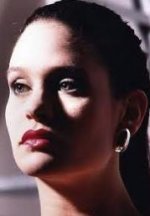
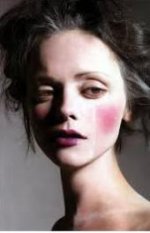
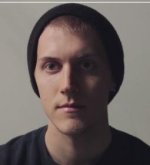
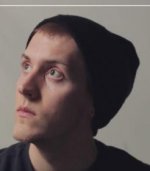
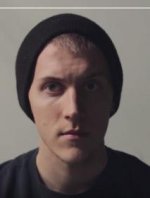
I got an interview coming up Thursday. And I just did a quick 2 light setup at my house as a test. I was going for a Rembrandt keylight (Aputure ls1s with small softbox) and a back/rim light(quasar science crossfade).
first picture is without the quasar science. But I do feel like I kinda messed up the Rembrandt lighting, I should pay more attention to it on the actual shoot. Where did I go wrong? (higher, closer, more to the back with the keylight, more to the front, angle?)


Thanks!
 
Last edited:
The whole Rembrandt concept becomes much more forgiving when you use a larger source. Your Aputure is fine, but the size of your softbox may be preventing you from creating softer lighting. In addition, I would wrap a bit more with your key. In other words, not so far off to the side, but pull it in. Back to Harmenszoon van Rijn, get the tip of that nose shadow to traverse her crease a bit less by placing the light a bit more centered than where you have it now. Height looks great.

For a bigger source, use a larger diffusion panel. The LS1s has enough punch to fill a 4x4 for indoor shoots, which will give you a much softer shadow.
 
Thanks!

@Liam Hall:
You mean I need to decrease the angle of the light(it is too sidelighted now, and I need to bring it closer to the camera?)
Also I do not own a dimmer for the Quasar Science(backlight), so I could only wrap some diffusion around it to bring it a stop down. And maybe put a lens hood on the lens to prevent it from flairing.

@ ozmorphasis: yeah I do have a large shoot through reflector that could work, but I do not have the right equipment to mount it on a lightstand. So a bigger softbox is a no go for now. I could move it in closer though, which should make it softer. So you think the height is ok, but just need to bring the light more closely to the camera then it was right now.
 
Last edited:
Thanks!

@Liam Hall:
You mean I need to decrease the angle of the light(it is too sidelighted now, and I need to bring it closer to the camera?)
Also I do not own a dimmer for the Quasar Science(backlight), so I could only wrap some diffusion around it to bring it a stop down. And maybe put a lens hood on the lens to prevent it from flairing.

@ ozmorphasis: yeah I do have a large shoot through reflector that could work, but I do not have the right equipment to mount it on a lightstand. So a bigger softbox is a no go for now. I could move it in closer though, which should make it softer. So you think the height is ok, but just need to bring the light more closely to the camera then it was right now.

FWIW, dimmers for the QS tubes are really cheap. Get one.
 
You are being hard on yourself. You did quite well.

Others replied that the key was placed too far off to camera right but I disagree. If anything, the key is not far enough to the right and here is why: The nose shadow should connect to the cheek-shadow leaving only a triangle of light. Creating what is known as a "Rembrandt patch". ( as in, "patch" of light that is triangular-shaped. ). Note how in the example you provided, in the example without the backlight, the nose shadow does not quite join the cheek shadow. It comes up just short as a result of the light source not being place far enough to camera-right.


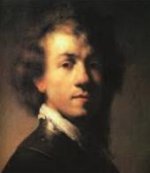
Here is are examples of successfully a executed "Rembrandt patch", first from examples of photography and then from the man himself:

Screen Shot 2018-08-14 at 9.29.01 PM.jpg

Screen Shot 2018-08-14 at 9.29.35 PM.jpg

Screen Shot 2018-08-14 at 9.30.07 PM.jpg


You chose to make the attempt using a subject wearing eyeglasses and that makes things challenging because the shadow of the frame of the eyeglasses is "sent" sideways by a key-light placed laterally, the shadow of the eyeglass frame producing a shadow that projects into the eye of the subject in an "ugly" manner. Using a key-light that is larger in size would help to mitigate that ugliness because it would produce a less-defined shadow of the frame of the glasses.

So, in summary, you got really close. Good job. Place the key a bit more to camera right ( more lateral to the eyeline of the subject ), use a larger key, and also raise the height of the key-light slightly. You want to "send" the nose-shadow downward, at an angle, until it connects to the fill-shadow and the result is a triangle of key-light on the fill-side of the subject's face. That distinct triangle-shaped patch of light is what you are after. In your first example there isn't a distinct triangle because the nose-shadow is not connecting to the fill-shadow to create the triangular-shaped patch of light.

A couple things to keep in mind: In the second example you provided there is more of a Rembrant patch than in the first. Possibly because the subject's head is turned a bit more away from the key. Which brings me to my second note- achieving Rembrandt lighting is really more of a still photography thing than a thing in moving images. The reason being is that in still photography you can capture an image where the subject's head is positioned at just the right position. But in motion photography the subject isn't likely to keep their head at the required position necessary to produce the so-called "Rembrandt patch.". For an interview or a dialogue scene in a narrative film the subject is likely going to move their head around. The subject is going to turn their head in relation to the position of the key-light. As a result the position of the subject's nose-shadow is going to travel around. At times it will connect to the cheek-shadow ( or, to the "fill-side shadow" ), at other times it will separate from the cheek-shadow on the fill side. All that said, if you use a large key that produces a soft nose shadow the times that the nose-shadow fails to connect to the fill-side shadow are less noticeable or less "offensive".

Here is an example of video that demonstrates what I am talking about when I speak about the Rembrandt-patch coming and going as the subject moves their head:


At times, when the man's head is in the right position, a Rembrandt-patch results:

Screen Shot 2018-08-14 at 9.48.34 PM.jpg

But when the man turns his head to the left or to the right of that position, there is no longer a Rembrandt-patch.

Here the face is turned too much towards the key-light for the nose-shadow to connect to the fill-shadow:

Screen Shot 2018-08-14 at 9.49.45 PM.jpg

Here the face is turned too far away from the key-light and as a result there is no nose-shadow at all. Instead the lighting on the face is split. The lighting is "50/50". Each side of the face being either all key or all fill:

Screen Shot 2018-08-14 at 9.51.21 PM.jpg


All of this is rather exacting and requires everything working in conjunction. Which is why in motion photography the Rembrandt-patch is attainable but not always sustainable. Because rarely does a subject keep their head in just the right position for there to be a Rembrandt-patch.

Often times the thing that should take precedence is making the subject look good. Don't just do Rembrandt-style lighting regardless of whether or not it is flattering for the shape of the subject's face. Don't do it if it is producing ugly shadows of the subject's eyeglasses. If it ain't working for that subject, abandon it and go with something that works better for the subject. You may have to balance the desire to maintain continuity of lighting style and a desire for dramatic lighting with making a person look good. Use good judgement. I'd rather have "boring" lighting that makes a person look good than dramatic lighting that isn't flattering on the subject. If you are lighting Jessica Lange for an interview and she hates the way you lit her it isn't going to be satisfactory to her to explain that you were going for a "Rembrandt" look with a lot of falloff and drama. Maybe for a scene in a film...but not when it is an interview setting. You'll end up being the goat and she may even demand that you never be hired again.

Lastly, is your interview that you have coming up going to be one where the subject looks at the camera lens and not at an interviewer? Because your practice setup has the subject looking at the lens. If your subject is going to be looking to the right or the left of the lens during the interview, your key will have to move further to the right or left accordingly.
 
I think a good rule of thumb is you want your lights as close as possible. That makes the falloff more pronounced, which is usually more interesting. And it makes the lightsources larger because they are closer. It also makes it so you don't have to buy huge lights because they don't need to be as poweful. And, if you don't want too much light falling on your backgeound, it will help with that too. We are winning all around here :)

You often even see photographers leave their light source in frame it is so important to them to get it as close as possible. They could either composite it out if shot on a tripod, or clone it out if on a uniform background. That compositing methid is how everything is being shot now... go check out a group shot for an hbo show and it will almost assuredly be amgiany composite, each subject with their own lighting.
 
Last edited:
Thanks guys! Really appreciate the help!
I think Jpnola is right if you follow the shadows and compare them. So that is what I am gonna do. Move the keylight closer, and a bit more to the side, maybe a tad higher. I am going to have the subject look right to the camera and not into the camera, so the camera is shooting into the shadow side.
 
Thanks for all the feedback.
I just got a picture from the location. So Im not sure if the windows have blinders on it. Everything does seem white and pretty small. I could just place the interviewee on that small table and chair. Move it a bit in the center of the room and place a giant diffuser in front of the windows, and just use the natural light coming in as a keylight. and maybe just use negative fill on the left side. Probably it is possible to put a grey blackdrop on the white wall. Any suggestions?
 
Last edited:
What time of day will the interview be taking place?

The risk of using all natural light or even partial natural light are twofold:

* the light level changes with cloud coverage. You end up having to ride the iris as clouds roll in and out. And you can end up in a situation where you were wide open when there was full sun outside, in order to get shallow depth of field, but then the sun becomes clouded, the light-level drops, and you are already wide open on the lens or near enough to wide open that you don't have enough iris to maintain good exposure. It isn't good when you are having to ride the iris mid-response, when you are having to ride the iris as the interview-subject is giving a great response. You end up having to shoot much of the interview at a more boring f/5.6 because you need the safety of more iris available for when a cloud rolls in.

* the light level changes with time of day. You are scheduled to roll-record at 2pm but things run late, you don't start rolling until 4pm, the interview lasts way longer than expected, and you are losing daylight. You are still rolling at 6:30pm and the amount of natural light in the space is 1/10th of the amount when you started. You're "in the mud" as far as exposure and contemplating having to go to a higher ISO. The look is more flat than when the interview began, you're miserable over it and feeling sick to your stomach over it. You might even have to pause the interview in order to add lighting that no matter what you do will not look the same as the natural light, the Producer / client is unhappy about it all, you've broken the rhythm of the interview and the subject who before was comfortable and speaking candidly has tightened back up and withdrawn again. You've screwed things by not anticipating that the interview might start late and run long and you'd lose that much light. You've screwed the pooch by depending on natural light in the first place. The wrap-out is extraordinarily quiet as you are kicking yourself and having regret.


As to the pictured space, it is curious that a space used for photography does not have a means of blocking the light from those windows. Or at least appears not to have any means of easily doing so.
 
Yeah there are 4 interviews from 12:00 until 16:00. I think I can work around the sunlight, the weather forecast is cloudy.
If the room cannot be darkened. There is no point in using the lights either. As the sun will probably be stronger then my lights anyhow(depending on the weather).
 
FWIW I'd put a bounce in front of the subject and a big negative fill to the left of them assuming they are sitting at the table and see if a kicker/hair light does anything I like or not.

The room is so white and bright it would be worth cutting some of that to create some contrast. Sometimes you wouldn't want that, but based on your original post you want MORE than most people do - I don't know what htis interview is for - but that would dictate my choices as well. if it's light and fun and poppy, I'd not go dramatic, if it's serious I'd have more contrast, corporate, they just like plain zero shadows

Cheers and good luck.
 
As to the pictured space, it is curious that a space used for photography does not have a means of blocking the light from those windows. Or at least appears not to have any means of easily doing so.


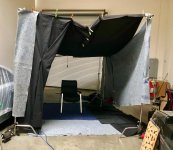
I've ran into this many times with photo studios. I think it's mainly because it's so easy to defeat sunlight and ambient light using pro output level studio strobes, it's doesn't matter unlike with video. I shot an interview in Herb Alpert's loft in Santa Monica last year and the entire place was like this, big windows and skylights everywhere. My gaffer and I ended up making an entire room out of Duvetine, a big one about 20'x30' since we were shooting green screen. Duvetyne and furniture pads are my best friends, I also recently setup an interview studio for a big project I am working, same issue, a huge skylight 30' up and we don't have a scissor life or a ladder long enough to reach it. So making a tent of Duvetyne and Furniture Pads. It's a PITA, but it works and let's you actually be a cinematographer and control light, rather than be a camera op and just have to deal with it ;-)

Prepping for my latest round of interviews, it looks like this before I light it. Damn skylights! Going to get more Duvetyne to go from the back of this tent to the top of that roll top door so I can light the door as a cool abstract BG with some cuc patterns or slashes. It takes a lot of Duvetyne to deal with ambient light.

IMG_8863.jpg
 
Last edited:
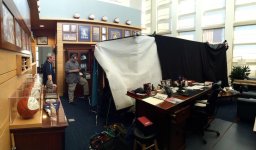
Yep. We ran into the same thing a few years ago. The look was a background that they were shipping around for all of the interviews and instead of the PR person putting us downstairs in a dark room, they wanted to do it in the coaches office upstairs, and we knew this going in. But I even asked after we arrived if there was anyway to move us. Nope. Oh did I mention the ceiling was probably 20' with windows from top to bottom? So we had to drag everything up to the office and then build a completely enclosed box big enough for subject, talent, producer, two cameras and two shooters. Audio stayed outside.

IMG_6522.jpg
 
Ok I just did a small test again, this time with the quasar science tube as the keylight.
First picture is just taped straight onto a tripod(35mm), the second one is me holding it at an angle above her(70mm, I did seem to hit the lens a bit with light it seems, I am surprised hitting the lens with light has such a dramatic impact, I am also missing an eyecatch so probably angled the tube wrongly, or the 70-200 is more prone to light then the sigma 18-35mm).

I think I can get away with the sigma 18-35mm lens instead of the canon 70-200mm depending where the natural light is flooding from + what my backdrop will be.

The crossfade seems to be softer then my softbox so I might switch it up and use the tube as a key isntead depending on the natural light.
 
Last edited:
Yep. We ran into the same thing a few years ago. The look was a background that they were shipping around for all of the interviews and instead of the PR person putting us downstairs in a dark room, they wanted to do it in the coaches office upstairs, and we knew this going in. But I even asked after we arrived if there was anyway to move us. Nope. Oh did I mention the ceiling was probably 20' with windows from top to bottom? So we had to drag everything up to the office and then build a completely enclosed box big enough for subject, talent, producer, two cameras and two shooters. Audio stayed outside.

View attachment 132278

That's such a big vertical space, that I would have been tempted to just work with it and use the ambient light - the room looks interesting enough for an establishing shot - what did you end up using in the background if anything? The post before that in front of a garage door begs the question - why not just do it in the garage!?!? lol ;)
 
I just got a picture from the location. So Im not sure if the windows have blinders on it. Everything does seem white and pretty small. I could just place the interviewee on that small table and chair. Move it a bit in the center of the room and place a giant diffuser in front of the windows, and just use the natural light coming in as a keylight. and maybe just use negative fill on the left side. Probably it is possible to put a grey blackdrop on the white wall. Any suggestions?
2ecnltu.jpg

If that's your angle / shooting direction, it looks like there are 3 rolls of paper (probably for back drops) in that right corner. Bring extra stands / bars and you could use one of them - possibly the white roll - to block the windows on the right as well be your fill bounce side and another roll to be your own backdrop to cover up that smaller window by the shooting table. Then with a ladder, you could possibly tape / hang duvey / black cloth on that upper horizontal window to at least block most of it (perhaps leave a little opening to create a bit of a back light / hair light if exterior light will remain consistent ??). Then, you should be able to light your to own satisfaction. For me personally, I like a little less ratio for most interviews - and even if doing the "Rembrandt patch" would bring up the fill side so it's not quite as dark. But to each his/her own style...
 
Back
Top