I don’t do windows.

JPNola

Veteran
I’m curious, who among you does not do any post?

I only shoot and light. Never any editing, color correction, or other post work.

I know of around 8 other Owner / Ops in my market and it is the same for all but one, maybe two of them.

The discussions here about LUTs and grading and Premiere and such suggest that many of you do post-production.

Chime in with whether you do post or are a DP / shooter only, like myself. Am I the more rare breed these days? It used to be that it was rare that a Cameraman did anything but shoot and light. Particularly since there was no home-editing system and editing systems cost upwards of $100K. Seems like only yesterday that everyone was buzzing over the Video Toaster software and wowing that it was possible to edit video on a consumer desktop computer. At one time in my career “Shooter / Editor” was a new thing. Later came “Preditor”, a Producer / Editor.
 
I edit and I love to. But I mostly only edit stuff that I've shot and am co-producing. I shoot lots that is edited by others, but it's rare that I edit something that someone else shot. My motion graphics skills are not very advanced because I'm not very interested in that type of work. But it's a lucrative skillset and the fact that I don't offer advanced graphics skills boxes me out of some work.
 
I started doing both at the same time just as iMovie started to really get going.

Today, I think it's pretty rare you'll find someone not having some knowledge in both.

Like a lot of people may decide to focus only on filming or editing as their main business or interest, but usually have pretty decent knowledge in operating a camera and have intermediate editing skills as well.
 
I bet at times it is frustrating to edit content shot by someone else and to have to deal with poorly executed work. I’ve often wondered if some editor is cursing me as they work with material I have shot. Although I’ve never received any negative feedback.
 
I bet at times it is frustrating to edit content shot by someone else and to have to deal with poorly executed work. I’ve often wondered if some editor is cursing me as they work with material I have shot. Although I’ve never received any negative feedback.

This. I love editing, it's my favorite part, but I can't stand cutting someone else's footage, so I started getting into shooting too. Every time I cut footage shot by someone other than myself, I find I'm lacking a certain shot, a few extra frames etc.. When I shoot, I shoot for the edit and the fact that there's no one to blame but myself if it goes bad is good accountability.
 
Shoot/light only. 100% of what I do is handed off to the client. I haven't had to edit since I used to string for one of the locals, here in the late 90's/early 00's.
 
I'm a bit amazed by you both, JP & R&G. Not to call you dinosaurs - but I would venture to guess yours is a bit of a dying breed. But I would love to be wrong - and am envious you've both been able to pull it off.
I started out as a shooter only - but in my market - I would have had to get out of the business years ago - if I hadn't started editing / doing post work, etc. I do believe having to edit - has made me a better shooter.
 
I am a better DP and producer than editor but I like editing. I edit most of my corporate and lower budget work but most of my higher end work is edited by editors who are in a higher league than I am.
Editing is fun but can be tedious. I suck at motion graphics but I produce high end motion graphics with a couple of top designers and animators so I know motion graphics from a producer standpoint.
Wish I knew AE, I miss several jobs where I could shoot and edit but they always want someone who can do good work in AE and I can't.
 
This is an interesting subject to me and one I discuss often.

From my earliest experiences shooting I was also editing...1/2" black and white reel to reel (Sony Portapak) was my first experience in both, then early VHS. In college it was film, then back to tape again thereafter. Three years at a production company doing all of the shooting and editing (mostly 3/4"). Eventually I focused more on shooting, although when Final Cut Pro came out in '99 I got back into editing my own reels and personal projects, which continues to this day.

What I took from all of this, as mentioned by others above, is learning how to shoot for the edit. In prep, I see the edit in my mind and reverse engineer the shotlist out of that. I always maintain that if I can visualize my cut in my head, a great editor can come up with five other ways to cut it that are (hopefully) better--but it's certain that they won't get stuck with a difficult piece to cut.

It's hard for me to imagine doing what I do without having that background. As it is, I sometimes have conversations with my operators about nuances of their choices and will tell them "you just forced the scissors", meaning they have hamstrung the editor into having to make an edit which limits their options. A classic example is when a character walks out a door or stands up in a closeup--do you follow them out the door or out of their seat, let them out of frame, or "nickel them out" (meaning, give them a little bit of movement to keep them in frame just a bit longer and then let them out)? Those choices all have to be made based on the best guess of what the editor will want--it is surely that much harder to deliver that if you haven't been in their seat.

I have a lonnnng story I could tell about this--probably not the right venue here. Would definitely be a tl;dr situation.
 
I have a firm beleif that everyone should edit, once. I f you have not editied a film I dont really want to work with you - that goes for producers, sound men, directors whatever.

The film may be 25s long and donr 20 years ago - but if you have not edited a film you are probably clueless.

Today I edit if I have to, but bigger projects will have a proper editor.

---

I note the correlation between non editors here and those who seem to want to shoot baked and dont think a grade can bring much to the party!

MOdern digital cams only come alive in the grading suite. All cam department should have a few tens of hours grading.
 
Producer/Director/DP/Editor

Have been my whole career.

"A human being should be able to change a diaper, plan an invasion, butcher a hog, conn a ship, design a building, write a sonnet, balance accounts, build a wall, set a bone, comfort the dying, take orders, give orders, cooperate, act alone, solve equations, analyze a new problem, pitch manure, program a computer, cook a tasty meal, fight efficiently, die gallantly. Specialization is for insects."

-Robert A. Heinlein

Changing a diaper and pitching a manure are two skills that directly translate to this business and are useful every single day in it.
 
This is an interesting subject to me and one I discuss often.

From my earliest experiences shooting I was also editing...1/2" black and white reel to reel (Sony Portapak) was my first experience in both, then early VHS. In college it was film, then back to tape again thereafter. Three years at a production company doing all of the shooting and editing (mostly 3/4"). Eventually I focused more on shooting, although when Final Cut Pro came out in '99 I got back into editing my own reels and personal projects, which continues to this day.

What I took from all of this, as mentioned by others above, is learning how to shoot for the edit. In prep, I see the edit in my mind and reverse engineer the shotlist out of that. I always maintain that if I can visualize my cut in my head, a great editor can come up with five other ways to cut it that are (hopefully) better--but it's certain that they won't get stuck with a difficult piece to cut.

It's hard for me to imagine doing what I do without having that background. As it is, I sometimes have conversations with my operators about nuances of their choices and will tell them "you just forced the scissors", meaning they have hamstrung the editor into having to make an edit which limits their options. A classic example is when a character walks out a door or stands up in a closeup--do you follow them out the door or out of their seat, let them out of frame, or "nickel them out" (meaning, give them a little bit of movement to keep them in frame just a bit longer and then let them out)? Those choices all have to be made based on the best guess of what the editor will want--it is surely that much harder to deliver that if you haven't been in their seat.

I have a lonnnng story I could tell about this--probably not the right venue here. Would definitely be a tl;dr situation.

After reading your post Charles - I guess I have been editing since the start - not sure why I didn't "count" it in my original post - other than it seems so quaint nowadays.
My first experience was VHS deck to deck while still in college - and then 3/4" tape decks before Beta SP shooting for ENG local affiliate. Still remember my first "special assignment" that involved going to DC and then getting to work with Avid editor upon our return. Remember that Avid taking up a large portion of the small room - but boy was I hooked on non-linear instantly (just couldn't afford it back then).

I think your "reverse engineer" description of visualizing the cut - is exactly how I've always done it in my head as well. I very rarely edit others footage nowadays - but over the years I could always spot a shooter who wasn't thinking "coverage" or about choices in the edit. They didn't get repeat work.
 
When I was in business (2000-04) I began as a camera operator only, to get my foot in the door with the other video producers in town. The businesses were sole proprietorships, and the gigs were entry level: weddings, recitals, school games, etc. I moved up into editing as soon as I could, partly because it meant more money. I would think that plays a part in others' decisions. Ironically the more you pay someone, the more specialized they often are. For example, the wedding videographer will rig microphones, operate camera, and edit. But Roger Deakins does not edit his own movies. So if you can make enough money while doing just camera, more power to you. I have to agree with the others, that you might try editing every once in a while, just to make yourself a better camera op.

As it is, I sometimes have conversations with my operators about nuances of their choices and will tell them "you just forced the scissors", meaning they have hamstrung the editor into having to make an edit which limits their options. A classic example is when a character walks out a door or stands up in a closeup--do you follow them out the door or out of their seat, let them out of frame, or "nickel them out" (meaning, give them a little bit of movement to keep them in frame just a bit longer and then let them out)? Those choices all have to be made based on the best guess of what the editor will want--it is surely that much harder to deliver that if you haven't been in their seat.

I have a lonnnng story I could tell about this--probably not the right venue here. Would definitely be a tl;dr situation.

This is really cool that you have a taxonomy of ways to let the subject exit the frame. Not surprising when I think about it. I might enjoy the long story some time.
 
After reading your post Charles - I guess I have been editing since the start - not sure why I didn't "count" it in my original post - other than it seems so quaint nowadays.
My first experience was VHS deck to deck while still in college - and then 3/4" tape decks before Beta SP shooting for ENG local affiliate. Still remember my first "special assignment" that involved going to DC and then getting to work with Avid editor upon our return. Remember that Avid taking up a large portion of the small room - but boy was I hooked on non-linear instantly (just couldn't afford it back then).

I think your "reverse engineer" description of visualizing the cut - is exactly how I've always done it in my head as well. I very rarely edit others footage nowadays - but over the years I could always spot a shooter who wasn't thinking "coverage" or about choices in the edit. They didn't get repeat work.

I have a theory that anyone who starting editing tape-to-tape or splicing film had to develop a more precise sense of timing in the edit vs those who came along non-linear, because it took so much longer to complete each edit, so there was more incentive to get it right. I used to supervise cuts with a young editor who started on a non-linear system (Media 100!) and after a while he teased me about my specific timing notes, i.e. "take 7 frames off the source side and add 3 to the record side". He was like, 7? Not 5 or 10? For me everything had been time-code oriented so I was acutely aware of the difference a single frame could make, where he was doing it visually and not numerically and trimming in multiple tries as needed. It's just a different way of working!

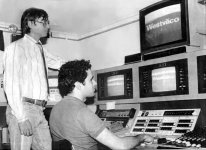
Below during my tenure as cameraman/editor at a small production company in the late 80's...everything in this picture feels like it's from a million years ago!

telecommercialeditor-denoise-Recovered.jpg
 
The other part of this is grading (or what we used to call coloring/color correction until a few years ago). I dabble in Resolve, I use it to cut my reels (and fix color on clips that were finished without my participation!) as well as cut and color my own projects. Most of the time I sit in color suites with incredibly skilled colorists who are able to do things far beyond my capabilities, but it is helpful to be able to speak a bit of the same language. Most importantly, it gives me ammo to know how much I can "let go" on set and fix in post, which is increasingly becoming a desirable way to go (a fast DP is a desirable DP, and while there is still a cost associated with the color process, it is much less weighted than taking time on set). Typically this involves gradients and vignettes for walls vs taking the time to flag, balancing hot windows, lightening or darkening faces when people are standing next to each other and it is tough to light them separately.

One discipline that I have no hands-on experience with is VFX or compositing (After Effects etc). This past season on Crank Yankers I spent a lot of time with our VFX artists advising on comps as we had a lot of blue-screen backgrounds, and it was a fantastic learning experience.

Ultimately I think it's possible to armchair-quarterback all of this if one is perceptive enough. After all we have spent our lives ingesting visual material and it's really a matter of analyzing and understanding how the pieces all come together. I do feel like the more jobs one has done on set (or at least taken the time to learn about), the better one gets at their own job. Ultimately, it's about being a filmmaker!

It's not without its risks as sometimes things will slip through the cracks, and
 
Back
Top