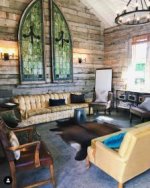
How to dampen sound in this room

chris f

Veteran
I'm producing a video podcast 2-person interview thing at this location and am trying to brainstorm ways to get rid of the echo in the room: https://soulcarehouse.com/pages/the-barn
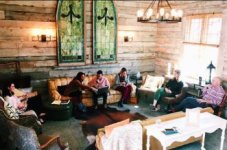
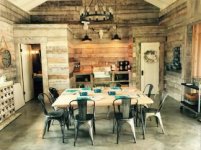
Screen Shot 2018-12-28 at 10.00.23 AM.jpgScreen Shot 2018-12-28 at 10.01.22 AM.jpgScreen Shot 2018-12-28 at 9.58.36 AM.jpg


It's about 700 square feet, some furniture in the room, but lots of hard surfaces.

I've got maybe $150 left in my budget and was thinking of trying to find a big area rug on clearance somewhere. Any other ideas on how to dampen this place? (Ugly, off-camera solutions are perfectly acceptable).

For microphones I'm definitely thinking lavalieres, but am trying to do as much to the environment as I can. Also, location is booked, so finding another location isn't an option.
 
Furniture pads from Harbor Freight is probably the cheapest way to breakup the room acoustics. Hang them from grip arms or you can hang several off of a 12' background stand kit. A floor rug will help if there is none.

A few years back I decided to make a better setup. I bought a box of 2'x4' acoustic foam panels and glued them to foam core panels. These are light, bulky, but very effective. You can hang them or just set them standing up against the perimeter of the room. Placing them in the corners of the room is particularly helpful as hard room corners are the worst acoustic offenders. I managed to find a couple of hard shell bicycle travel cases for cheap to store them. This solution will bust your $150 budget but is a great long term solution if you want a more professional appearance and functional solution. A set of six panels will cost you about $350. They have the added bonus of being able to use them as on-set flags. Use them in your edit suite to improve your acoustics there as well. They are quite light so can be placed on walls with velcro; even in corners.

Using gator board instead of foam core would be a huge improvement but would run the cost up. Foam core works well enough.

FWIW, I was shocked at the cost of the "official" glue products. I tried a few things but ended up using plain old good quality pure silicone sealant which can be got for about $5/tube at the box stores. I used about a tube per panel. Works great but takes a day or two to setup and dry. As I glued the panels to the foam core, stacked them as I glued, and then topped the stack with a sheet of plywood and some deadweight. Contact adhesive would work also but isn't really cheap and is nasty to work with.

Here is a link to the panels I used. They also have 12 packs.

https://www.bhphotovideo.com/c/prod...ry24cha_hp_2_studiofoam_pyramid_acoustic.html

Best Regards,
Grant
 
I end up in rooms like that a bunch. Can be a pita for walkarounds and narrative, but for interviews it can work fine.

If want to use a rug, go for shag in a neutral grey. That works, but is kind of a pain to carry around. You could also use some good sound blankets (aka, furnipads). Mass matters here; don't go for cheap ones from Harbor Freight or something, imo. Also, don't go for blue or another color that'll influence the scene. In San Diego, there must be a good expendables shop. Maybe pick up a few black sound blankets...and if they have them, a couple with white on one side and black on the other so you can get all positive/negative-filly when needed. My current favs are the Producers Choice from this company...but shipping is expensive(ish) and do you have time? And "regular" good blankets from an expendables shop are fine:
https://www.moverssupplies.com/sound-blankets-producers-choice.html

Stick a couple directly under the interviewees (not directly on top of each other; cover more space). Then light around them (ie- factor in the blackness or greyness of the blankets or rug). Maybe drape a couple over nearby couches or tables. You may not need to worry so much about hanging pads just away from the walls or caging the interviewees; that can help a bit, but requires more setup time and a bit more finesse with lighting...see if you can get what you need without it.

Like Paul says, lavs are a good way to go here. But you can also use a good hyper above each interviewee; just above the frameline.

Monitor on headphones during setup, do a little playback to see what's working best.

And that's a cool-looking room. A bit of 'verb is motivated.

Good luck and post some pix of the shoot so we can see what worked for you.
 
Microphone proximity is far and away the simplest, easiest, and least expensive way to battle echo. Rugs and sound blankets and whatnot can make some difference, and should be used where possible, but you want mics as close as possible so the good signal overwhelms the echo. If at all possible, practice before the shoot. And get the lavs as close as possible; don't go sticking a lav way down on someone's shirt or whatever just to try to hide it; if possible, I'd vote that seeing a tiny black dot is far preferable to hearing massive echo that cannot possibly be removed in post. Maybe wire it up over their ear on the far side of the camera, or if one of them has a walrus mustache you could maybe hide it in that, I don't know, just ... the closer you can get it, the more you can turn down the gain, and the more you turn down the gain, the more the echo will disappear. If one of them is wearing a hat, that's a good spot for hiding a mic. Close, close, close is the key.

If you've got no money, don't go torching what you've got on buying a single rug... consider renting moving blankets from U-haul, or picking up as many carpet scraps as you can from a carpet installer or retailer. Big bulky soft stuff helps control echo, so moving a big ol' sofa into the room will probably do as much or more than hanging up a blanket somewhere. Hard surfaces bounce sound, soft surfaces help diffuse and absorb, and that room looks like a nightmare scenario for echo, so if you're going to go the dampening route, you need bulk. See if your local Goodwill store will rent you some used clothing by the ton... then drop it back off as a donation when you're done. :)
 
To echo what Barry said, at the budget end, it usually makes sense to avoid buying products marketed for audio (foam, blankets) and instead try to find cheaper industrial counterparts (most audio foam is simple PU foam, movers blankets are often comparable to those marketed for sound, etc.)

If it's a more permanent install and you happen to have access to a cheap source of woodworking, making your own versions of these could be useful as well: http://www.rpgeurope.com/products/product/flutterfree.html
 
Back
Top