How much sandbag weight should one use?

ahalpert

Major Contributor
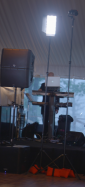
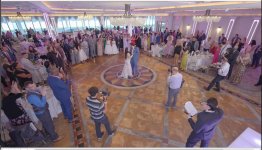
I've been rigging a 5lb payload (DJI RS3 mini gimbal + a7iv + 14GM) on a 13' light stand at maximum height to get a high-angle master shot of the wedding dance floor.

I've been using a single 15lb sandbag on it and keeping the unit at the corner of the dance floor where it's unlikely to be disturbed. But now i plan on moving it closer to the action once the central dance area has been determined.

My thought was that 30lb of weight might be sufficient for the casual bump into the light stand, or someone kicking the leg or swinging their arm into the column.

But is there a formula that we use for determining how much weight to throw down? Or is it just a guesstimate erring in the direction of too much rather than too little?

The worst case scenario is probably a heavy person falling backwards at full speed into the stand. What are your thoughts? I'd like to use the minimum weight necessary to prevent injuring a drunken guest.
 
IMO, that is too much of a liability to be considering - but if you must, you really want a few of those 30lb sandbags to keep it from tipping over.

It's not just about anyone tripping on it and hurting themself but also knocking it over and having that hit anyone else. And you don't have to be heavy; many men (and women) are stronger than they look and would easily be able to knock it over, especially when tipsy.

I would consider a cable camera system; it's easy to set up between point A and B and can hover above the action.
 
IMO, that is too much of a liability to be considering - but if you must, you really want a few of those 30lb sandbags to keep it from tipping over.

I'm not not going to do it. The only question is how to do it right.

I would consider a cable camera system; it's easy to set up between point A and B and can hover above the action.

that's an interesting suggestion but I wouldn't have time to set it up and it still presents safety concerns plus creates a background distraction for my A camera and I don't want a bird's eye view, I want 45-degree angle, and I don't have hands to operate it, etc
 
There's no easy amount of weight at the bottom that will be able to withstand someone grabbing the stand while going down unless it's several hundred pounds, but maybe you'll get by somehow.

I have a pull-up station that's over 100lbs and if I grab it and fall back it moves/drags with me (meaning I would take it down with me if I was really falling back).

If you can flex your prices a bit, I'd maybe hire another assistant on standby to stand by and watch it for the peace of mind.
 
There's a general rule on traditional sets (grip/lighting department) that c-stands don't get used outside. Adding wind to the equation, it's not so much related to capacity as it is having a larger footprint.

I own all of these stands, check out the increasing footprints from 27" to over 6 feet:

c stand

combo triple riser

overhead stand

For this reason you'll struggle to find low boy combo stands with triple risers (IDK if they even exist), only double risers - small footprint means limited height.

There's no formula to get an equivalent level of stability with smaller footprint stands that have more sandbags vs. bigger footprint stands with fewer sandbags.

Mixing the general public with lighting equipment sucks! I don't think you should ever plan for a few bumps, people just can't touch it at all and if that can't be followed then the set up can't happen.
 
lol, many more than the average person, which I learned most people supposedly can't even do 1 which really shocked me.

But just to be clear; the station doesn't move if I use it properly (like for pull-ups). Above I was talking about grabbing one of the side poles and pulling it/dragging it across the floor. If I hold the top bar for pulling up then it stays put.

To add to this story: I actually bought this thing from some dude down in Florida who was making them in his garage like 15 years ago. A few hundred bucks and it is so superior. He was a welder who knew his craft well.
 
lol, many more than the average person, which I learned most people supposedly can't even do 1 which really shocked me.

To add to this story: I actually bought this thing from some dude down in Florida who was making them in his garage like 15 years ago. A few hundred bucks and it is so superior. He was a welder who knew his craft well.

lol zero is not great... and nice find, sounds solid.
 
Mixing the general public with lighting equipment sucks! I don't think you should ever plan for a few bumps, people just can't touch it at all and if that can't be followed then the set up can't happen.

At weddings, videographers and photographers always stage lights and tripods, albeit usually at the periphery. I've never witnessed an incident. For context, this is the shot I'd like to replicate:

Click image for larger version  Name:	Screenshot 2023-06-08 at 9.13.32 PM.jpg Views:	0 Size:	75.7 KB ID:	5703014

It's not as important as the floor-level coverage, but it shows the world and gives me a usable shot of any part of the dance routine; shoots over the photographers' heads, etc. Floor coverage typically looks like this:

Click image for larger version  Name:	Screen Shot 2023-06-08 at 8.57.03 PM.jpg Views:	0 Size:	53.8 KB ID:	5703015

Usually, I put my lights and unmanned camera next to a DJ/band speaker to keep it out of the way, like so:

Click image for larger version  Name:	Screenshot 2023-06-08 at 10.38.21 PM.png Views:	0 Size:	26.6 KB ID:	5703016

But reviewing my most recent wedding, I was unhappy with the unmanned camera angle because the couple ends up dancing too far away from the DJ and therefore from the camera. Too much crap in the foreground. You can crop it in, but it's not going to be the angle/composition I want. And you sometimes get photographers covering the lower half of the couple. It's usable, but the camera wants to be at the edge of the crowd of spectators, and perhaps from a bit lower angle on account of the ceiling height:

Click image for larger version  Name:	Screenshot 2023-06-08 at 10.39.51 PM.jpg Views:	0 Size:	101.0 KB ID:	5703017

I have a shot from later that night where I switched this camera to a 24mm. There's nothing to see here, but it shows me that maintaining camera placement and zooming in would not have made me happy:

Click image for larger version  Name:	Screenshot 2023-06-08 at 10.41.14 PM.jpg Views:	0 Size:	89.0 KB ID:	5703018

And in reality, these worst case scenarios I'm talking about are not going to happen. The piece of coverage I'm interested in doing this for is the formal dances - couples' first dance, and parent/child dances. For those dances, only a couple people are dancing in the middle of the floor and everyone else is just watching. I can pull the camera to a safe remove by the time the whole crowd is dancing. And people aren't usually wasted until later in the night. But it's worth considering how to maximize the safety of the situation. I think that maybe posting it right next to a table could help because there's usually a table close enough to where the camera wants to be. And then if anyone went careening into the stand, they'd knock it into the table. If they fall towards it from a different angle, they'll hit the table before the stand. But I'm still on the fence about how much weight to bag it with. Maybe 45 lbs.
 
The mathematical physic is one of a see saw or calculating c of m.

When an instrument is leaned if the cofm goes outside the stand feet it will topple.

it is easier to fall than return to upright

physics chooses the easier route to equilibrium
 
Most people attach a mono pod to either the camera or gimbal to get an over head shot. A more permanent solution would be a portable crane. That's what movies and other events use. Obviously it's not a smart idea setting up any equipment on the dance floor. Not sure why you are asking this question since you acknowledged you wouldn't do it.
 
Even if it doesn't tip over some could hurt themselves running into it and you're obstructing the dance floor. It's a wedding not a movie set.
 
At weddings, videographers and photographers always stage lights and tripods, albeit usually at the periphery. I've never witnessed an incident. For context, this is the shot I'd like to replicate

Can you do what you did with the statue/art stuff where it's you operating the human boom (or whatever it was) and split time between this and your normal set up on the ground?
 
Last edited:
he used a double negative so he might actually do it, unless it was a typo

Yes I will definitely do it and it will be great. I'm not going to leave it there during the open dance set, just during the ceremonial dance portions. If you know, you know.
 
Can you do what you did with the statue/art stuff where it's you operating the human boom (or whatever it was) and split time between this and your normal set up on the ground?

No, I need both types of coverage simultaneously for the entirety of the action. These ceremonial dances don't last that long. I want a clean master shot for the whole thing plus a variety of angles from the camera I operate. But here's a shot of me doing the human boom captured by the master shot, which in this case I feel could also have been closer to the action

20230529_223148.jpg
 
The mathematical physic is one of a see saw or calculating c of m.

When an instrument is leaned if the cofm goes outside the stand feet it will topple.

it is easier to fall than return to upright

physics chooses the easier route to equilibrium

I like the cut of your jib.

So, let's say that we have 45 lbs of weight at the base, 5 lbs of weight at the top. The stand is 13' high. Let's say in an absolute worst case scenario it gets pushed over to an angle of 45 degrees before being released. (This is very unlikely.)

Calculate c of m in x direction... distance of top weight from base is 13 squared, divide by 2, take the square root... 9.15' away from base

(45 x 0) + (5 x 9.15)
/
45+5
=
.92'

So I feel like if the stand base is broader than 2', which it is, then it stands a chance of returning to its standing position?
 
Even if it doesn't tip over some could hurt themselves running into it and you're obstructing the dance floor. It's a wedding not a movie set.

See, here’s the problem with that statement, it’s different than it was 20 years ago. People are expecting “the movie” today and in my opinion, all a wedding is now is a show-off to people. A spectacle. The actual marriage happens when you sign the documents/wedding license, not kiss someone standing in front of 100 people. The rest is just a dog & pony show and a party. And today everyone is used to cameras and everything being recorded and done specifically “for camera”, anyway. When I got married, I chose specifically not to have anything “video’d”, but my philosophy on this today is, the cameras take precedent over everyone to get the shots that the couple want. Screw everyone else, except maybe the father of the bride, who may be paying for everything. Lol.
 
There's a general rule on traditional sets (grip/lighting department) that c-stands don't get used outside. Adding wind to the equation, it's not so much related to capacity as it is having a larger footprint.

I own all of these stands, check out the increasing footprints from 27" to over 6 feet:

c stand

combo triple riser

overhead stand

For this reason you'll struggle to find low boy combo stands with triple risers (IDK if they even exist), only double risers - small footprint means limited height.

There's no formula to get an equivalent level of stability with smaller footprint stands that have more sandbags vs. bigger footprint stands with fewer sandbags.

Mixing the general public with lighting equipment sucks! I don't think you should ever plan for a few bumps, people just can't touch it at all and if that can't be followed then the set up can't happen.

I ditched using c-stands outside(except a Gary Coleman that I put a small tabletop on for reporters) a while back and only go with wide base stands now. Even inside, I don’t seem to use c-stands as much as I used to.
 
Back
Top