
Navigation
Install the app
How to install the app on iOS
Follow along with the video below to see how to install our site as a web app on your home screen.
Note: This feature may not be available in some browsers.
More options
You are using an out of date browser. It may not display this or other websites correctly.
You should upgrade or use an alternative browser.
You should upgrade or use an alternative browser.
Hot Tungsten vs led tungsten now?
- Thread starter firehawk
- Start date

CharlesPapert
Director of Photography
There are quite a few who insist that there is still nothing like tungsten. That is true on paper--the spectrum is still not equivalent. The question is whether or not it is actually noticeable. I am pretty well convinced that if you pushed a tunsgten unit and a late model LED with multiple emitters for white light purity through a nice thick booklight (thus equalizing any differences in beam spread and quality), matching intensity and color temperature, and shot matching skintone tests, nearly everyone would have a hard time picking out tungsten on a consistent basis. Blind tastes are scary to a lot of people because they want to believe what they want to believe.
Certainly from a power and heat perspective, LED is an absolute winner. Quality of light in terms of the shape of the source...a little tough to match a fresnel unit, but then again not much in modern lighting relies on fresnels any more. Ironically I'm about to shoot a period 1940's piece and we will be sourcing a set of fresnels for our keys (probably keeping LED for backlights and background lights), but it's the first time I've needed those in many years--sold off my Arri kits a good decade ago now. I do not miss humping those massive grey vacuum formed cases into my car, this I can assure you (and trying to fold up the cable and fit into the case--hunt around for lost scrims...oh man).
Certainly from a power and heat perspective, LED is an absolute winner. Quality of light in terms of the shape of the source...a little tough to match a fresnel unit, but then again not much in modern lighting relies on fresnels any more. Ironically I'm about to shoot a period 1940's piece and we will be sourcing a set of fresnels for our keys (probably keeping LED for backlights and background lights), but it's the first time I've needed those in many years--sold off my Arri kits a good decade ago now. I do not miss humping those massive grey vacuum formed cases into my car, this I can assure you (and trying to fold up the cable and fit into the case--hunt around for lost scrims...oh man).

Doug Jensen
Carbonite Member
I agree. On human skin nothing looks better than a good old-fashioned tungsten. But, I'll gladly give up that tiny bit of extra image quality for all the many other advantages that quality LED lights provide.I think tungsten lights still look appreciably better than the best LEDs.
rob norton
Veteran
The resell value for tungsten lights is awful, but if you're offering a wireless RGB lighting solution in the studio and every $$ counts then it may be worth selling even at a huge loss.
Maybe you can rent them out as props in your studio rather than use them as lights.
I can see selling open face/fresnels (even though I wouldn't) but the original s4s are still pretty good value. LED projection modifiers are still a generation or two away IMO - in terms of usability not quality.
Maybe you can rent them out as props in your studio rather than use them as lights.
I can see selling open face/fresnels (even though I wouldn't) but the original s4s are still pretty good value. LED projection modifiers are still a generation or two away IMO - in terms of usability not quality.
morgan_moore
Major Contributor
Anual rental income VS cost to insure and store.
- I think tungsten look better.
-clearly LED win every way.
To me the thing how much shed space do you have!
What industry sectors do you work.
A couple of years ago I was giving away my redheads. (they never got collected!)
Now I bought the light pictured and would be in the market for three more!
Basically they can appear on set (in picture) in certain pop/jazz performances
So IMO if you have the space keep them.
The low watts are better for practical lighting, I also go some dimmers at an auction for pence (cents)
I dunno where a 2 or more K fits into the modern world
- I think tungsten look better.
-clearly LED win every way.
To me the thing how much shed space do you have!
What industry sectors do you work.
A couple of years ago I was giving away my redheads. (they never got collected!)
Now I bought the light pictured and would be in the market for three more!
Basically they can appear on set (in picture) in certain pop/jazz performances
So IMO if you have the space keep them.
The low watts are better for practical lighting, I also go some dimmers at an auction for pence (cents)
I dunno where a 2 or more K fits into the modern world
Attachments

morgan_moore
Major Contributor
Im absolutely keeping my dedo DLH4 lights.
morgan_moore
Major Contributor
Pro TIP...
This 300 hotlight plus 600w aperture into a big diffusor = golden skintone win.
This 300 hotlight plus 600w aperture into a big diffusor = golden skintone win.

Peter C.
Veteran
On related subject. I was watching a video talking about movies from 80s look the same because they used the same film.
What it reminded me of something I long forgotten. Before the advent of digital cameras, color film for movies or photography could only be purchased in 5600 or 3200k white balance couldn’t be controlled in camera beyond adding a lens filter.
We’re spoiled with custom wb in camera and adjusting in post. Yet ppl complain they’re not happy with the color.
What it reminded me of something I long forgotten. Before the advent of digital cameras, color film for movies or photography could only be purchased in 5600 or 3200k white balance couldn’t be controlled in camera beyond adding a lens filter.
We’re spoiled with custom wb in camera and adjusting in post. Yet ppl complain they’re not happy with the color.
Last edited:
Imamacuser
Veteran
Has anyone compared the difference when pulling a chroma key?
I'd assume that tungsten would yield a cleaner key, as it has a linear full spectrum output.
I'd assume that tungsten would yield a cleaner key, as it has a linear full spectrum output.
CharlesPapert
Director of Photography
On related subject. I was watching a video talking about movies from 80s look the same because they used the same film.
What it reminded me of something I long forgotten. Before the advent of digital cameras, color film for movies or photography could only be purchased in 5600 or 3200k white balance couldn’t be controlled in camera beyond adding a lens filter.
We’re spoiled with custom wb in camera and adjusting in post. Yet ppl complain they’re not happy with the color.
Even though a notable number of younger DP's are getting to shoot film these days, with scanning to a DI (if we even use that term any more) so prevalent, think very few will ever experience the wild ride of photochemical color timing, i.e. printer lights. It occurs to me that they are replicated within Resolve, so there's a fun challenge for those who feel like they missed out on the heady days of film shooting: perform your grades purely with printer lights, but turn off your program and any preview monitoring of the image while you do so, you only get to see the numerical result of what you are doing until you do an output. And adjust from there. And if you really want to experience the whole of it, wait a day or so to watch each output to simulate processing and printing. How incredibly clunky in comparison.
CharlesPapert
Director of Photography
OK, so we have a number of people in this thread alone who feel certain that tungsten provides superior results to late model LED with emitters tuned for white light. Can anyone provide a link to a comparative video (either theirs or someone elses) that substantiates this, or is it just a "feeling"?

ahalpert
Major Contributor
haven't had time to watch it but this might have some comparisons -OK, so we have a number of people in this thread alone who feel certain that tungsten provides superior results to late model LED with emitters tuned for white light. Can anyone provide a link to a comparative video (either theirs or someone elses) that substantiates this, or is it just a "feeling"?
Doug Jensen
Carbonite Member
In my case it is more than a feeling. Yes, I have done side-by-side testing, but I don't have a video I can point you to. However, as I said before, it is a hollow victory for tungsten because the difference is not enough to make me give up all the advantages of dimmable, daylight balanced, battery-powered LEDs.OK, so we have a number of people in this thread alone who feel certain that tungsten provides superior results to late model LED with emitters tuned for white light. Can anyone provide a link to a comparative video (either theirs or someone elses) that substantiates this, or is it just a "feeling"?
morgan_moore
Major Contributor
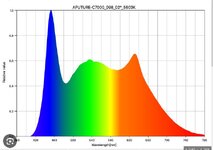
Using the internet (!) it is easy to find images that show a huge difference between my ap600 and 'tungsten' (see below)OK, so we have a number of people in this thread alone who feel certain that tungsten provides superior results to late model LED with emitters tuned for white light. Can anyone provide a link to a comparative video (either theirs or someone elses) that substantiates this, or is it just a "feeling"?
Obviously that is the internet.
Clearly led (daylight cob) is weak in red and tungsten is not.
Does this matter?
My years of experience which has moved from film to no IR filter Kodak to sinar with IR cut filtration added to black magic and cheap ND to ex1 with IR bleed to my current canons.
Id say the interplay in deep red between IR pollution, smooth skins and both sensors filtration and light sources is very real.
Do I have a side by side test of this years lights and cameras? To be honest. No.
I would suggest my 'pro tip' of popping a small tungsten into a LED diffusion as the holy grail.
My shots of chum Roy with my FS100 in 2009 (the worst sensor ever?? +24mbs codec) always struck me as appealing. the light source was a gel filtered redhead.
Attachments


Last edited:
CharlesPapert
Director of Photography
Scanned it, saw the section at 9:36 where the exposure levels, fill and contrast were markedly different between the tungsten source and the LED source, don't need to see any more. That is always going to psychologically affect the results. The sources need to be both pushed through at least a double break but better still a book light, inspected looking back from subject to diffusion to make sure they are both equally uniform, then carefully metered or scoped (I'd do waveform, parade and vectorscope myself) to ensure the color and intensity are exactly the same. Anything less isn't apples to apples.haven't had time to watch it but this might have some comparisons -
CharlesPapert
Director of Photography
Of course, tungsten will win out over older and cheaper LED, we know this. You can put a 40 yr old Tota light up against a Skypanel and the Tota will beat it out for purity (and probably burn your fingers somewhere along the line...plus a bug will inevitably fly into it and fill the room with a delightful aroma).
To Doug's point, it really depends on the circumstances. I'd be nervous shooting a product with the art director scouring the frame and dinging us if the exact shade of the box was "swinging just a smidge too far to chartreuse", but then there were shoots like I did this weekend, in a converted garage on a hot day with a faulty air conditioner, and I was very glad to be using Aputure products instead of hot lights. Sure, the skin tones may suffer a bit, but the performance might have been affected if it had gotten any hotter in there and indeed, any hot light would have had a noticeable effect.
To Doug's point, it really depends on the circumstances. I'd be nervous shooting a product with the art director scouring the frame and dinging us if the exact shade of the box was "swinging just a smidge too far to chartreuse", but then there were shoots like I did this weekend, in a converted garage on a hot day with a faulty air conditioner, and I was very glad to be using Aputure products instead of hot lights. Sure, the skin tones may suffer a bit, but the performance might have been affected if it had gotten any hotter in there and indeed, any hot light would have had a noticeable effect.
Doug Jensen
Carbonite Member
Glad I didn't waste my time watching that video. It always amazes me how many people just have no skills whatsoever at doing side-by-side testing and eliminating variables that might/will affect the results. Or even worse, making judgments without doing any tests at all.Anything less isn't apples to apples.

QuickHitRecord
Veteran
This brings back some memories; trying to wrangle one of these cases through the airport along with our Varicam 2700 in it's hardcase AND a tube for a tripod by myself. I don't miss that at all. Fortunately, I only had to deal with this for the first 3-4 years of my career before I gained enough clout to have some input on our purchasing decisions and talked my superiors into an LED and Canon Cinema kit. I haven't looked back at tungsten since and sold off my last fixture 2-3 years ago after I hadn't taken it out once in 10 years.I do not miss humping those massive grey vacuum formed cases into my car, this I can assure you (and trying to fold up the cable and fit into the case--hunt around for lost scrims...oh man).
I just watched the same video. What struck me was their assertions that the stock itself produced brownish hues. For some reason, the social media algorithm shows me lots of "then & now" photos from classic films as compared to what the locations look like now. I've seen a lot of snaps from ET, Indiana Jones, Back to the Future, Star Wars, etc. It seems like a lot of California in the 70s and 80s was new development with lots of bare patches, brown dirt, and long-reaching visibility. The color palettes were naturally more warm, muted, and brown. Today, these same areas are covered with more development, mature trees and grassy lawns -- all of which are reflecting a lot of green light.On related subject. I was watching a video talking about movies from 80s look the same because they used the same film.


The feeling betwen the two is totally different. So maybe when we think back to the days of film/tungsten/HMI and think about how much warmer and more dramatic everything looked, it had more to do with the locations that were available. Just a theory.
