
Phil Rhodes
Well-known member
It goes without saying that this is one solely for the tinkerers, and this post comes with a significant health warning. It describes working with things which generate very high voltages, ultraviolet radiation, temperatures high enough to make sintered alumina glow red, explosion hazard, and other things, so be careful and wear protective equipment as appropriate.
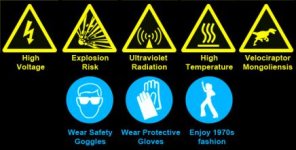
In all seriousness, things described herein are genuinely hazardous, so take precautions.
Anyway, a lot of people are using variations on 150-watt metal halide lighting, and it's at least a bit of an annoyance that we can't hot start them - only actually, we can. This is a work in progress, and I can't report complete success yet, but I thought it was worth mentioning that it's quite possible to run 35-watt metal halide lights from the sort of ballasts used in automotive headlamp installations.
This has presumably been thought of before, but people are now making 150-watt ballasts of similar design. Quite why anyone would want 300 total watts of headlights is beyond me, but these things are available and, since people need to be able to flash headlights on and off, they develop a high enough voltage to hot-start the lamp.
I have tried this only with a 35-watt type, as I happened to have some 35-watt HID ballasts lying around. It worked imperfectly - it flashes over in the base of the lamp on a true hot start, but the time to a successful restart is reduced to about 45 seconds, rather than about ten minutes. I think it might be possible to improve this by flooding the G12 base with some low-viscosity silicone, but I'll get a 150-watt ballast in and report my results here.
The other advantage is that you then have a 150W light that can be powered from (reasonably big) batteries. To make it mains powered, factor in a suitable 12V DC power supply, which should fit in not much more space than a normal CDM ballast.
And again, this is all at some considerable safety risk. Many tests required before this is field-ready. It's also likely, I assume, to reduce the life of the lamps quite significantly, as they aren't designed to be fired hot.
P