Good gels to have on hand?

I now have all daylight balanced lights — even daylight practical bulbs. I know that when I used to have tungsten lights, I would put ctb gels on them to match daylight. I also knew that I could put cto gels on windows to match the tungsten light. Now with an all daylight kit, what gels do you guys carry with you and for what situations do you use them? I don’t want to go overboard, but I want to be prepared.

For example, if my camera is balanced for daylight in a night scene and I’ve lit the scene with my lights to match the look of indoor lights, what gel would you put on 1 of the daylight balanced lights shooting through a window to give it a moon light look?

Just looking to have some good gels available or maybe there’s something better than gels? Just trying to use some color for creative purposes.

What about matching sunrise or sunset?
 
My gel roll that I assembled in the days before LED's became widespread, consists largely of correction gel's:
1/8, 1/4, 1/2 & Full- CTO, CTB, + Green, - Green, various cosmetic enhancers, various diffusions, various ND's and "party gels"/"party colors"(i.e: greens, reds, yellows, non-correction blues, etc.).

Today, it's rare for me to pull the gel roll out, except for diffusion, because most of my lights that I use regularly are either bi-color or some variation or RGBWW. You can run into problems gelling LED's, because there may be(are) missing parts of the spectrum and the gel can potentially exacerbate that.
 
The minus green ones appeared useful, but didn't work that well for me on my theatrical LED whites - the CRI is a bit too random. They work pretty well on the photo style LEDs that have the repeatable CRI curves. The only snag I found was that you need to identify them with a sharpie because they're very different to judge in daylight. The old CTB, for example was just blue - so you could identify them easily, The new LED gel looks just weird without holding them uo to a light source.
 
The minus green ones appeared useful, but didn't work that well for me on my theatrical LED whites - the CRI is a bit too random. They work pretty well on the photo style LEDs that have the repeatable CRI curves. The only snag I found was that you need to identify them with a sharpie because they're very different to judge in daylight. The old CTB, for example was just blue - so you could identify them easily, The new LED gel looks just weird without holding them uo to a light source.

I mark ALL of my correction gels for quick/easy identification: 1/8, 1/4, 1/2, Full. Full is usually pretty easy(at least with CTO & CTB), but the lighter densities can be tough sometimes and you don’t always have time to just be standing there holding a sheet up and trying to figure out if it’s an 1/8 or 1/4, or 1/4 or 1/2.
 
Great info guys. I see this is a little more complicated with LEDs. So in the two examples: MOONLIGHT and SUNRISE, which blue and orange gels would you add to the daylight balanced lights while white balanced to daylight to achieve that look? Of course, I can cool or warm up the shot in post, but for the "normal" practical lights in the shot, I will balances for daylight. But then for my off camera light(s) that are supposed to be from moonlight OR sunrise light coming through a window, which gels would you try and at what strengths?
 
In other words, my kit is good for making all of my lights look like the same color temperature, but for using some of the lights in the scene to use color for separation (dramatic effect), which gels should I try?
 
I remember watching a Shane Hurlbut video where he put either a 1/8 or 1/4 straw gels on the lights to make pale skin look more alive. I guess it depends on your camera and lens, as I find straw gels too yellow, and would rather use CTO.
 
I'm currently on a job that I could use cto gel to warm up my daylight leds. Once again almost all the popular cto are out of stock. What gel would I need to warm 5600 to 3200? 3/4 or full. Only 3/4 is in stock. How does temperate change with gels? I understand that they get warmer as you dim but what happens with different lumen leds? For example, I have very bright panels that output 16,000 lux @ 100% and I have light that only put out 3,000 100%. So would the color temp be close between the two?
 
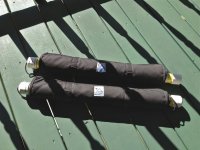
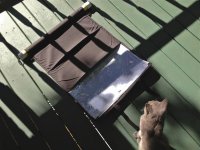
I have a couple of gel rolls which I keep my color correction, diffusion, and colors on.
They are pretty handy.
 

Attachments

  • Gel roll 01.jpg
    Gel roll 01.jpg
    89.5 KB · Views: 0
  • Gel roll 02.jpg
    Gel roll 02.jpg
    87.5 KB · Views: 0
Silly question, but if your daylight balanced lights are white balanced to daylight in your camera and you want to add a blue gel to one of your lights to give a bluish moonlight look though a window, how much CTB would that take?
 
Really depends on the look you are going for, and how many stops you are willing to sacrifice to get there.

You already know this, but it would be easier to white balance your camera to somewhere between 3200K-4200K.
 
Back
Top