I'm going to be lighting a night shoot a couple months from now, without access to a power outlet or generator, and I'm looking for a good battery-powered lighting solution. These will be mostly for medium and tight shots, no wide areas. What are my options? I'm really looking for something small, portable, and easy to set up. I'll likely be renting whatever I use, but if it's something cheap enough, I might also buy.

Navigation
Install the app
How to install the app on iOS
Follow along with the video below to see how to install our site as a web app on your home screen.
Note: This feature may not be available in some browsers.
More options
You are using an out of date browser. It may not display this or other websites correctly.
You should upgrade or use an alternative browser.
You should upgrade or use an alternative browser.
Good battery-powered nighttime lighting solution
- Thread starter jthabel
- Start date

David W. Jones
Veteran
What portable battery powered lights do your rental houses keep in stock, along with batteries & charger?
That is where I would start. I would also suggest a budget point so others could chime in with more tailored solutions.
That is where I would start. I would also suggest a budget point so others could chime in with more tailored solutions.

Taylor Rudd
Veteran
I keep a 1x1 LitePanel on hand for use in a pinch. Usually as a fill with existing light. Granted, this is for more run'n'gun situations. It has an Anton Bauer gold mount attached so i can power it via camera batteries.
I see you're in Austin - Omega & Gear should both have them.
I see you're in Austin - Omega & Gear should both have them.


legrevedotcom
Veteran
I had some Area 48s some time ago and while they didnt get much rental business those who used them like them.
They are quite similar to led panels yet use phosphor tech so the light is nice and soft even for its small size.
They come with a batteryplate where one 150w battery will run at full power for 1 hour.
They are quite similar to led panels yet use phosphor tech so the light is nice and soft even for its small size.
They come with a batteryplate where one 150w battery will run at full power for 1 hour.
adaptation
Active member
2 1x1 LED panels + a small LED cube (the ones that go on the hotshoe of your camera, although ideally you dont put it there) usually will do the job and not be too tough to carry around. LED panels need Li-Ion bricks while usually the small ones operate on sony batteries.

CharlesPapert
Director of Photography
The above answers are all good but I feel that there are other questions to ask first, such as: what ISO/stop are you planning to shoot at (determines amount of firepower required). What is the location (night exterior in city means backgrounds will already be lit; night exterior in the woods means you need to also light the background to keep it from falling into a black hole).
legrevedotcom
Veteran
I would agree with you Charles, in a perfect world, but the title states battery powered, so that takes away the firepower and the lighting of big backgrounds imo
CharlesPapert
Director of Photography
Not really, depends on the camera being used and the intended ISO. I lit up a beach with a Canon C300 at 6400EI, 3 lights under 1K each off a putt-putt. With an A7S shooting at 25,000EI, you could substantially pick out backgrounds with a couple of battery-run 1x1's, no problem.
Is "no access to a generator" a choice, a sound concern or a budgetary one? If the thought was to rent lights, a putt-putt isn't a notably expensive concept. Understood if it's out of reach but I think sometimes those are considered more exotic than they are.
Is "no access to a generator" a choice, a sound concern or a budgetary one? If the thought was to rent lights, a putt-putt isn't a notably expensive concept. Understood if it's out of reach but I think sometimes those are considered more exotic than they are.
CharlesPapert
Director of Photography
Also: back in the day we lugged a few car batteries around as power sources! And then there was that music video in the 1DMKIV days where I lit the background with carefully placed road flares (5 minutes of shoot time before "reloads"!)
morgan_moore
Major Contributor
I have a solution with a lesure battery and two 150w 'led bar lights' the batt is very heavy but will run for 2-3 hours - v bright for lighting the scene. I use a vlock and dedo led combination on the talent as the bar lights have a low cri. Will dig out pics later
morgan_moore
Major Contributor
Led bar light/lesure batt..
Backlit on this scene
https://twitter.com/sammorganmoore/status/650991063205834752
Boxed up
https://twitter.com/sammorganmoore/status/534055255638827010
On Location
https://twitter.com/sammorganmoore/status/521385108180578304
Setup
https://twitter.com/sammorganmoore/status/509719312379043840
Backlit on this scene
https://twitter.com/sammorganmoore/status/650991063205834752
Boxed up
https://twitter.com/sammorganmoore/status/534055255638827010
On Location
https://twitter.com/sammorganmoore/status/521385108180578304
Setup
https://twitter.com/sammorganmoore/status/509719312379043840

David G. Smith
Steak Knife Member
Also: back in the day we lugged a few car batteries around as power sources! And then there was that music video in the 1DMKIV days where I lit the background with carefully placed road flares (5 minutes of shoot time before "reloads"!)
I've done the road flares thing for a music video also. Not for the faint of heartheart! LOL. I'm also a big fan of 12 volt inverters for no generator night shots.
Last edited:
CharlesPapert
Director of Photography
and what ISO do you plan to shoot at?
CharlesPapert
Director of Photography
So, here's what I'm getting at with all of these questions.
When I approach a shoot, I start with my ideal lighting setup first and then work backwards within the parameters to figure out the units and logistics. The OP gave us a certain amount of information, but I couldn't begin to make any suggestions without knowing more. Learning that this will be on city streets vs, say, a pitch black forest means there will be existing lighting in place. Also knowing that it is a Canon, this allows for higher ISO shooting vs, say, a Blackmagic. I would still ask more questions but there is a sticky that covers just this.
I think many scratch their head and wonder why I'm over-thinking all of this: just get a couple of 1x1 litepanels and shoot away. However, this is a forum where threads can go for dozens and dozens of pages on the scientific details of sensors and processing (and to be honest, I'm not sure how much of actually relates to filmmaking). The nuances of lighting are just as intricate, so the idea to me of a one-size-fits-all approach is similar to jumping into one of those threads and saying "just turn on the camera and shoot, what's the big deal".
A 1x1 litepanel is a useful tool (assuming a late-model version--the early ones were not great in terms of color purity) but it is still a relatively small source and thus a bit hard. If this is a run-and-gun, low profile shoot that may be the right idea, but if a softer source is desired, using a BBS Area 48 pushed through a 4x4 diffusion frame or even bounced will deliver quite a different quality of light. This may require shooting at a higher ISO than 800 but the C100 can certainly manage this, and for a night street exterior probably appropriate. If bouncing, I like the ultrabounce floppies; two of those set next to each other will deliver an 8x8 source (64 times as big as a litepanel!) and quicker and easier to manage than a frame.
I would also want to be able to control existing lighting on the faces--say if there was a nasty spill from a nearby streetlight or security light that was pushing cyan onto your subject. A couple of 4x4 floppies would help with this and also if you wanted to create some negative fill.
Given a scenario where the crew is at least two people and the gear is being transported in some way other than being hand-carried, and it won't cause a fuss to have some lighting gear in evidence, I myself would go at this with the following package:
(2) Area 48's
(1) 1x1
batteries (a charging station would be helpful, could be run off inverter in car
(2) 4x4 solids, floppies
(1) ea 4x4 single, double net
(2) 4x4 ultrabounce floppies
(1) ea 4x4 frames skinned with 250, 216, light grid
c-stands and sandbags
That may seem like a lot of 4x4's to manage, but if you have a pickup truck or SUV that can remain accessible at each location, no big deal (just hope for a mild night wind-wise) And grip gear is a relatively cheap rental. The idea is to be able to modify the existing light (via solids, nets or diffusion, depending on its intensity) and then build in the desired light.
If it had to be simplified and made run-and-gun, I'd go down to maybe one Area 48 with a Chimera and one litepanel. I'd still be wanting the ability to bounce, so maybe a handheld large flexfill.
Finally a night location scout would be critical, to learn where the existing lighting works best and what the plan of attack would be, and I'd build the lighting package based on what was learned. Taking stills can help with this, or even the camera itself since it is small enough
Last edited:

Samuel H
Major Contributor
They are not battle tested so I wouldn't advise to use them in a project like this one, but I'm building LED fresnels that get the same light output as a 500W tungsten fresnel, drawing a bit less than 100W of power. They use CREE CRI 93+ LEDs, and optical-grade glass (it's not a fresnel lens actually, but it does the same function). They weight 500g each (one pound), plus about as much for the adapter, which sits on the ground (I wanted to make the fresnel itself as small and light as possible). They have absolutely no flicker at any frequency I have tested (at least up to 1/2000s). My aim is to sell these at around $400 each.
Two downsides:
They have a slow-moving, almost-silent fan (for me it's no problem at all, but for others it might be).
If you like your gear to be able to withstand rough use, they are not for you: they are made of ABS plastic, and I already broke one in a 1.5m drop test (that's five feet) (it still works but the fan lost one blade and is unbalanced now; I can rapair it easily but for others it wouldn't be so simple).
Why I post this here: currently they need to be plugged, but I could make them work with batteries as well. A $100 LiPo battery that weights one kilo (2 pounds) and needs a $50 charger would keep one working for two hours. But I'd have to work on it to make sure everything is OK. Do you think it would be worth the effort?
Last edited:
morgan_moore
Major Contributor
When I approach a shoot
Charles sometimes I think you get a little remote from the world on the ground.
Area48s are $3000*, even lite panels are $800* your small packaged if purchased, adds up fast when you throw in all the brick batts and the like you need. $10g at least.
My LED light bars are $150 each and a $100 car batt runs two of them for 3 hours... cheaper than a single 1.1 panel.
Maybe your lesson to us mortals is not to be scared of the rental house

One thing.. I think that low CRI is usually acceptable in night scenes
S
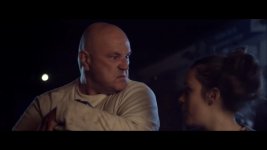
Here they are gelled blue (with CTB of course!) providing backlight.. actually their power cannot really be seen as they are well back from the actors..
*super rough $ guesses based on CVP UK pricing.
Last edited:
David W. Jones
Veteran
Charles sometimes I think you get a little remote from the world on the ground.
Area48s are $3000*, even lite panels are $800* your small packaged if purchased, adds up fast when you throw in all the brick batts and the like you need. $10g at least.
My LED light bars are $150 each and a $100 car batt runs two of them for 3 hours... cheaper than a single 1.1 panel.
Maybe your lesson to us mortals is not to be scared of the rental house.
Well in all fairness the OP did post this in his first post.... "I'll likely be renting whatever I use, but if it's something cheap enough, I might also buy."
I also suggested he visit his rental house to see what they stock, which would also give him the opportunity to go more in-depth about his shoot, which is still a little lacking on the info here.
Last edited: